Grow your business: How Tree is supporting the 3D printing revolution by saving materials and reducing time
Support structures are important partners in the intricate dance of metal additive manufacturing. They maintain a drapey character during the printing process, defying gravity and ensuring that the geometry is faithfully transformed from digital dream to tangible reality. However, traditional supports—blocky, dense latticework attached to every downward-facing surface—come at a cost: lots of wasted material and painfully long post-processing marathons. Enter tree support – A clever algorithmic approach reshapes the way we think about 3D printing support. Tree shoring is more than just a novelty, it represents a major leap in efficiency, directly impacting costs, sustainability and delivery times.
The burden of traditional support: why change is needed
Traditional supports have long been the unsung hero and hidden villain of printing complex parts:
- Material gluttony: Solid or dense grid carriers consume large quantities of precious metal powders. This waste becomes a major cost driver when producing in high volumes or when using expensive alloys such as titanium or Inconel.
- Time Bandits: Printing large amounts of support material significantly increases build time. It also greatly increases the difficulty of post-processing: removing these strong, tightly connected structures requires hours of meticulous manual labor (sanding, grinding, cutting), often at the risk of damaging the fragile components underneath.
- Complexity Trap: Designing supports for highly organic geometries with deep cavities or complex internal features can be complex and sometimes impossible to achieve without compromising the part design itself using traditional methods.
- Surface scars: Removing bulky supports often leaves scars, pits or uneven surfaces on the critical part surfaces they contact, requiring additional finishing work.
These restrictions are not just an inconvenience; They are bottlenecks to productivity, cost efficiency and sustainable manufacturing.
Tree Support: Nature-Inspired Efficiency
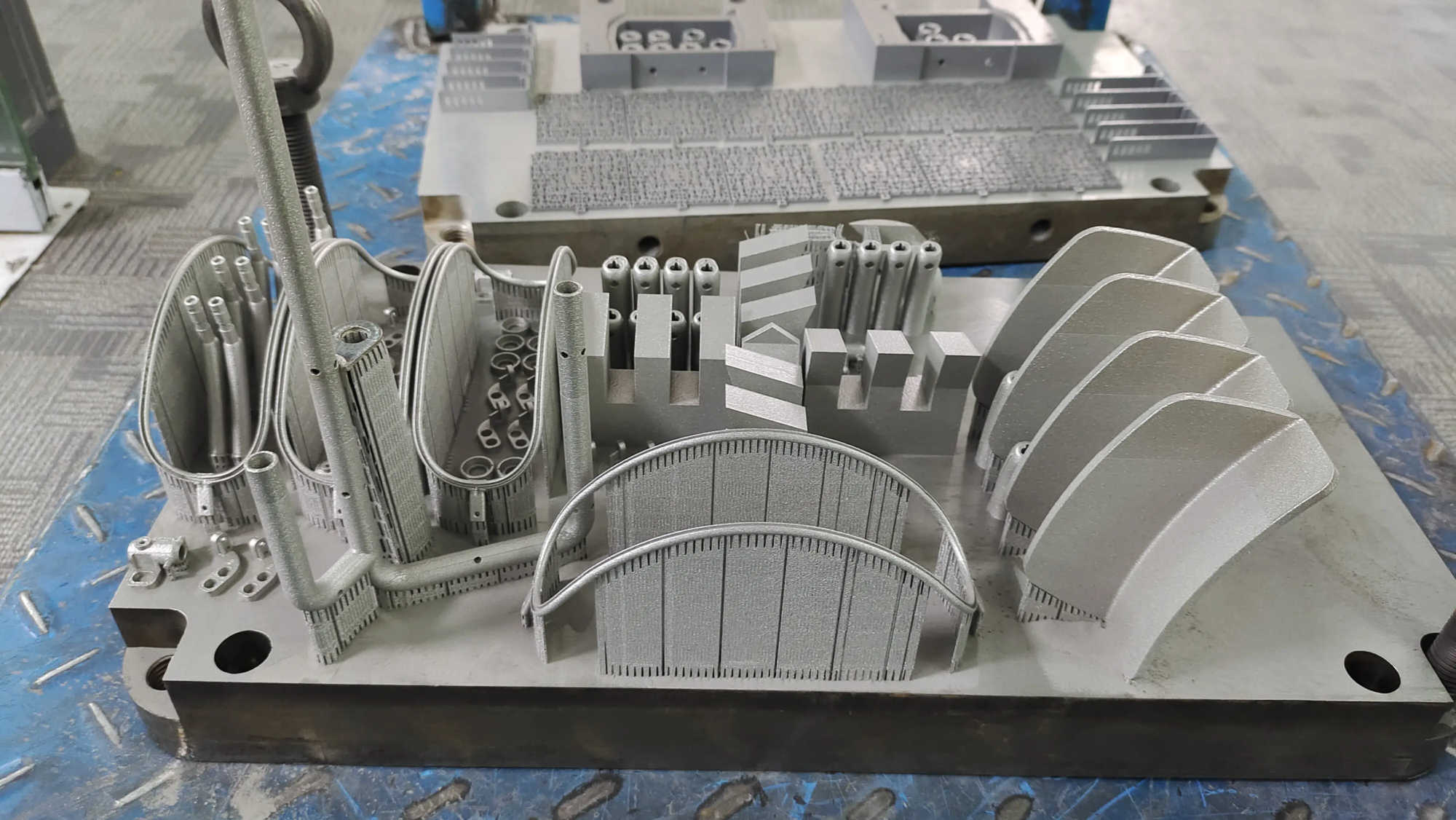
Think of a fractal tree—its trunk branches into smaller and smaller branches, optimizing strength while maximizing canopy coverage with minimal trunk material. Tree supports mimic this organic efficiency. Instead of a dense block or wall beneath each overhang, specialized slicing software (such as Materialize Magics, Autodesk Netfabb, or a dedicated slicer for desktop printers) produces slender, tree-trunk-like columns that branch only where they really need to contact the part at critical points.
How Tree supports achieving savings:
- Radical reduction of materials: This is the headline benefit. By minimizing support volume and precise contact points for the slender torso, Tree supports significantly reduce material consumption, often by 50% or more compared to traditional supports. This directly translates into lower raw material costs, an important factor in high-performance metals.
- Speed up printing time: Less material deposited means faster print jobs. Printing elongated branching structures is inherently faster than laying down dense solid supports. Shorter build times increase machine throughput and capacity.
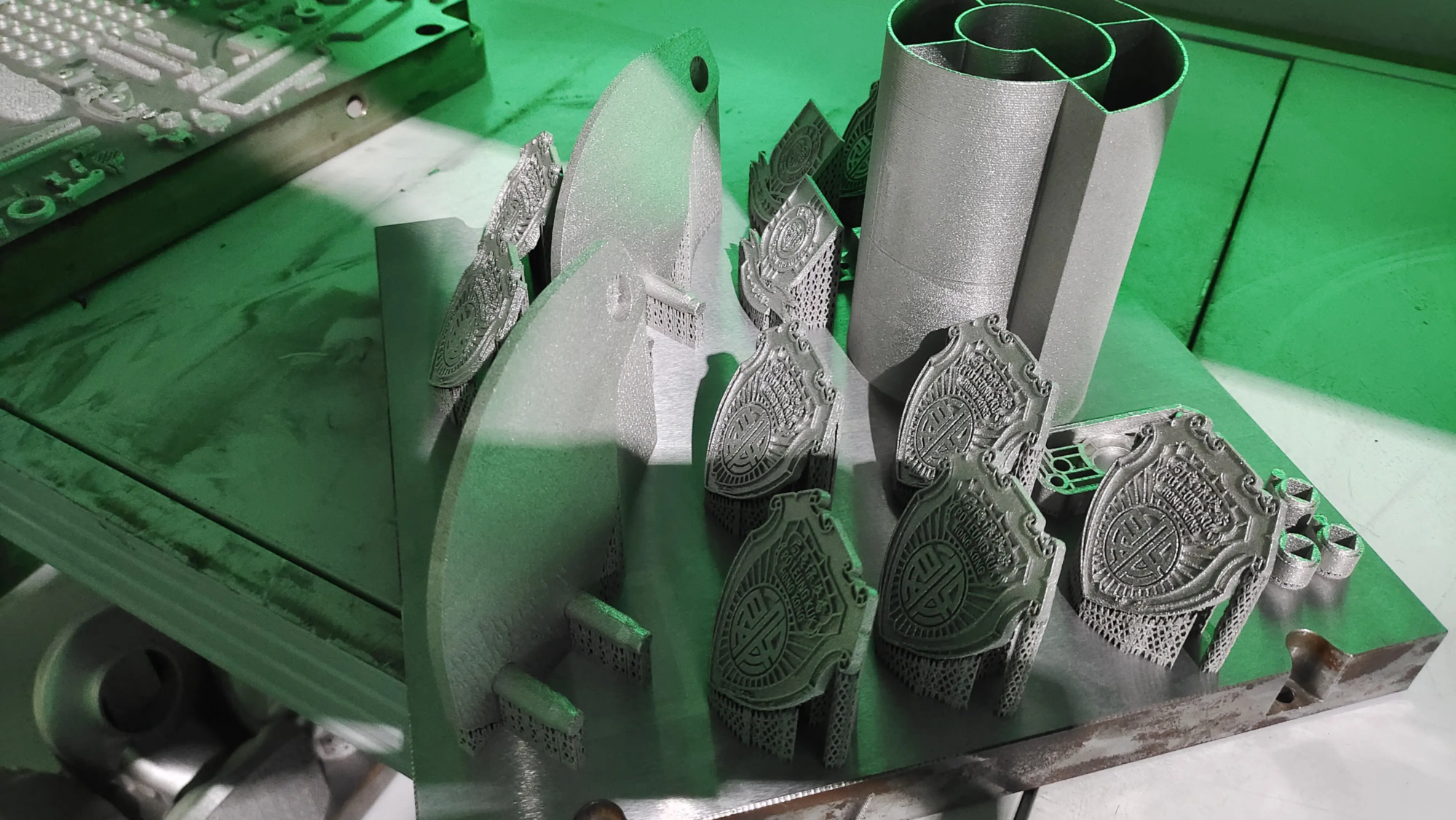
- Revolutionary post-processing: Removal becomes easier and faster. Tree supports typically connect to parts with tiny contact points rather than large adhesive surfaces. They often snap or break with minimal force, sometimes even removing the entire branching structure as a single component. This is thorough Reduce physical work time and reduce the risk of damaging delicate finished parts during support removal.
- Unleash complex geometries: The branching structure allows trees to grow into confined spaces, under curved surfaces, and into complex internal channels that traditional bracing would be difficult to overcome, providing unparalleled design freedom for truly complex topologies.
- Minimize surface impact: Smaller contact points usually mean smaller scars or witness marks on the part surface, potentially reducing the need for intensive finishing in these areas.
GreatLight: Harness tree support efficiency for your projects
At Greite, the leader in professional rapid prototyping manufacturers in China, we understand that efficiency is not limited to the print bed. We push the boundaries of what’s possible using advanced SLM (Selective Laser Melting) 3D printing technology. Integrating complex algorithms toikon Tree Supports is an integral part of our workflow.
- Our expertise lies in selecting and generating the optimal tree support structure for your specific metal part geometry and materials, including a variety of custom alloys.
- We combine this with comprehensive one-stop post-processing capabilities – utilizing technologies such as CNC large machining, heat treatment, EDM and precision finishing