The Evolution of Desktop Production: A Closer Look at Qidi Technology’s 3D Printers
In the dynamic world of modern manufacturing, desktop 3D printers have evolved from niche gadgets to indispensable tools for designers, engineers and small businesses. Among brands that continue to push boundaries in this space, TusTech Always stands out for combining industrial-grade functionality with user-friendly accessibility. As a leader in industrial rapid prototyping, we recognize the importance of such tools to accelerate iteration cycles and functional testing. After rigorous testing of Qidi Technology’s flagship model in real-world scenarios, we share the following insights to help you determine whether this solution meets your prototyping requirements.
Design Concept: Bridging the Gap between Prosumers and Professionals
Qidi Technology printers prioritize reliability through strong engineering. Models such as X-max 3 Featuring a die-cast aluminum frame and a fully enclosed chamber, which is critical for temperature stability. Unlike cheaper printers, the casing actively reduces warping through continuous heating, making it easy to print in ABS, nylon or polycarbonate. The dual-gear extruder and hardened steel nozzle can withstand abrasive composites such as carbon fiber infused filament, while modular hot-end components allow users to change components to specialty materials in minutes. This flexibility reflects professional settings but condensed into a desktop footprint.
Performance indicators: speed, accuracy, repeatability
When stress testing Qidi Technology’s CoreXY model, we observed:
- accuracy: Dimensional tolerances for complex geometries are consistently ±0.1mm.
- speed: Movement rates of up to 600 mm/s (with vibration compensation) reduce print times by 35% compared to older models without compromising surface quality.
- Layer controls: Variable layer heights (0.01–0.3mm) enable high-detail miniatures or quick sketch prototypes.
Failure rates are significantly reduced thanks to filament sensors, automatic bed leveling and proprietary algorithms that compensate for temperature changes. For low-volume functional parts, such as drone casings or robot joints, the machine achieves an impressive balance between speed and flexibility.
Beyond PLA: Expanding material horizons
While competitors stumble, TusTech thrives through material adaptability. Its thermal ecosystem supports:
- Standard polymers (PLA, PETG)
- Engineering grade thermoplastics (ABS, TPU, nylon)
- Advanced composites (carbon fiber, Kevlar blends)
- High temperature options with chamber upgrade (PEI, PEEK)
We successfully printed a heat-deformation-tested bracket using polycarbonate-CF, a rare feat for non-industrial machines. While metal printing is still beyond the scope of Qidi (an inherent limitation of desktop FDM/FFF), its plastic/composite versatility enables complex jigs, housings, or snap-on prototypes that have been stuck in the outsourcing queue.
Ecosystem integration: software that supports services
Seamless workflow is as important as hardware prowess. Qidi’s improved slicer optimizes the Quickprint™ mode profile, balancing speed and accuracy. Remote monitoring via WiFi cameras facilitates nighttime operations, while full Linux OS integration promotes shop floor scalability. For businesses seeking higher throughput, stackable buffer systems can autonomously manage successive projects. Additionally, we appreciate the easy-to-use lubrication points and intuitive maintenance guide, which significantly extend the life of the printer.
Real prototype efficiency: the advantage of Qidi Technology
For startups and R&D teams, Qidi printers can reduce costs and shorten delivery times:
- Proof of concept: Fast turnaround (as fast as 2-4 hours for small parts) simplifies design review.
- Sampling before production: Durable functional testing reliably simulates end-use loads.
- Tooling solutions: Print modified custom assembly fixtures weekly without CNC delays.
We tested the IoT device’s durable case with an IP54-rated seal using a TPU textured handle (all printed in-house). Compared with third-party laboratories, cost savings exceed 70%.
Limitations in a professional environment
Despite the advantages, recognize that alternatives dominate. The build volume is still limited to the desktop (for example, X-Max 3: 325 × 325 × 380mm), limiting large prototypes. Metal printing is critical to the aerospace or medical fields and requires SLM (laser powder bed fusion) machines like ours. Likewise, UL/CE certified production requires process traceability on an industrial scale.
Conclusion: Smart Scaling in a Prototype Ecosystem
For agile product teams, Qidi Technology provides superior desktop capabilities to democratize prototyping that was once limited to industrial labs. Its combination of speed, elasticity and material diversity justifies investment in education, boutique manufacturing or corporate R&D. Users gain independence in rapidly iterating non-metallic prototypes, but hit the boundaries when faced with complex alloys, large surfaces, or certified series results.
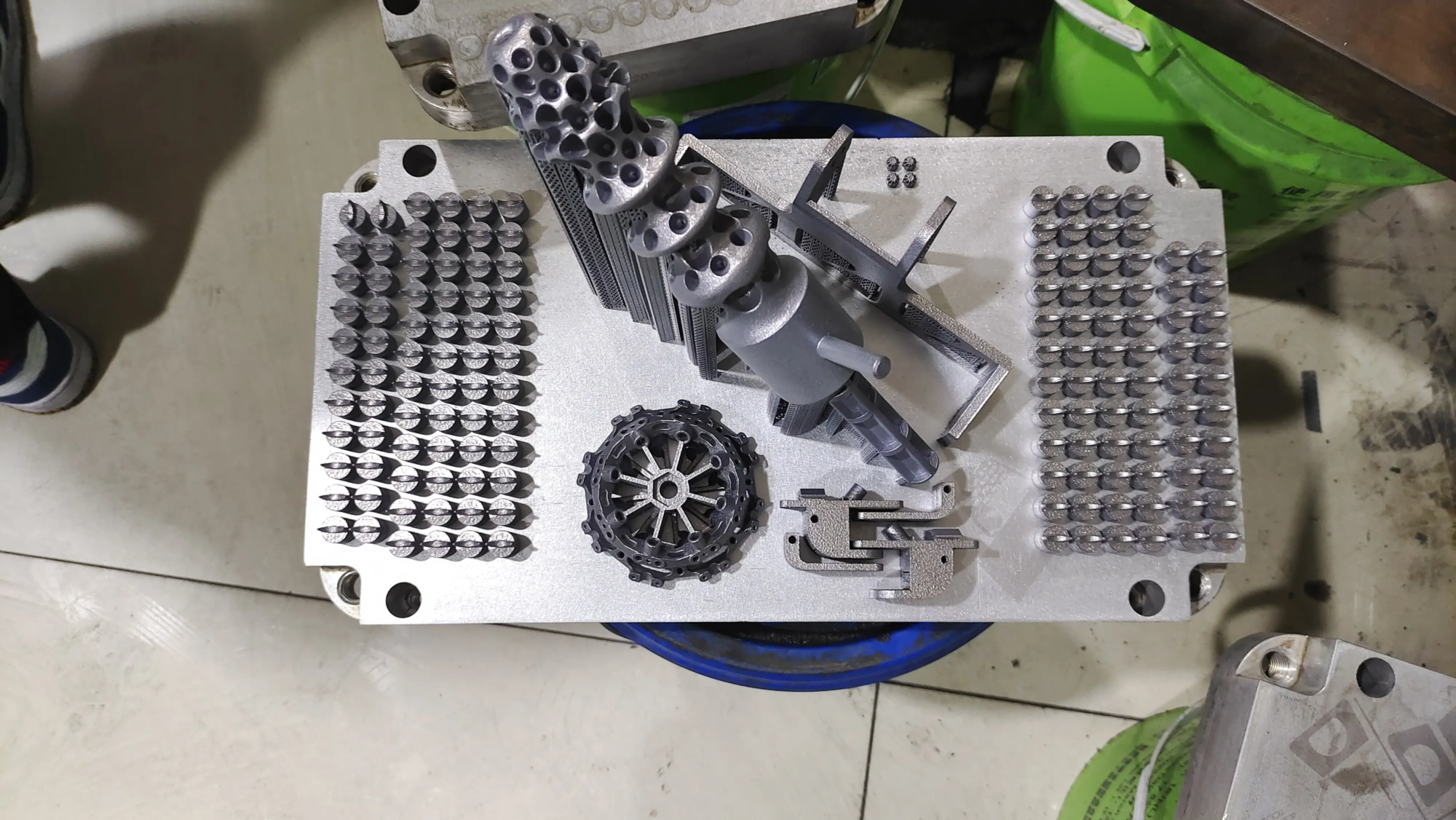
exist huge lightit is these gaps that fuel our mission. as an expert Metal rapid prototyping (via SLM 3D printing), we supplement desktop limitations by:
- Industrial SLM Machines: Can handle titanium, aluminum, stainless steel with dimensions up to 450 × 450 × 500 mm.
- Post-processing integration: Sand blasting, heat treatment and precision machining are completed in one stop.
- Custom alloys and certifications: Biocompatible implants, flame retardant aerospace components complying with AS/EN9100 standards.
Don’t outsource your printers to meet demand – outsource strategically. Whether using Qidi for everyday ideation or leveraging our SLM farm for certified metal components, layered capabilities accelerate innovation. Contact GreatLight for a turnkey solution to bring tabletop plastic up to its ceiling.
FAQ: Qidi Technology and Professional Prototyping
1. What materials can Qidi printer print?
TusTech supports polymers (PLA, PETG, ABS), elastic flexible materials (TPU) and composite materials (carbon fiber, wood filling). For metals such as titanium or Inconel®, industrial SLM systems such as GreatLight’s are still necessary.
2. Is Qidi Technology suitable for functional prototypes?
Yes, its heated chambers and hardened components reliably produce engineering-grade parts that are moldable, durable or heat-resistant. Complex brackets or gears printed with Nylon-CF can withstand mechanical loads exceptionally well.
3. How does printing speed affect prototyping efficiency?
Accelerated mode reduces iterations from days to hours. However, the finishing component facilitates slower setups – always optimizing the mesh or supporting the use of slicers like Qidi’s own software.
4. Why invest in outsourcing if it exists?
Desktop printers like Qidi allow for unlimited iterations with no per-project fees. For a low-cost proof-of-concept or bridge tool (both cheaper than CNC), the return on investment is very high.
5. When should I turn to an industrial prototyping partner?
If needed, hire an expert like GreatLight:
- Metal parts requiring laser melting/SLM processes.
- Production scale batches requiring UL/ISO certification.
- Custom alloy chemistry or perfect surface treatment.
Combine the resiliency of Qidi with industrial metal proficiency to achieve end-to-end agility with hybrid workflows. Request our SLM prototyping guide here.
6. Does GreatLight handle finishing?
Absolutely. Our facility performs CNC tuning, anodizing, polishing, powder coating, vacuum casting and ultrasonic cleaning to ±0.001” tolerances, eliminating post-print handoff logistics. Submit your STEP file here for instant DFM analysis.