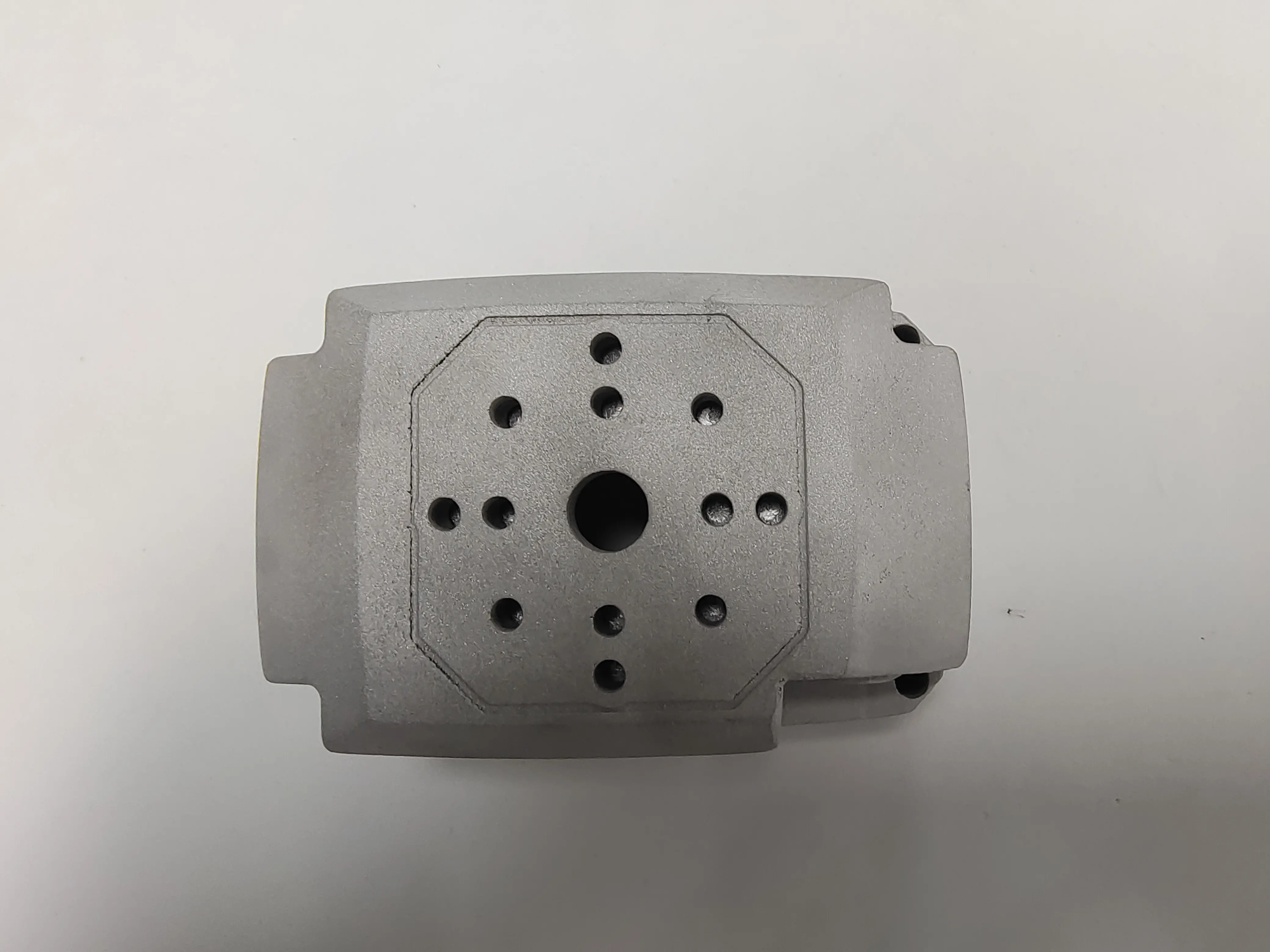
Unlock your world: explore the potential and responsibilities of 3D printed lockpicks
The world of additive manufacturing continues to amaze, pushing boundaries from aerospace components to complex medical devices. Now, onto a more provocative frontier: 3D printed lock picks. The concept sparked immediate interest—the ability to literally "Print" Tools capable of manipulating physical security mechanisms. But beyond the initial appeal, there are complications of technical, ethical, practical and legal nuances.
At its core, 3D printing a lockpick involves creating a physical tool from a digital model using material deposited layer by layer. This is not science fiction; a deep understanding of the feasibility, limitations, and responsible application of this technology is critical.
Technology Area: From Documentation to Function Selection
Creating a reliable pick lock via 3D printing depends on several technical factors:
-
Material selection:
- Polymer (PLA, ABS, resin): Commonly found on hobbyist FFF/FDM and resin printers. These materials are low cost and easy to print. However, they often lack the required stiffness, strength and durability, especially critical "feedback" What it feels like when tensioning and lifting the pin. Polymer picks can bend, break easily under pressure, or wear out quickly on the hardened steel pins.
- Metals (stainless steel, titanium, tool steel): This is where functional feasibility shines. Use advanced Selective Laser Melting (SLM) technology that uses high-power lasers to precisely fuse metal powders (such as 17-4PH stainless steel) layer by layer. huge light Utilize state-of-the-art SLM systems to produce lock picks that are comparable to traditionally machined lock picks. Metal picks offer superior strength, precision, stiffness for tensioning, significant tactile feedback and wear resistance. Post-processing such as precise CNC contouring, polishing and tumbling are essential to achieve a flawless, smooth surface, which is essential for smooth operation inside the lock cylinder.
-
Design Precision and Complexity: Lock picks are complex tools. Rakes, hooks, diamond wrenches, and tension wrenches all require precise geometry. Rough surfaces, slight dimensional errors, or internal stresses introduced during the printing process can cause them to fail. Digital design (CAD) must be carefully optimized for manufacturability, accurately converting complex curves and thin profiles. Professional SLM services, such as those provided by Duoyuan huge lightensuring these designs are faithfully translated into strong, functional metal parts.
-
Printing process: Not all 3D printing is created equal. SLM excels in this area, enabling encapsulation: producing fully dense, near-net-shape, complex metal parts with exceptional dimensional accuracy. Resin printing (SLA/DLP) can achieve high surface detail in polymers, but material limitations remain. FFF/FDM has struggled with the resolution and material properties required for reliable pickup. Metal printing is the benchmark for durability.
- Improved post-processing: Raw 3D printed metal parts often have surface roughness and potential microscopic defects. where is this glorious Comprehensive One-stop post-processing Competence becomes crucial. Techniques such as CNC machining with precise edge definition, precision grinding, electrochemical polishing or special abrasive tumbling ensure a mirror-like, burr-free surface of the pick. This minimizes friction within the lock, providing the crucial smooth action that lockpickers rely on and ensuring longevity. Unlike rough prints, professionally finished metal picks won’t jam or damage the lock’s inner workings.
Legality and ethics: primary considerations
This part cannot be overemphasized.
The production, possession and use of lock picking tools must comply with Strict supervision Laws vary by region and country. Possession with intent to commit a crime is illegal in many places. However, a legal context exists:
- Rocksport Community: It’s a vibrant and ethical hobby scene where enthusiasts practice picking locks they own or are licensed to, focusing on skill development, solving puzzles and learning about machinery safety. Transparency and consent are fundamental principles.
- Professional Locksmith: For training, lockout (as permitted by law), diagnosing lockout failures, and vulnerability assessment.
- Security Professionals and Penetration Testers: Assess your organization’s physical security weaknesses ethically and always with clear authorization.
- Educational purposes: Teaching concepts in mechanical engineering and safety design.
Responsible use is mandatory: institutions like this huge light It is emphasized that the manufacture of such components is strictly carried out by certified professionals or law-abiding enthusiasts for legitimate and legal purposes. We do not endorse or support any illegal activity. Know and obey local laws only End User Responsibility.
Beyond Controversy: Legal Applications and Innovation
Despite understandable sensitivities, legitimate applications of high-quality 3D printed lock picks are still valuable:
- custom made: Designers can create custom tools for specific lock types, unique access challenges, or ergonomic preferences—something that would be difficult with a mass-produced pick. GreatLight thrives on transforming unique concepts into high-precision metal realities.
- Auxiliary functions: For true lock movement beginners, custom-designed ergonomic tools lower the barrier to entry in areas where ownership is legal. For professionals, specialized tools can be quickly crafted and produced.
- Security research: Enable faster iterations to develop and test new lock designs or novel countermeasures against unauthorized access techniques. Rapid prototyping accelerates innovation in physical security.
- Training and Education: Durable metal printed tools provide a real-world training aid for locksmith apprenticeships or security courses.
Conclusion: Integrity tempers innovation
3D printed lock picks represent a fascinating intersection of modern manufacturing potential and enduring ethical responsibility. While polymer printing is curious at best, Metal 3D printing through SLM technology Open the door to truly useful, durable tools.
The focus must always be firmly on ethical application and strict compliance with the law. As a leader in professional rapid prototyping, huge light Push the limits of metal part manufacturing with the power of advanced SLM printing and precision finishing. we provide Highly customized, Excellent qualityand Produce quickly Metal parts for countless industries.
If your project requires complex, robust and precise fabrication metal parts – Whether it’s legal security applications, aerospace, medical devices or industrial equipment – GreatLight has the expertise and technology to meet your exacting requirements. Explore the potential of advanced metal rapid prototyping with a trusted industry partner committed to excellence.
FAQ: Learn about 3D printed lock picks
Q1: Are 3D printed lock picks as good as metal lock picks?
- one: This depends a lot on the material and printing/post-processing:
- Polymer printing picks (PLA, resin): Generally speaking no Just as good. They lack the strength, stiffness and durability of metal. They break easily, bend, and don’t provide good feedback. They occasionally work on simple locks, but are unreliable.
- Professional SLM Printed and Finished Metal Picks: When using selective laser melting technology to produce metals such as stainless steel