Wall Rings Revealed: The Backbone of Strength and Appearance in 3D Printing
Ever wonder why your 3D printed parts feel brittle, look rough, or lack a crisp, well-defined finish? Often, the answer lies in complex settings that control the print’s shell, often called wall ring or perimeter. Understanding these settings requires more than just tweaking numbers; This is the basis for achieving the structural integrity, dimensional accuracy and visual quality your design deserves. Let’s dive into the basics of wall loops and how mastering them can improve your prints.
What exactly is a wall ring/perimeter?
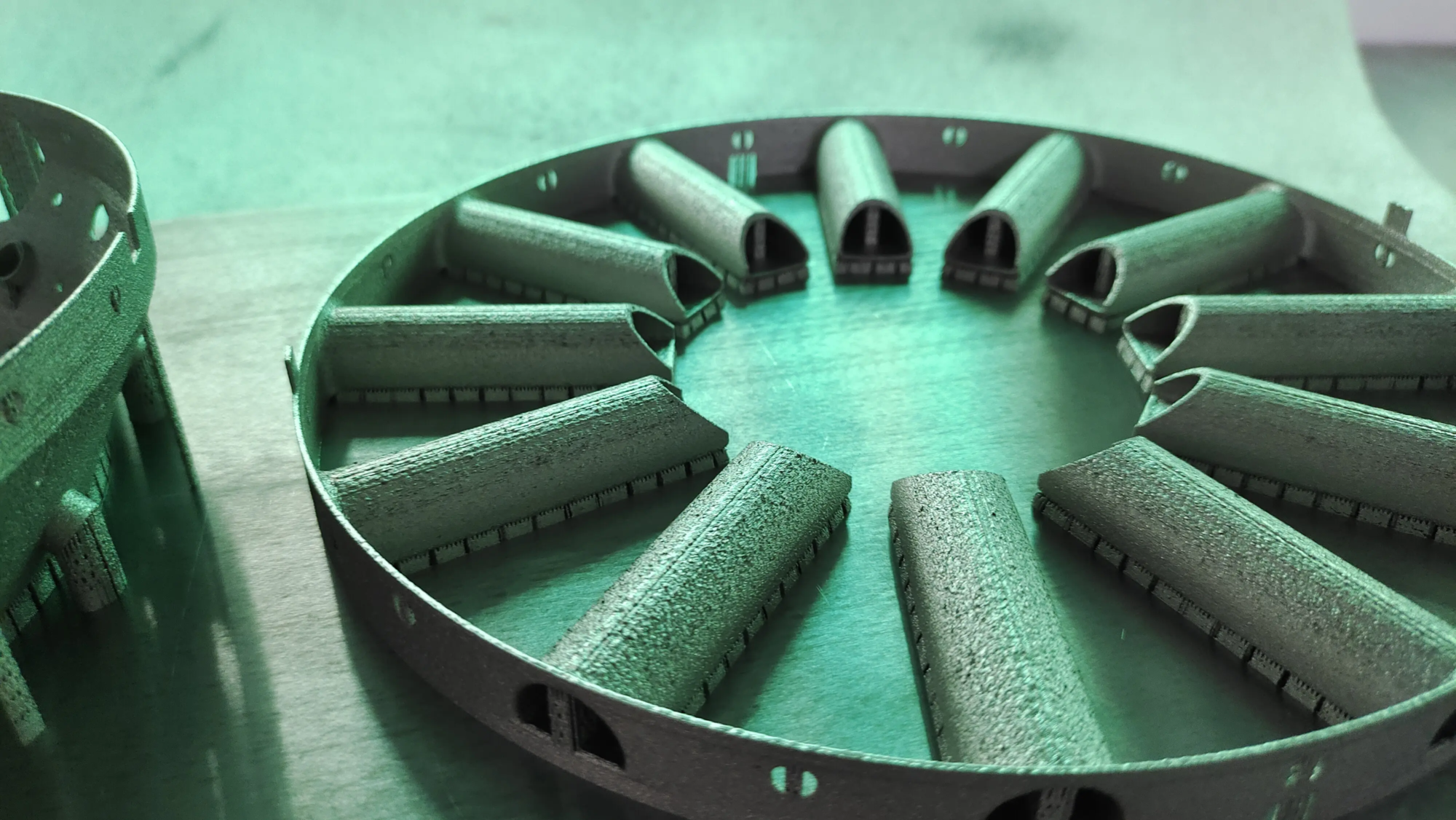
Imagine software cutting a cross-section of a 3D printed object. The outermost border has no sparse fill printed; it is constructed with continuous concentric lines that trace the outline of the shape. These continuous loops are yours wall ring or perimeter.
- Function: They form a solid shell that encapsulates the inner filling structure. Think of them as the physical exterior walls of a building, protecting the interior and carrying most of the structural loads and external forces.
- Visual: They define the visible outer surface of the print. The quality and setup of these walls directly affects surface smoothness, detail resolution, and overall aesthetics.
Key parameters that define wall rings
Controlling wall performance revolves around a few key settings in the slicer software:
- Wall thickness: This is all The thickness of the entire enclosure, measured in millimeters (mm). It is not the thickness of an individual thread.
- Perimeter/number of walls: This defines How many concentric rings are there? Print to obtain desired wall thickness. Each loop adds another layer.
- Extrusion width: width personal There are extruded plastic lines around each perimeter (and filling/skin). This is usually slightly wider than the nozzle diameter (typical default is about 120% of the nozzle size).
- Wall order (outside then inside/inside first then outside): Determines the order in which contours are printed. "Outside first then inside" Typically provides the best dimensional accuracy for external features.
How Wall Rings Interact: Calculating Thickness
this total wall thickness It is fundamentally determined by your choice Number of walls multiply by your Extrusion width:
Total Wall Thickness = Wall Count * Extrusion Width
example: If your extrusion width is set to 0.45mm and you use 3 walls:
Wall Thickness = 3 * 0.45mm = 1.35mm
Make sure your total wall thickness yes At least you specified Nozzle diameter (Ideally, a significant increase in strength). A single wall line (number of walls = 1) printed with a 0.4 mm nozzle only provides a wall thickness of about 0.48 mm – usually not enough.
Why are wall rings so important? (Effects on print quality)
Proper wall setup can have a profound impact on multiple aspects of printing:
- Strength and durability: This is critical, especially for functional prototypes or end-use parts (such as those produced via metal SLM printing). More walls/perimeter increases significantly:
- Impact resistance.
- Resistant to crushing (compressive loads).
- Resistance to bending and deflection (stiffness).
- Shear strength parallel to the layer.
- Dimensional accuracy: Properly configured walls can minimize over/under extrusion artifacts on the surface. Correct wall order ("Outside first then inside") is critical for printing holes and bosses at the expected size.
- Surface quality and finish: A higher wall count and appropriate extrusion width produce a smoother surface. Fewer walls or incorrect extrusion width will emphasize the step effect between layers and nozzle path. Essential for visible decorative parts or surfaces that require post-processing (sanding, painting) like GreatLight’s finishing services.
- Leakage resistance: For containers, vessels, or fluid handling prototypes, adequate wall count/thickness is critical to prevent leakage through the micro-gaps inherent in the fill pattern.
- Protective filling: Walls protect the structurally weaker filling from direct impact or abrasion.
Optimizing your wall setup: practical tips
Finding the sweet spot requires balancing strength, print time, materials, and application:
- Balance the number of walls and infill density: Walls provide primary strength through stiffness; infill provides primarily compressive strength and internal support. You can usually get better overall results (strength to weight ratio and print time) by combining the following:
- Number of medium and high walls: (e.g. 3-6 walls/perimeter).
- Medium filling density: (e.g., 15-35%). Significantly less padding back The walls are thick enough.
- Set effective wall thickness: For PLA/PETG fittings, a total wall thickness of 1.2 mm (eg, 3 walls @ 0.4 mm extrusion width) is a solid starting point. For functional parts, load-bearing parts or metal prints, thicker walls (e.g. 2.0 mm or more) should be used. For thin decorative parts, 0.8mm-1.0mm possible Enough.
- Match extrusion width: Make sure the nozzle can achieve the set extrusion width. The default value is usually safe. Trying a slightly larger extrusion width (for example, 110-130% of the nozzle diameter) can improve layer adhesion and strength, but test first.
- Prioritize wall order: choose "Outside first then inside" Excellent external accuracy in most situations. "Inside first then outside" Can sometimes slightly improve bore quality potential The price of external precision.
- Material matters: Stronger materials benefit greatly from the addition of walls. Brittle materials require thicker walls to resist impact. High temperature or engineering materials such as PAHT CF, PEEK, Ultem or metals such as titanium/aluminum alloys in SLM require careful wall optimization for their specific flow and thermal properties.
- Minimum feature size: Features smaller than yours total wall thickness (e.g. push pins, small text on surfaces) will not form correctly. Adjust your design or slicing strategy accordingly.
Conclusion: Master the External Fundamentals
Wall rings may look like a simple slicer parameter, but they are the foundation for creating truly high-performance 3D printed parts. By understanding the relationship between wall count, extrusion width, and resulting wall thickness, you can precisely control the critical shell of your print. Investing time in optimizing these settings can bring the benefits of increased mechanical strength, sharper dimensional accuracy, smoother visuals and overall reliability. Whether you’re printing beautiful prototypes on FDM or solid metal components via SLM, mastering your walls can’t be ignored for professional-grade results.
Have questions? Wall Ring FAQs
Q1: How many walls/perimeter do I have? real need?
A1: There is no single answer! This depends largely on the function of the part:
- Basic non-functional model: 2-3 walls may be enough.
- Functional prototypes/hands-on parts: Started with 4 walls and test. Add higher loads.
- Rugged Structural Parts/End-Use Components: 5-6+ wall Very common, usually combined with medium fillers (20-30%). For critical metal parts realized through SLM, thickness is specifically analyzed.
- Watertight container: At least 3-5 walls Highly recommended, usually combined with a top/bottom layer of 100% infill near openings.
Q2: Should I set the wall thickness directly or rely on the number of walls?
A2: Most modern slicers mainly use Number of walls and extrusion width indirectly to control the total thickness. Explicit "wall thickness" The setup will usually automatically adjust the number of walls to approximate thickness. It is often more intuitive and reliable to adjust the number of walls directly.
Question 3: Will increasing the number of walls significantly increase the printing time?
A3: Yes, significantly. Print walls continuously at relatively slow facade speeds. Doubling the number of walls can easily double the perimeter print time per layer. Weigh increased capabilities against project timelines. Optimized padding reduction can partially offset this.
Q4: Which is more important for strength, wall thickness or filling density?
A4: Wall thickness is generally more important to the overall stiffness and impact resistance of the part. Infill primarily supports the top layer and adds compressive strength. Dramatically increase strength by adding walls first, Then Adjust the padding down as needed to save time/material without affecting the core structure.
Q5: Will thicker walls prevent layer splitting/delamination?
A5: Thicker walls definitely help, But that’s not the only factor. Stronger interlayer adhesion mainly comes from:
- The optimal printing temperature for the material.
- Cool thoroughly (for thermoplastics).
- Proper extrusion rate/flow calibration.
- Clean, dry filament.
- Good bed adhesion/first layer squeeze.
Thicker walls better disperse stress, reducing the likelihood of bond failure under load. SLM parts are less concerned about layer adhesion and more concerned about laser melt pool dynamics.
From prototype to production-grade performance
exist huge lightwe know that accuracy starts from the beginning – or rather, cycles from the wall. As a professional rapid prototyping manufacturer equipped with advanced Selective Laser Melting (SLM) 3D printers and integrated production technologies, we specialize in solving the challenges of prototyping complex metal parts. Our expertise goes beyond printing; we offer Integrated one-stop post-processing and finishing services – From heat treating and CNC machining to polishing, sand blasting and coating – ensuring your parts meet the highest standards of functionality and aesthetics.
Whether your project requires complex geometries, demanding material properties, or mastering the perfect decorative surface through optimal settings such as wall ring configurations, GreatLight provides reliable, innovative solutions. Most materials are customizableable to handle quickly according to your specific requirements. Need to integrate custom precision machining with your additively manufactured components? We bridged the gap seamlessly.
Find out why Greite is recognized as one of the best rapid prototyping companies in China. Customize your precision rapid prototyping parts today and get superior quality at the most competitive prices. Get a quote and let us turn your vision into reality.