Uncovering the Secrets of Warhammer 40K STL Files: Your Ultimate Printing Guide
The harsh darkness of the distant future beckons, and for enthusiasts, tacticians and artists, Warhammer 40,000 offers an unparalleled universe filled with conflict, lore and intricate micro-warfare. STL files are at the heart of bringing the Emperor’s finest works (or the countless horrors of Chaos and Xenos) from the digital realm to your desktop. These digital blueprints are the lifeblood of custom armies, unique terrain, and replacement parts. However, transforming them into tangible, high-fidelity models requires expertise and the right technology. Whether you’re printing standard infantry, powerful Titans, or vast terrains, it’s critical to understand the entire process from STL to finished product. This guide takes an in-depth look at Warhammer 40K STL files and the advanced 3D printing processes required to implement them, with a special emphasis on when industrial-grade solutions become critical.
Interpreting STL: A blueprint for micro-warfare
An STL (stereolithography) file is a triangular mesh representation of the surface geometry of a 3D model. Within the Warhammer 40K community, STL files range from meticulously sculpted character miniatures and weapons to majestic vehicles and vast terrain pieces like gothic cathedrals or alien landscapes.
- Source: Many STL files originate from talented independent artists and are sold through platforms such as Cults3D, MyMiniFactory or Patreon. Official Games Workshop STL files are rare and mostly related to licensed merchandise. Always abide by the license agreement and respect copyright/intellectual property laws.
- Main features: Successful printing depends largely on the quality of the STL. Look for files with sufficient polygon count (resolution) to achieve smooth curves, manifold meshes (no holes or flipped normals), and correctly scaled parts. Complex models must be carefully pre-supported by the creator or manually supported by the user to ensure successful printing.
Navigating the Print Minefield: Challenges and Solutions
Printing Warhammer miniatures is renowned for its brutal splendor and meticulous detail, but it also faces unique obstacles:
- Extreme detail fidelity: Capturing the intricate structure of Space Marine armor, Eldar runes or Tyranid carapace requires high-resolution printing. Resin-based technologies such as stereolithography (SLA) or digital light processing (DLP) are often the first choice for character miniatures due to their superior surface finish.
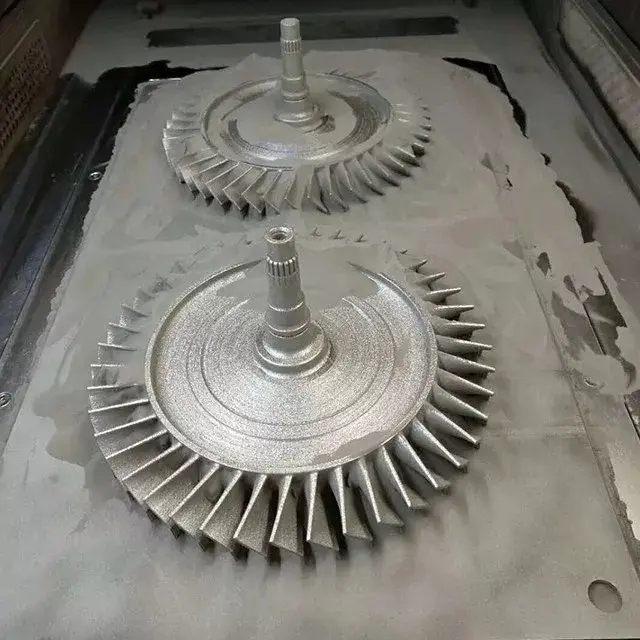
- Scale and complexity: Larger models, such as vehicles or Titans, can change the challenge. It becomes critical to print large parts without deformation, maintain assembly dimensional accuracy, and ensure mechanical strength. While resins are suitable for components, fused deposition modeling (FDM) can provide strength and material economy but often struggles with fine detail. For really sturdy large pieces or metal lovers, Metal 3D printing technologies such as Selective Laser Melting (SLM) Provide unparalleled solutions. At GreatLight, our advanced SLM systems excel at this, being able to precisely fuse fine metal powders layer by layer to create extremely strong, durable and complex metal parts, ideal for large-scale Warhammer projects that require exceptional performance and longevity.
- Structural integrity: It is known that thin elements such as swords, banners or antennas break easily from standard plastics. SLM metal printing Providing the inherent rigidity provided by metallurgy – imagine a chain sword blade Feel Dangerous. For large or load-bearing components within terrain blocks, such as fort bastions, the structural integrity of SLM-produced metal components can permanently solve durability issues.
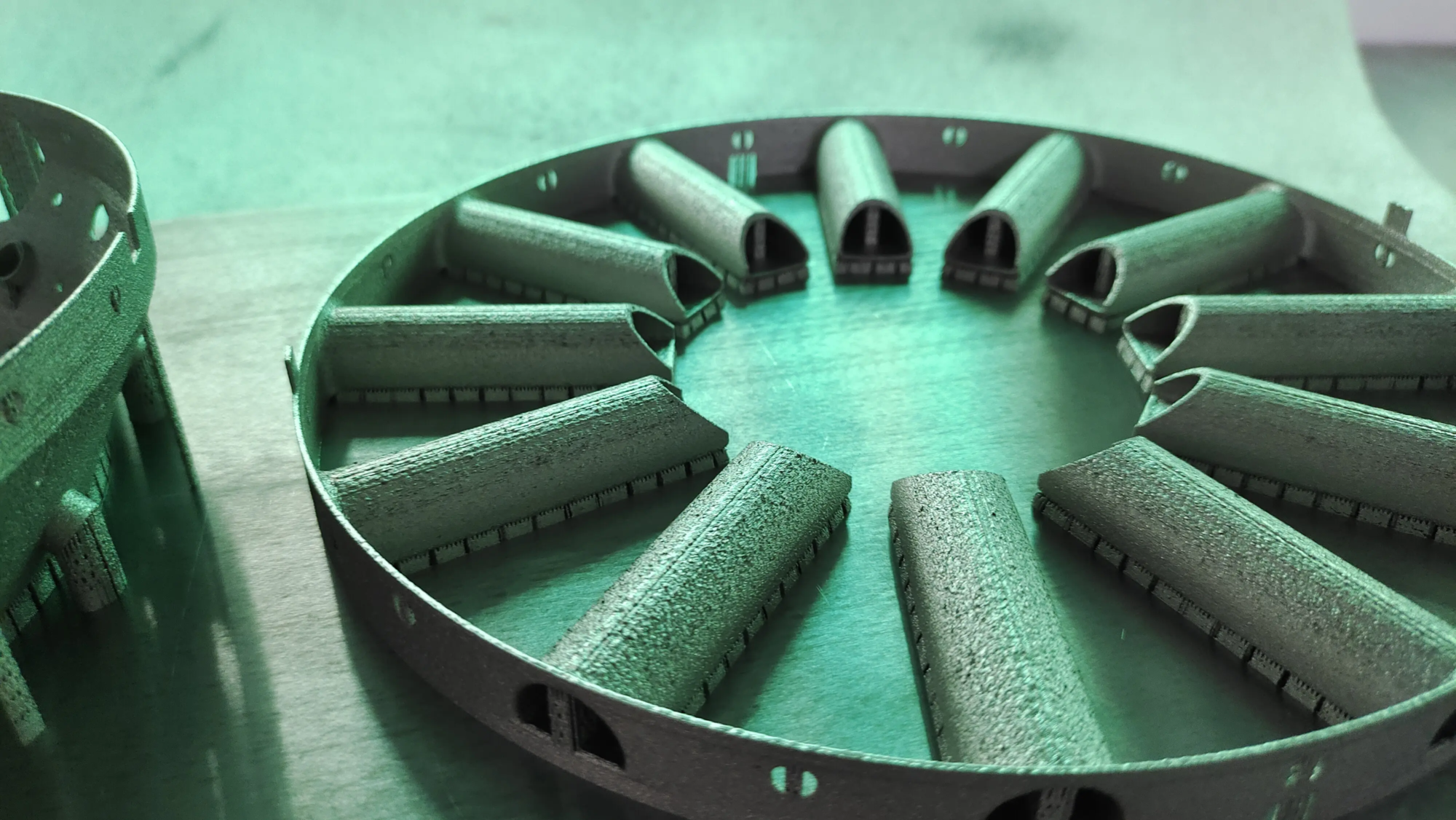
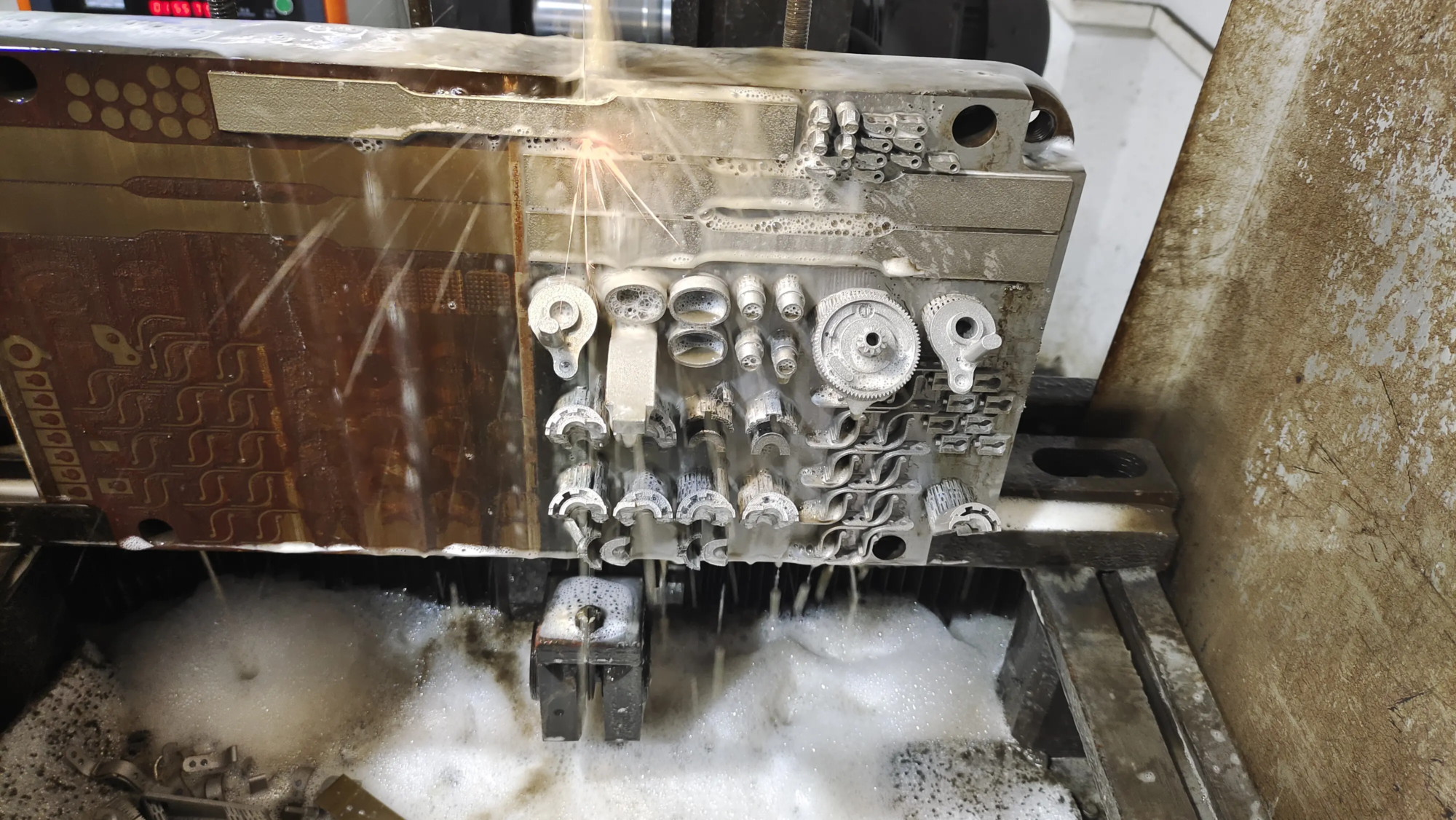
- Support structure and post-processing: Clean removal of supports without damaging delicate details is crucial. Resin prints require careful cleaning and UV curing. Metal printing, such as SLM, requires the same careful removal of thermally conductive metal supports and then specialized techniques to achieve the desired surface finish. This highlights the tremendous value of comprehensive post-processing services.
Materials matter: choosing the right arsenal
The choice of material fundamentally determines your print work:
- Photopolymer resin: Standard for miniatures. Variations such as "ABS-like" Provide resilience, "washable" Simplify cleanup, and "high detail resin" Capture the clearest features. Essential for character models.
- Engineering plastics (FDM): PLA or PETG are often used for parts on larger terrains due to cost-effectiveness and ease of printing, but surface textures may require treatment. ABS has better heat resistance and toughness.
- Metal material: This is where professional SLM printing shines. Materials such as stainless steel (316L), aluminum alloy (AlSi10Mg), titanium alloy (Ti6Al4V) and nickel-based alloy (Inconel) transform STL files into true metal relics of the 41st century. It’s not paint on plastic; it’s paint on plastic. It delivers rugged metalworking precision – perfect for trophies, elaborate weapon replicas or load-bearing structural elements that require absolute resilience and true metal weight. GreatLight specializes in sourcing and processing these high-performance alloys tailored to your project requirements.
The Forge World Finish: Basic post-processing services
Original prints, especially SLM metal parts, have a practical purpose but are rarely suitable for desktop use. Turn them into masterpieces with one-stop post-processing:
- clean: Remove uncured resin or powder residue.
- Support removal: Precise removal without damaging the model.
- Surface refinement: Grinding/polishing resins/plastics; vapor smoothing polymers; SLM Specialty finishing techniques for metals such as CNC machining of critical interfaces, tumbling, sandblasting, hand polishing or painting. Achieving a perfectly smooth Imperial Eagle emblem or a sharp titanium railgun edge requires skilled finishing.
- Assembly and painting: Complex models may require precise gluing or fixing. Professional priming and painting services enhance the quality of the final product.
- Finishing touches: Protective clear coat of plastic/resin or specialized paint/enamel metallization to mimic a metal finish. Real SLM metal parts have inherent metallic properties that paint cannot match.
Working with GreatLight means getting end-to-end expertise: Our advanced SLM capabilities produce unparalleled metal parts, complemented by our extensive workshop that can handle cleaning, support removal, machined friction smoothness, polishing, spraying rough to smooth custom injection molded finishes and painting, ensuring your Warhammer creation is ready for glory on the battlefield or on display.
Conclusion: Command STL printing workflow
Warhammer 40K STL files unleash unlimited creativity. Exploiting them successfully requires grappling with the complexities of digital files, printing technologies, materials, and processing. While resin printing dominates character miniatures, professional SLM metal 3D printing has become the ultimate solution for projects that require the highest strength, durability, authenticity and scale, whether crafting rugged parts for large war machines, complex weapons replicas or terrain frames designed to withstand prolonged conflict.
At GreatLight, we are masters of the entire production chain. With our advanced SLM printers and deep expertise in rapid prototyping and materials science, we turn your Warhammer STL vision into a carefully crafted reality. We seamlessly handle complex metal and plastic printing, complex support removal, industrial-grade CNC machining accuracy enhancements, and superb finishing techniques – all under one roof. Trust our engineering depth, authoritative manufacturing processes, and commitment to quality to turn your most ambitious Mechanicum visions into reality.
Warhammer 40K STL File and Printing FAQs
1. Is it legal to print Warhammer 40K models from STL files?
Under the copyright laws of many countries, printing for personal use is generally acceptable, similar to drawing fan art. Howeverselling printed minis based directly on GW’s designs (even ones you model yourself) is a violation of their intellectual property (IP). Using an artist’s files almost always comes with explicit permission – Read them and respect them. It is illegal to distribute or sell GW’s IP without permission. Create a proxy using STL ("Count as") are usually tolerated within the gaming group if they are clearly your own design or if you purchased a properly licensed commercial file.
2. Where can I find high quality Warhammer 40K STL files?
Explore platforms like Cults3D, MyMiniFactory, Thingiverse, Patreon and Gumroad. Search specifically "40K agents," "[Faction Name] acting," or "Sci-fi STL." Quality varies greatly. Find creators known for their designs "Count as" Applicable to 40K scale models.
3. What type of 3D printer is best for Warhammer miniatures?
For single infantry-sized character models and highly detailed squads, resin printers (SLA/DLP) are generally considered to offer the best balance of resolution, surface finish, and print time. FDM printers are cost-effective for larger vehicles, terrain pieces, or parts that require mechanical strength but less detail. For parts that require superior strength, durability, heat resistance, or true metal properties and weight (e.g., weapon barrels, joints, structural frames for large models), Selective Laser Melting (SLM) metal printing from providers like GreatLight offers an unparalleled professional solution.
4. My STL print fails or details look blurry. Why?
Common culprits:
- Poor documentation: Non-manifold mesh, insufficient triangles/resolution.
- Incorrect settings: Layer height too thick (resin), temperature/flow issues (FDM).
- Poor support: Insufficient support or improper placement can cause warping/failure.
- Poor leveling/UV exposure: Bed not level (FDM), exposure time incorrect (resin).
- Substantive issues: Printer/environment resin error, wet filament (FDM).
- Mechanical issues: Loose belts, worn nozzles/components.
5. Why would I choose Metal 3D Printing (SLM) for Warhammer?
SLM is not suitable for all micromodels, but is suitable for specific applications:
- ULTIMATE DURABILITY: Metal parts resist chipping, breaking, and deforming better than plastic or resin, which is critical for load-bearing joints, delicate weapon barrels, or display pieces.
- Authenticity: Featuring the weight and feel of real metal, it adds an unparalleled sense of realism to weapon replicas or metal armor elements.
- Heat resistance: Ideal for models exposed to heat sources.
- Large/Sturdy Components: SLM excels at producing complex and robust parts integral to large vehicles or terrains that would be weak points if printed via FDM or resin.
- High-tech aesthetics: The unfinished metal pieces inherently embody a certain Mechanicum/Gothic industrial aesthetic. GreatLight handles demanding post-processing, ensuring SLM parts are seamlessly integrated into your project.
**6