Weighted 3D printing: Mastering quality in additive manufacturing
Achieving the perfect balance between lightweight construction and required weight is a common challenge in the world of 3D printing. While plastic polymers dominate the market due to their versatility and affordability, they inherently lack density. This becomes a problem when designing functional prototypes, engineering components, or even consumer products such as gaming models or automotive parts that require specific quality characteristics for authenticity, balance, or mechanical functionality. Strategically adding weight can transform a simple plastic print into a high-fidelity, functional object. Let’s explore the core method behind weighted 3D printing.
Why weight is more important than beauty
Weight is not just a "Premium feel." In functional applications, appropriate quality effects:
- Mechanical properties: Reduce vibration and improve stability (e.g. substrates, mechanical parts).
- Dynamic behavior: Changing the center of gravity of ergonomic tools, balancing rotating parts, or robotic components.
- Simulation realism: Prototypes that imitate metal parts must behave realistically under pressure or movement.
- Acoustic properties: Sound is dampened by increasing the mass density in the enclosure.
- User experience: Achieve satisfactory weight in handheld devices or consumer products.
Overcoming the inherent lightness of polymers requires targeted strategies. Here are the five core methods:
1. Fill density and pattern optimization: software solutions
- method: Increase the internal infill percentage of the printed part. Density as high as 80-100% instead of the typical 10-20% significantly increases mass.
- advantage: Easiest method; completely software driven using slicer settings; seamlessly maintains structural integrity; even weight distribution.
- shortcoming: Material usage and print time increase significantly; relatively low density ceilings, especially standard plastic ceilings.
- Key considerations:
- Use high density infill patterns: Gyroid or Grid provide a good strength to weight ratio. Cubic subdivision provides excellent stiffness.
- Material Selection: Nylon (PA) is denser than PLA or ABS. Consider mixing composite materials if your printer supports it.
- Optimize wall count: Combine high infill with increased perimeter walls (e.g. 4-6) for a solid surface feel.
2. Multi-material printing: direct integrated density
- method: Materials with higher specific gravity are used in the printing process. This includes:
- Metal-filled filament (PLA/PETG/thermoplastic blend infused with stainless steel, copper, tungsten or iron powder).
- High-density resin (SLA/DLP resin loaded with ceramic or metal powder).
- advantage: Precise spatial control; integrates weight directly into the printing workflow; avoids post-processing; enables excellent surface finish.
- shortcoming: Significantly increased cost; increased risk of printer wear and nozzle clogging; requires compatible printer hardware (hardened nozzles, resin magnetic stirrers); has lower mechanical properties than pure metal.
- Best for: Smaller parts that require a metallic look/feel but not the strength of metal; functional prototypes that require local weighting.
3. Design the cavity for the internal counterweight
- method: Voids are strategically designed in the 3D model specifically for the insertion of high-density ballast after printing. Common inserts include steel or tungsten balls, fishing weights, lead shot, or small machined metal blocks.
- advantage: Highly flexible and customizable; allows precise adjustment of center of gravity; uses off-the-shelf, cost-effective insert materials; has excellent weight-to-volume ratio compared to fillers.
- shortcoming: Requires careful upfront CAD design; additional assembly/sealing steps; insert may rattle if not secured.
- Design and execution tips:
- Design trap doors or insertion ports that are easily accessible and sealed after filling.
- Use expandable foam, epoxy, or hot glue to secure the insert and prevent rattling.
- Consider gluing metal plates/shims to the exterior surface for localized weighting.
4. Insertion technology after printing
- method: External or internal added weight back Printing is complete.
- Example:
- Drilling/Milling and Embedding: After printing the cavities are created and weights inserted, then patched/epoxyed.
- External accessories: Epoxy the metal plate/gasket/sheet to the critical surface.
- Resin/Epoxy Doping: Mix metal powder (bronze, steel) into the resin/epoxy and fill the cavity.
- advantage: Universal – No special printers or supplies required; use tools you can use in most workshops.
- shortcoming: Highly manual process; risk of damaging prints; steps required; may affect aesthetics; bond strength limitations.
- Best for: One-off prototypes, modifications to existing prints, or cost-effectively adding significant weight.
5. In-mold weighing (hybrid method – mainly industrial/SLM)
- method: Place solid metal components within Printed envelope during construction. The printer deposits material around the insert, partially encapsulating it. More relevant to real metal printing like SLM/DMLS.
- advantage: Excellent bond strength (metallurgical fusion); integral insert minimizes shifting/vibration; precise positioning on the build platform.
- shortcoming: Requires extensive printer control/calibration; requires precise blade placement (handling at temperature); pause point complexity; risk of device shadowing.
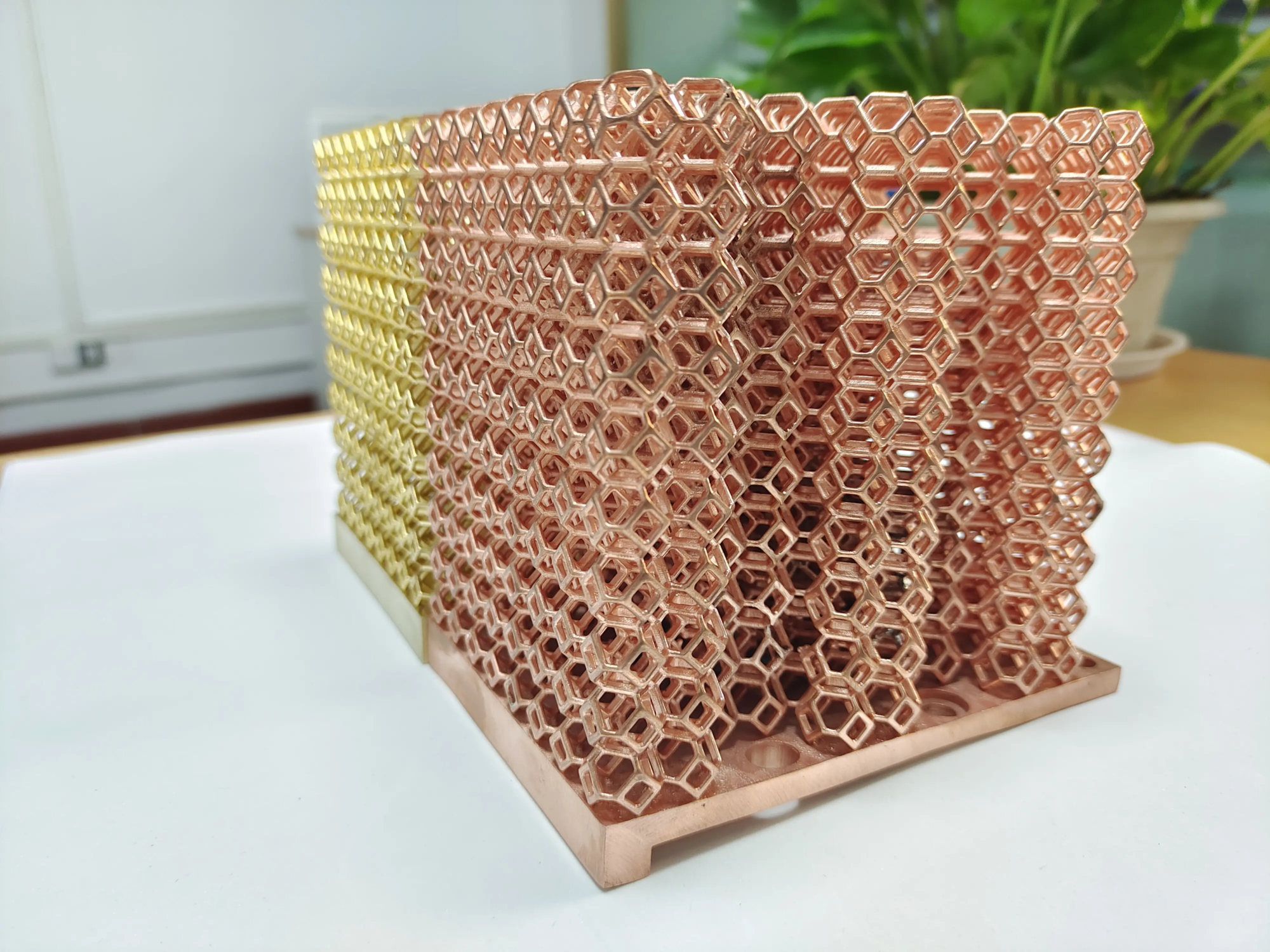
- Best for: Highly specialized functional metal parts require metal reinforcements, such as radiator blocks or prestressed elements.
Leverage expert knowledge for advanced weight management
Consistently achieving complex weighing requirements often requires industrial-grade equipment and engineering expertise. This is where professional rapid prototyping services shine. For example, huge lightLeverage Advanced Selective Laser Melting (SLM) Printer and deep expertise in solving complex metal part prototyping challenges. They understand that weighted parts are not just about additive materials; They require holistic thinking about materials science, mechanical design and post-processing:
- Metal solutions: SLM inherently utilizes dense metals (titanium, aluminum alloys, stainless steel, nickel alloys) to immediately address polymer density limitations while providing superior strength.
- Design insights: Expertise in optimizing topology or designing internal cavities for hybrid weighted approaches.
- Advanced materials: Extensive customizability beyond standard alloys to meet specific density and performance needs.
- Post-integration processing: Professional sealing, finishing, machining and assembly services ensure inserted weights are secure, aesthetically seamless and functionally robust.
- Quick turnaround: Fast processing times for complex custom weighted prototypes.
Ultimately, GreatLight embodies the proactive approach required for demanding weighted prototypes, providing One stop solution From CAD consultation to final finishing – precision parts at competitive prices. Their understanding of EAT (Expertise, Authority, Credibility) ensures designs are grounded in engineering reality.
in conclusion
Mastering weight in 3D printing bridges the gap between visualization and functional realism. From adjusting slicer settings for plastic jewelry to mastering multi-material printing or designing complex cavities for metal inserts, the approach depends heavily on the project’s requirements, budget, tooling and functional needs. For designers and engineers who need precise mass properties or mimic metal properties, especially in functional prototypes, complex metal additive manufacturing services such as SLM/DMLS from providers like GreatLight can completely bypass filler operations to deliver unrivaled results. Whether DIY or professionally sourced, integrated weight can elevate your 3D printed creation from a simple form to a truly functional artifact.
FAQ: Demystifying Weighted 3D Printing
Q1: Can I make my PLA/ABS print heavier? No Use metal inserts or expensive filament?
Answer: Of course. Optimizing the filling density (70-100%) combined with increased wall thickness (5-6 layers) and top/bottom solid layers provides the simplest solution. Consider printing fully solid geometries whenever possible, although this will significantly increase time and material usage. Choosing inherently denser plastics such as nylon (PA) instead of PLA can also help.
Q2: What is the best filling pattern for adding weight?
A: To maximize material density evenly: cubic subdivision, gridor Straight type Very effective. Avoid patterns like concentric circles or triangles, which may concentrate material in certain areas. gyroscopeWhile very effective for power/weight balance, it may not be effective at maximizing absolute mass density.
Q3: How do I calculate how much weight I need to add?
A: Determine the target quality. Weigh the printed plastic part. Calculate the difference. Consider the density/material of the insert. Simple physics: mass (M) = density (ρ) x volume (V). If used for encapsulation, make sure fillers (epoxy, resin, foam) are included in the mass calculation.
Question 4: Is it cheaper to 3D print heavy plastic parts or traditional manufacturing?
Answer: Geometry determines cost efficiency. For complex shapes or low-volume batches that require complex in-house weighing, 3D printing can often maintain economics by eliminating expensive tooling. Simple, heavy-duty blocks can be CNC machined more cheaply from solid metal. Multi-material/heavy-fill printing or inserts enable the economical use of inexpensive plastic/metal inserts to create complex prototypes. Professional metal additive manufacturing is priced competitively with complex CNC machining.
Question 5: Which process is most effective for demanding functional metal prototypes that require optimized weight/strength?
one: Selective Laser Melting (SLM) or Direct Metal Laser Sintering (DMLS) is unparalleled. company likes huge light Focus on this, using industrial SLM printers to directly produce dense, strong, low-porosity metal parts. They offer customization of multiple alloys (AlSi10Mg, Ti64, SS 316L), advanced structural optimization using lattice/topology, high dimensional accuracy, and necessary heat treatment/post-processing to meet demanding applications requiring precise mass distribution and durability.