Unleashing tomorrow: How XLP 3D printers are redefining the speed of metal additive manufacturing
In an era of rapid innovation, the race to quickly transform digital designs into functional metal parts is relentless. Traditional manufacturing bottlenecks—prototyping delays, tooling limitations, expensive iterations—can hinder progress. enter XLP 3D printer— A leap in technology isn’t just accelerating printing; it’s reimagining what’s possible with metal additive manufacturing. At GreatLight, we champion this revolution, combining cutting-edge selective laser melting (SLM) technology with deep engineering expertise to transform complex visions into tangible realities faster than ever before.
Why speed isn’t optional—it’s essential
Time is a luxury that modern industry cannot afford. Whether it’s iterating on prototypes for aerospace components or producing critical medical implants, faster turnaround can translate directly into a competitive advantage. Traditional SLM printers balance speed and precision: print at too high a speed and defects will appear. XLP breaks this compromise. Leverage Multi-laser collaboration (up to four laser configurations), smart Dynamic beam controland AI-driven thermal management, which enables printing speeds 80% faster Better than standard systems – without sacrificing dimensional fidelity or material integrity.
Behind the Speed: Engineering Excellence
The breakthrough of XLP lies in its harmonious integration of hardware, software and materials science:
- Hyperparallel laser processing: Multiple high-power lasers operate simultaneously to evenly distribute energy across the entire printing platform. This eliminates hot spots and enables even layer fusion faster than ever before.
- Real-time adaptive scanning: Proprietary algorithm monitors melt pool stability millisecond by millisecond. If irregularities occur, laser parameters are automatically adjusted during the printing process, greatly reducing errors such as warpage or porosity.
- Airflow optimization: Vortex-enhanced inert airflow system prevents oxidation and effectively removes debris, ensuring consistent metallurgical performance during acceleration.
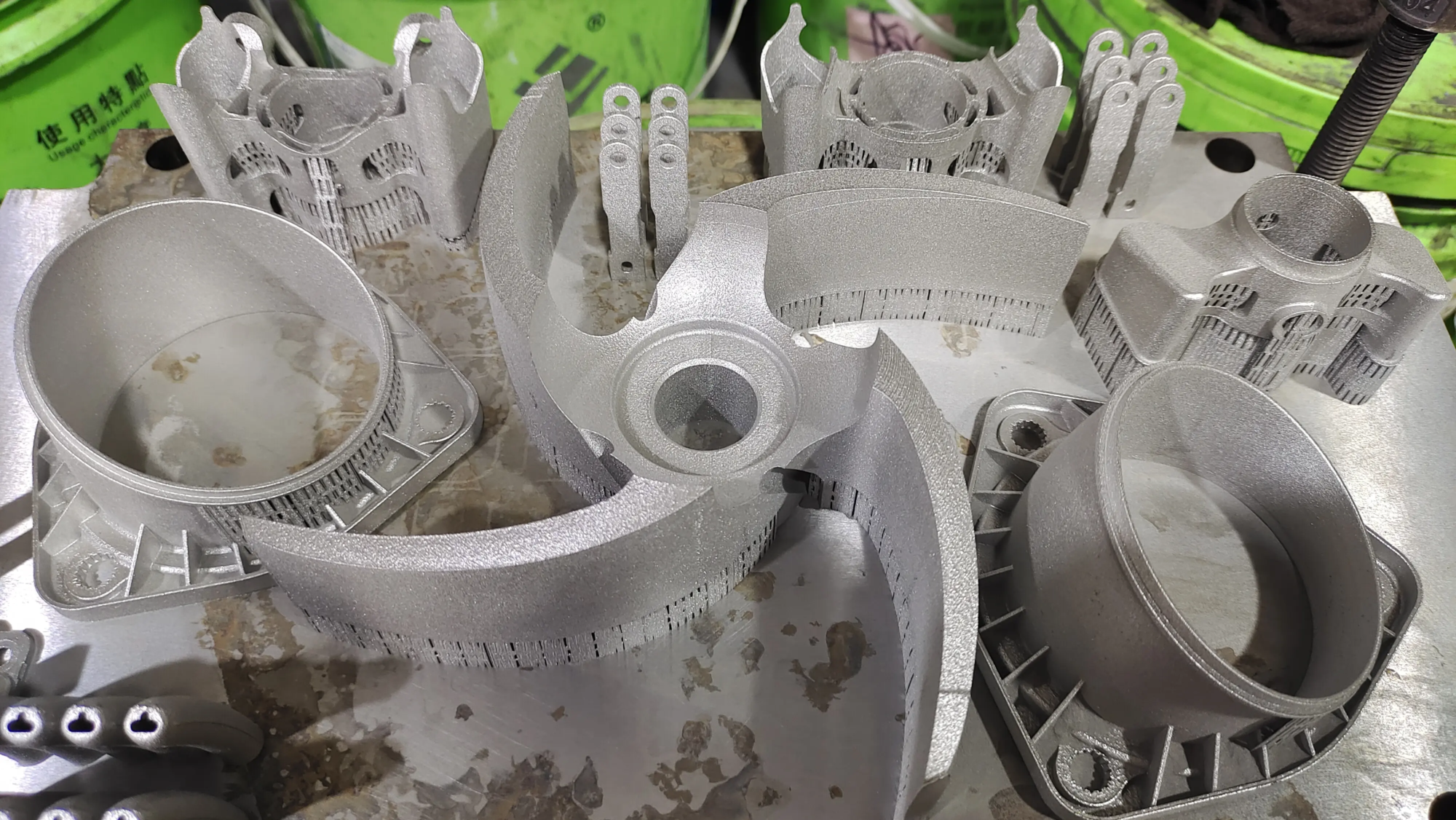
Crucially, this speed is not limited to “simple” geometries. Complex lattices, thin-walled structures, and organic topologies preserve perfect resolution—a blind spot for many “high-speed” competitors.
From prototyping to production: the GreatLight advantage
Speed alone is not enough, effort is also required. Total solutions drive value. as a Certified Level 1 Rapid Prototyping PartnerGreatLight leverages the speed of XLP in our end-to-end service ecosystem:
- Material diversity: Print aerospace-grade titanium (Ti6Al4V), corrosion-resistant stainless steel (316L), lightweight aluminum (AlSi10Mg), and specialty alloys such as cobalt-chromium or inconel – all of which can be customized for niche applications.
- Seamless post-processing: Our in-house capabilities include CNC machining, precision grinding, EDM, polishing, powder coating and heat treating. Transition from original print to finished piece under one roof.
- Scalability: Whether testing a single medical prototype or scaling to mid-volume production (500+ units), XLP’s speed-to-throughput ratio significantly reduces cost per part.
For example, an automotive customer used our XLP service to reduce turbocharger prototype verification time from 14 days to 2 days, shortening its development cycle by 600%.
Revolutionizing industries – one layer at a time
- medical: When designing surgical guides or patient-specific implants, speed is important. XLP enables rapid biomechanical validation and biocompatible stainless steel printing.
- Aerospace: Safely accelerate testing of lightweight aerospace components – Print heat-resistant Inconel turbine blades with competitive economics.
- car: Overcoming electric vehicle battery cooling plate bottlenecks with complex copper alloy structures produced overnight.
These are not assumptions; They are an everyday reality powered by GreatLight’s XLP platform.
Conclusion: A combination of speed and substance
The XLP 3D printer is more than just a device, it’s a paradigm shift. By removing traditional speed barriers while maintaining rigor (microstructural uniformity, fatigue resistance, density ≥99.8%), it empowers engineers to innovate without fear. At GreatLight, we combine this strength with decades of metallurgical expertise, a rigorous ISO 9001 certification process, and white-glove support. For those redefining the future of the industry, compromising on speed or quality is not an option. XLP ensures you don’t have to.
Ready to speed up your metal parts production? Contact GreatLight today – precision delivered at the speed of tomorrow.
FAQ: Answers to your XLP 3D printer questions
Q1: How fast "high speed" Print using XLP?
Using a four-laser SLM system, the XLP printer can achieve a peak aluminum printing speed of approximately 700 cubic centimeters per hour, significantly faster than traditional printers. Actual speeds vary based on material density and geometric complexity, but average project delivery time is reduced by 60-80%.
Q2: Can XLP handle large or highly complex parts?
Absolutely. Our printers feature build volumes up to 800 x 400 x 500 mm² and patented beam control for complex lattices (<100 µm wall thickness) with consistent repeatability (±25 µm accuracy).
Q3: What metals can be processed by the XLP printer?
GreatLight supports Ti6Al4V (Grade 5), stainless steel (316L/17-4PH), aluminum (AlSi10Mg), cobalt-chromium alloys, Inconel (625/718), copper alloys and custom alloys for special requirements.
Q4: Does GreatLight assist in design optimization?
Yes. Our engineers provide design for additive manufacturing (DfAM) consulting—reducing support structures, optimizing weight/strength ratios, and mitigating residual stresses—to leverage the speed of XLP.
Q5: What is the turnaround time from order to shipment?
Standard item delivery 3–5 working days— Benefit from XLP speed and streamlined workflow. For ultra-urgent needs (e.g., 24-hour prototype turnaround), expedited service is available.
Question 6: How does the cost compare to traditional CNC or slower SLM printing?
By reducing machine time, labor and waste, XLP printing provides Cost reduction 20–40% For prototypes/low volume vs. machining. At scale, the economics are shifting further toward additive manufacturing, especially for complex parts where tooling costs dominate.
Q7: Does Honglaite’s service include post-processing?
Yes. From printed output to finished parts (including heat treatment, surface polishing or complex machining), we handle all post-processing under a certified quality system.
Increase your speed of innovation. Visit GreatLight-prt.com to request a quote – speed isn’t just promised, it’s printed in metal.