XJET 3D Printer: Mapping the Path to Future Innovation in Additive Manufacturing
The additive manufacturing industry is underway, driven by groundbreaking technologies that challenge conventional production restrictions. Among these pioneers, XJET 3D printing technologyespecially its patents Nanoparticle jetting (NPJ) processit is the catalyst that changes how we conceive and manufacture complex metal and ceramic components. As a leader in professional rapid prototyping and manufacturing, Greglight Lovers Advanced Technologies like XJET’s NPJCombining industry-leading SLM (Selective Laser Melting) systems and comprehensive post-processing capabilities to effectively solve complex metal component challenges. This in-depth dive explores cutting-edge innovations that promise to drive XJET technology forward and redefine industrial manufacturing.
The current power of nanoparticle jetting: the foundation of innovation
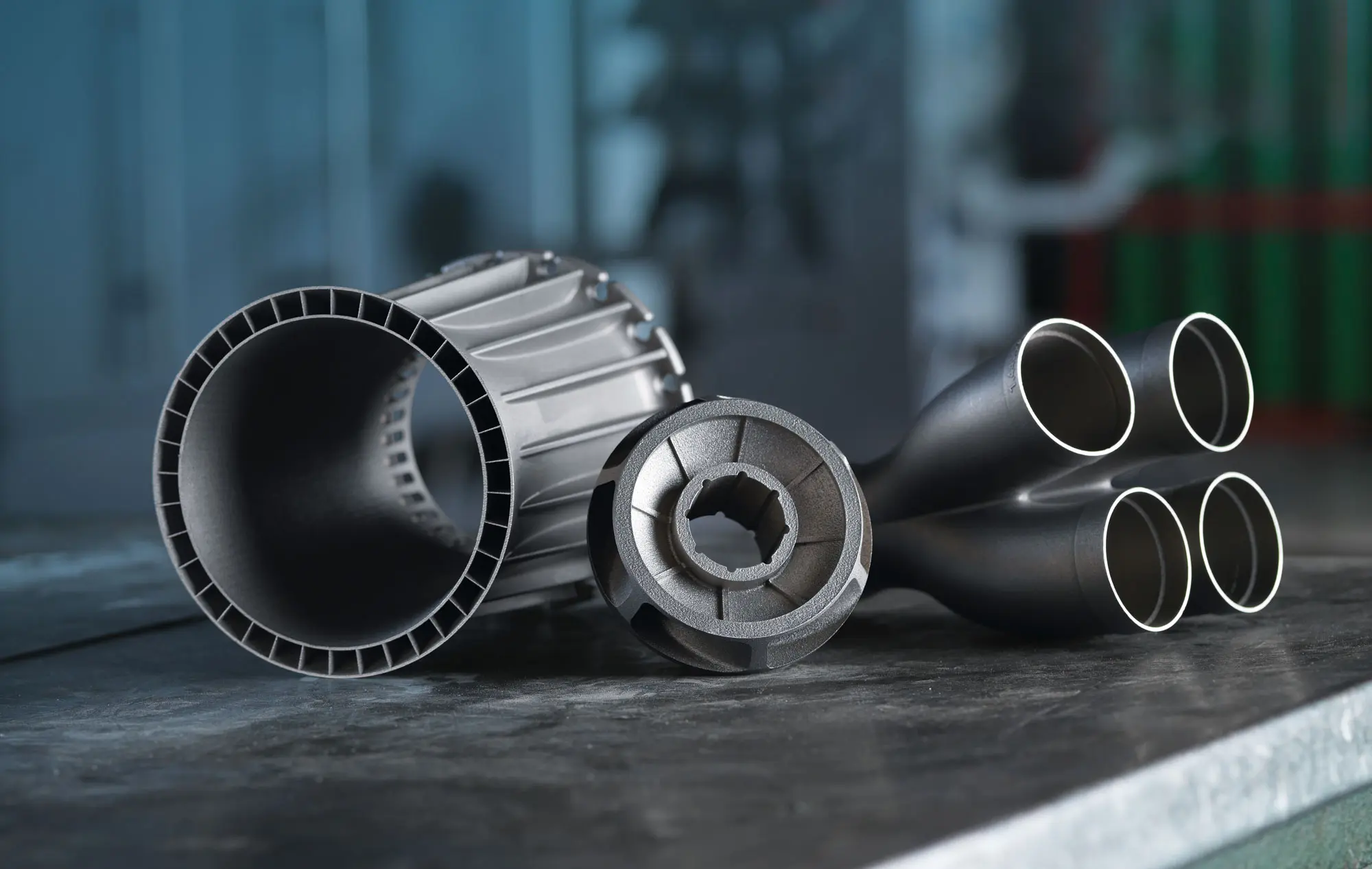
The core of XJET’s NPJ technology is different from the traditional metal 3D printing method. Instead of using a layer of melted metal powder, NPJ suspends ultrafine metal or ceramic nanoparticles in a liquid carrier, spraying them accurately onto the construction tray through thousands of micro nozzles. Secondary support material is deposited simultaneously. The carrier is then sintered at high temperature to remove and the nanoparticles are fused, leaving behind dense high-purity components with special resolution and surface quality. Key existing advantages include:
- Unparalleled details: Ability to produce fine features, thin walls and complex internal geometries, and powder beds are not possible.
- Top surface finish: The widespread post-processing demand has been greatly reduced.
- Material purity: Nanoparticle fusion enables high density and homogeneity, which is crucial for aerospace and medical implants.
- Multi-material potential: The basis for co-printing of metal and ceramics within a single section.
Future innovation shapes the next era of XJET technology
XJET’s trajectory points to deeper capabilities:
-
Extensions of the Material Library: Current products such as stainless steel, titanium and ceramics such as zirconia pave the way for next-generation alloys, super alloys (e.g., inconel variation), functional graded materials (FGMS), and advanced ceramics for extreme thermal or corrosive environments. This will unlock applications in energy, defense and cutting-edge electronics.
-
Throughput increased dramatically: Speed is still the focus area. Future iterations may combine faster printheads with higher nozzle density, optimized sintering cycles leverage AI-driven thermal management and larger build volumes. Combining these will significantly increase productivity, thus allowing XJET to produce production for larger batches.
-
Intelligent process control and AI integration: Embedded advanced sensors (thermal imaging, in-situ optical monitoring) are used in combination with machine learning algorithms to enable real-time defect detection, closed-loop parameter adjustment and sintering during printing, predictive maintenance, and ensure part quality – minimizing waste and ensuring reliability to the production environment.
-
Maturity of multi-matter and gradient manufacturing: Go beyond simultaneous material deposition to precisely control material composition within a single part. This enables a hierarchical assembly (eg, a turbine blade with a ceramic tip that can withstand heat while a metal base has structural strength). XJET’s inkjet approach is the only positioning that can grasp this complexity.
-
Enhanced automation ecosystem: Seamless integration with automated post-processing solutions (e.g., robot strikethrough, automatic support for deletion, integration checking) will create a complete "The light comes out" The manufacturing unit is centered on XJET technology. This solves the post-processing bottleneck.
- Sustainability drives: Optimizing material utilization (minimizing waste powder), using environmentally friendly carrier media, and an energy-saving sintering process consistent with the circular economy principles will be key innovation drivers.
Great Advantage: Expanding cutting-edge prototyping and production
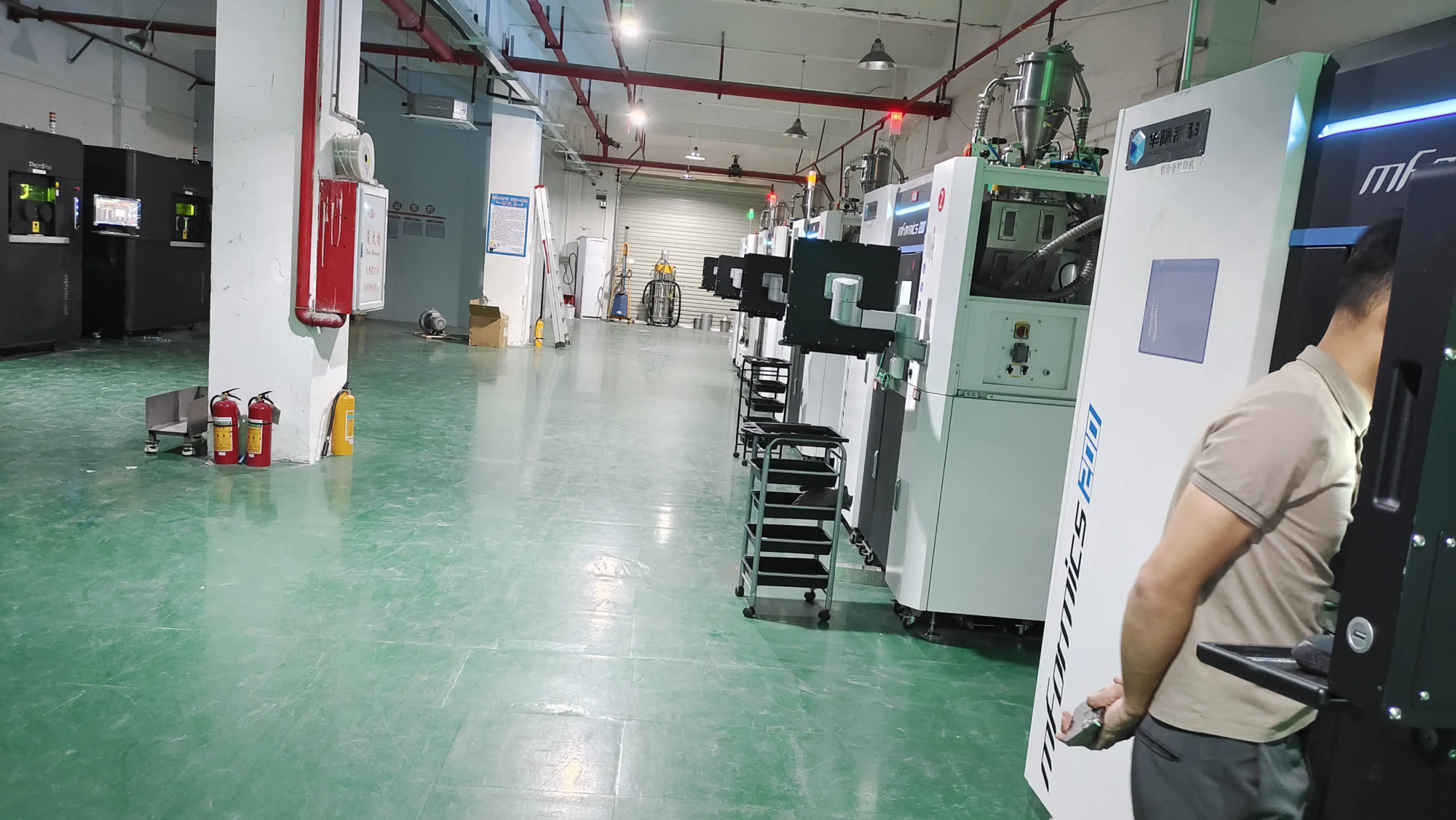
As these XJET innovations unfold, access to expert application engineering has become crucial. Rapid prototyping Leveraging its deep expertise in advanced additive manufacturing, including XJET technology and SLM, put customers at the forefront:
- Expertise on NPJ and SLM convergence: Understand when high precision and surface quality (intensity of NPJ) or pure structural integrity and speed (intensity of SLM) are optimal for projects, or how they complement each other.
- One-stop advanced post-processing: It is crucial to realize the potential of XJET parts. Greatlight offers comprehensive finishing – from precise CNC machining (to achieve the ultimate critical tolerance beyond sintering) and surface treatments (polishing, coating, heat treatment) to quality inspections.
- Rapid material innovation response: Ability to quickly evaluate and prototype new materials when using XJET systems, giving customers early access to next-generation material properties.
- Scalability from prototype to production: Support customers throughout the journey, from functional XJET prototype verification to experimental production and scalable volume manufacturing solutions optimized for TCO.
in conclusion
The future of XJET 3D printing is undeniably bright, anchored in innovations that will improve accuracy, expand the possibilities of materials, accelerate speed and deepen process intelligence. Its unique nanoparticle jet technology will go beyond specialized applications, especially for high-value components that require unparalleled details and surface integrity. For today’s engineers and innovators seeking solutions, Greatlight embodies the bridge to this future. Combining XJET, SLM manufacturing, comprehensive in-house post-processing and fast custom material functionality, Greglight has a unique position to transform complex design challenges into high-performance, precise manufacturing reality. Working with authoritative providers like Greatlight not only provides access to cutting-edge technology, but also ensures that it reaches its full potential, accelerates time to market and maximizes the expertise needed to ROI. The era of advanced additive manufacturing is here, driven by innovations like XJET and enabled by advanced manufacturers such as Greatlight.
FAQ (FAQ)
Q1: What makes XJET technology fundamentally different from other metal 3D printing?
one: XJET uses nanoparticle jetting (NPJ), a jet liquid suspension containing metal nanoparticles, rather than fused metal powders (such as SLM/SLS) or metal adhesive jetting. This allows for higher details, smooth surface surfaces, high material purity and unique support structures that are easily washed away.
Question 2: What is the most promising application developed in the future by XJET?
one: Enhanced XJET features will be revolutionized:
- Complex microfluidics and medical implants require extremely high accuracy.
- Turbine assembly with cooling channels and ceramic/metal gradient.
- Dental restorations and implants with excellent aesthetics and biocompatibility.
- Customized end-use parts for aerospace and luxury goods, requiring flawless surfaces.
- Next-generation electronics and sensors have complex geometry.
Q3: Why choose Greatlight for rapid prototyping, involving advanced 3D printing such as XJET?
one: Greglight stands out:
- Provide depth Competitive expertise exist Both Ultra-precision XJET NPJ and high-intensity SLM printing, select the best technology for each requirement.
- supply True end-to-end service: Prototyping, material consultation, CNC machining, heat treatment, surface finishing and quality inspection – all under one roof to ensure quality control.
- Focus on Quick turnaround and customize: Fast and efficient handling of complex geometric shapes and exotic materials at competitive prices.
- use Advanced production technology and expertise to ensure results meet strict functional and aesthetic needs.
Q4: How does XJET solve the challenges of universal metal 3D printing such as pores and pressure?
one: Compared with powder bed melting, the nanoparticle sintering process inherently promotes high density and internal stress reduction. Future innovations focused on AI-driven process control will further mitigate potential defects, such as microporosity during sintering.
Q5: Can XJET handle production, or is it only used for prototyping?
one: XJET’s roadmap highlights prototypes Significantly increase throughput. With larger build volumes and faster printing/sintering cycles, coupled with automated post-processing (e.g., Greatlight’s one-stop service), it is increasingly feasible for low to medium end-use parts production, especially where accuracy and completion are critical.
Question 6: What materials do you currently use XJET to provide? Can we use customized materials?
one: Greatlight utilizes XJET systems to handle a wide range of stainless steel and high-end ceramics. The team actively explores new materials that are compatible with the NPJ process. Customized material treatment is the key force; please consult our engineers to discuss the feasibility and prototype of your specific material needs.
Q7: What are the benefits of integrating AI? How about XJET printing?
one: AI can monitor and automatically adjust printing and sintering parameters in real time to ensure consistent parts quality, predict and prevent defects, reduce waste, optimize energy consumption during sintering, and accelerate process development cycles.
Unleash the potential of super professional additive manufacturing. Partners that can quickly prototypify and produce, leverage cutting-edge features from XJET and beyond.