When Smooth Layers Turn Wavy: Your Comprehensive Z-Strip Troubleshooting Guide
The original 3D print you envisioned will end up being marred by unsightly horizontal lines or ripples on your model – congratulations, you’ve encountered Z-bands (or ribs). This common but frustrating defect can destroy aesthetics, dimensional accuracy, and even structural integrity. But don’t be afraid! Diagnosing and overcoming Z-bands is usually within your control. This guide delves into the mechanics of Z-banding and provides you with possible repair methods based on engineering principles.
Learn about the culprit: What exactly is the Z-band?
Imagine that the stacked layers are perfectly perpendicular to the Z-axis (upward direction) of the print. Z-bands occur when inconsistencies in the stacking process create visible horizontal bands. Instead of a smooth, uniform wall, you see:
- Regular corrugation/rib: Repeating pattern of slightly thicker/thin lines parallel to the print bed.
- sudden change: Parts of layers that are clearly misaligned horizontally.
- Swing surface: The walls are not straight and true.
These defects stem from flaws in the printer’s mechanical movement along The Z axis of the layer change stage. Essentially, when the printer does not consistently move up a layer during each Z-step, the nozzle’s position relative to the previous layer moves horizontally. This misalignment manifests itself as the extruded plastic forming either outside or inside its intended path, creating characteristic bands.
Root Cause: Where the Diagnostic Toolkit Points
Repairing a Z-belt requires identifying the specific mechanical cause. Here’s a breakdown of the most common offenders:
-
Z-axis mechanical binding:
- Bending screw/rod: The Achilles heel of many printers. Defects (bends, kinks, burrs) in the lead screw or linear rod that guides the Z-axis can disrupt smooth motion. The carriage temporarily gets stuck at a certain height before jumping into the correct position, causing the nozzle to move unexpectedly.
- Misaligned components: Bonding stresses can occur from a lead screw that is not exactly perpendicular to the frame, a misaligned brass nut, a poorly installed coupling connecting the motor shaft to the lead screw, or a skewed linear bearing.
- Insufficient lubrication: A dry lead screw or rod can significantly increase friction, causing jerky motion and stalling.
- Over-tight fittings: Overtightening of bearings, nuts, or couplers can prevent smooth vertical movement.
-
Loose components:
- Shaking gantry: If the entire X gantry (fixed nozzle) is not securely fastened to the Z axis (e.g. loose bolts on stepper motor mounts, loose rollers on a Cartesian printer), it may tilt slightly with movement or direction changes.
- Loose waistband: While primarily affecting the X/Y plane, severely loose belts on hybrid CoreXY or Delta designs can cause overall instability, affecting Z motion coordination.
- Loose framework components: A non-rigid and square printer frame introduces compound instabilities affecting all axes.
-
Frame stability and resonance:
- Weak/unstable framework: Due to the lack of rigidity, the vibrations of the stepper motor and moving mass resonate throughout the structure. These vibrations cause subtle vibrations in the printed part when the Z-axis motion changes direction.
- Resonance frequency: At certain print speeds and accelerations, inherent printer frequencies can amplify vibrations, making Z-banding more apparent.
- Mechanical and electrical issues:
- Underpowered Z stepper motor: Uncommon, but possible. If a stepper lacks sufficient torque (especially on a dual-Z setup that is not properly adjusted), it may skip microsteps under load (binding), resulting in inconsistent motion.
- Electrical interference: Although rare, severe EMI can disrupt stepper motor signals.
Arm yourself with the solution: Effective Z-strap repair
Start with the most practical reasons and solve the problem methodically:
-
Comprehensive mechanical maintenance (primary task):
- Visual inspection: Carefully inspect the entire Z-axis: the lead screw for bends/kinks/burrs, the connecting rod for scratches/dents. Roll them out on a flat surface. Turn the lead screw manually with the motor disconnected – feel for any tight spots.
- Cleaning and Lubrication: Clean the lead screw and rod thoroughly (isopropyl alcohol). Apply a thin film of a high-quality lubricant specifically designed for lead screws (PTFE, lithium grease – avoid WD40). Relubricate regularly.
- Check plumbness and alignment: Use precision rulers and measuring tools. Make sure the lead screws are perpendicular to the frame and parallel to each other on a dual setup. Make sure the linear rods are perfectly parallel. If necessary, adjust the mount. Make sure the coupler is concentrically aligned with the shaft without binding.
- Tightness adjustment: Critical! loosen then tighten all Z-axis component system: bolts, brass nuts, couplings, linear bearings, roller eccentric nuts that fix the motor. tension only Enough to eliminate gaps without causing constraints. Brass nuts usually require a slight side-to-side clearance.
- Bug fixes: Replace a bent/crooked rod or lead screw immediately – they are nearly impossible to fix perfectly.
-
Stable ecosystem:
- Square and tighten the frame: Assemble/reassemble the entire printer frame using a precision square and level. Check every bolt! Filmament recommends CNC Kitchen’s meticulous bolt tightening video demonstrates its far-reaching impact.
- Strengthen the gantry: Add triangle brackets on cartesian printer. Make sure the dual Z motors/screws are properly synchronized via firmware such as Marlin (usually requires PID tuning).
- Tension belt: Make sure the X/Y belt has the proper tension (it should sound like a guitar string, not slap).
-
Suppress vibration:
- Rugged installation: Place the printer on a heavy, hard surface (granite slab, heavy-duty desktop, specialized case stand). Avoid flimsy tables that can shake easily.
- Vibration damping: Install anti-vibration feet under the printer frame. Common options: Sorbothane pad, squash cut in half.
- Reduce acceleration/jerk settings: Slower acceleration and lower jerk values significantly suppress ringing/vibration, affecting Z-band expression. Experiment to reduce these settings by 20-30%.
- Motor mounting ribs: Consider printing or purchasing stiffeners for the stepper motor mounts.
- Explore Firmware/Electrical Tuning (Advanced):
- Enable StealthChop/Z-Running: Silent modes are available on TMC stepper drivers such as StealthChop V2/Z-Running (check driver datasheet). Configure it appropriately in the firmware. Smooth current application reduces vibration.
- Check voltage/current: Make sure the stepper driver supplies enough current to the Z motor without overheating. Please consult manufacturer specifications.
- Electromagnetic interference shielding: If interference is suspected, move motor cables away from sensitive electronic equipment and use shielded cables.
Diagnostic workflow:
- Disconnect the motor and manually move the Z axis to check smoothness.
- Clean/lubricate all Z-axis components.
- Check and adjust all mechanical alignment/looseness/tightening.
- Stabilizes the frame/reduces vibrations.
- Adjust firmware settings (acceleration/jerk/TMC driver).
- Systematically replace damaged components.
Conclusion: Precision starts with a solid foundation
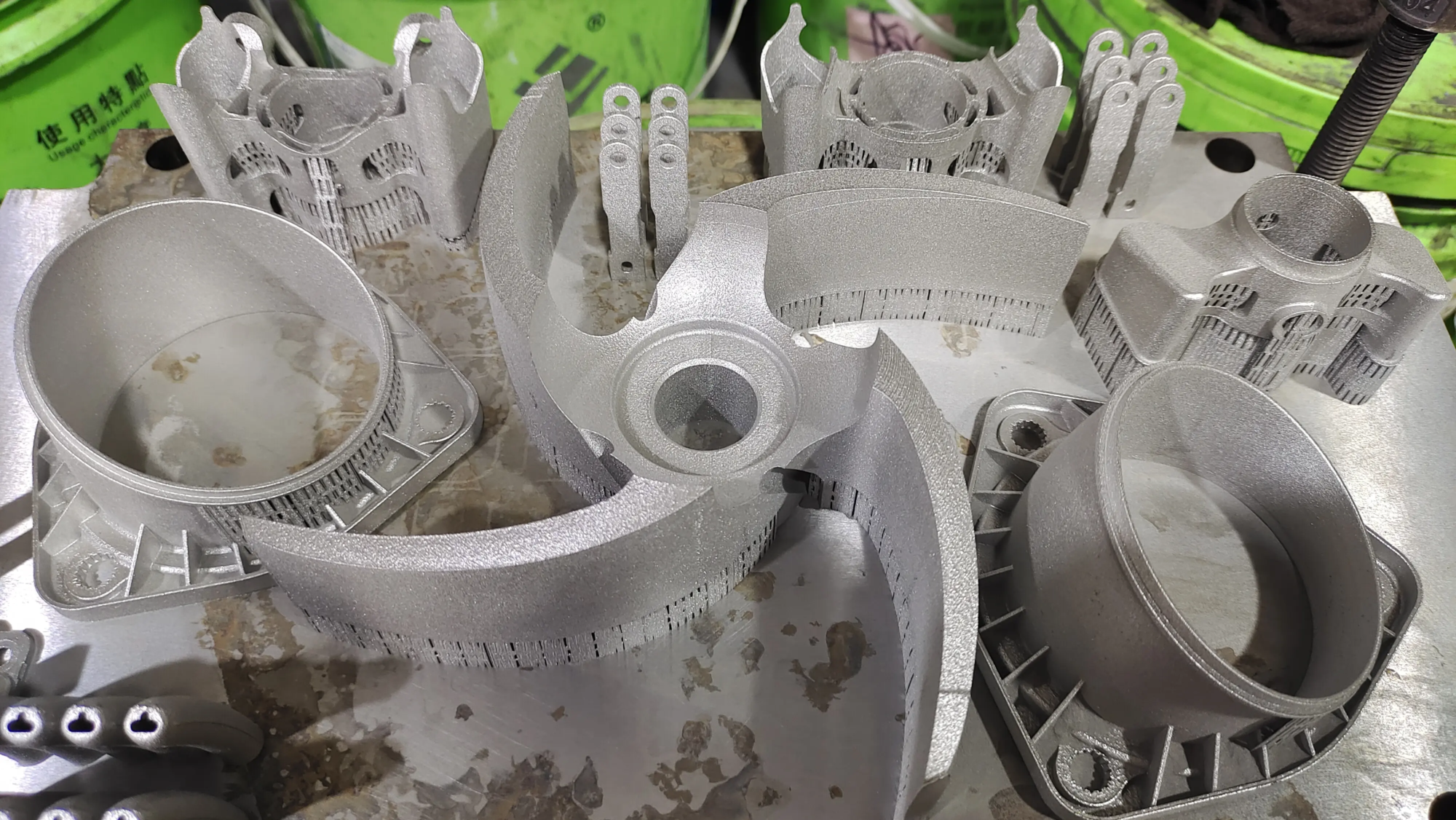
The Z-belt is fundamentally a mechanical problem that exposes a flaw in the printer’s movement along the vertical axis. While frustrating, the cause can usually be identified and resolved with diligent mechanical adjustment, alignment, stabilization, and vibration control. GreatLight utilizes advanced SLM metal 3D printers, known for their superior structural rigidity and carefully maintained motion systems that minimize inherent Z-axis inconsistencies, resulting in flawless metal prototypes. For complex geometries that require extreme precision, where even tiny strips are unacceptable, working with professionals equipped with industrial-grade equipment often yields superior results. Methodically applying these troubleshooting principles enables your DIY printer to produce very smooth printing. Persistence pays off – conquering the Z-band can elevate your prints from merely functional to impressively professional.
FAQ: Demystifying the Z-Strap
-
Q1: Can filament problems cause Z-bands?
- one: Usually not basic reason. Wet filament may cause extrusion changes look Similar to inconsistent layers, but usually produces random spots/zits rather than predictable bands that are highly correlated with Z. Material inconsistencies causing shrinkage/seizing may have an indirect effect by changing the forces on the gantry, but fix the mechanism first!
-
Q2: I clean/lubricate everything and this still happens! What now?
- one: Carefully recheck alignment and squareness – often overlooked points include coupler concentricity, parallelism Both Rods and frame box squareness on dual setups. Check linear bearings for wear/sticking. Eliminate electrical interference. If feasible/affordable, replace the lead screw. Consider combining various vibration reduction methods and reducing speed.
-
Question 3: Is Z-hop the fix for Z-banding?
- one: Won’t. Z-hop lifts the nozzle between moves to avoid collisions and reduce stringing/spotting. It does not address potential mechanical instabilities causing positional shifts period layer deposition, which is the source of the banding. It may even slightly mask the severity, but it won’t cure it.
-
Question 4: Why do my strips appear worse/lighter in specific locations?
- one: Z-axis defects (bends) are often uneven. More severe bonding may occur at certain heights due to screw/rod misalignment. Changes in print geometry (thin walls vs solid infill) or print speed/acceleration at different Z-heights can also affect the extent of visible/resonant vibrations.
- Q5: Dual Z-axis solves all my problems, right?
- one: Double Z motor/screw provides better stability if Perfectly aligned and synchronized. However, mechanical bonding of the lead screw, poor lubrication, misalignment between screws, loose mounting, or stepper drive adjustment issues can all cause still Can cause banding even on a double Z setting. The installation itself requires precise calibration.
Achieve process accuracy beyond compromise with GreatLight
When Z-straps and other complex 3D printing challenges threaten project timelines or part integrity, rely on engineering-grade solutions. huge lightis a leader in rapid prototyping companies in China, utilizing advanced SLM additive manufacturing technology and strict process control to consistently deliver metal prototypes without artifacts such as Z-bands. Our expertise ensures that the printer’s inherent stability is maximized, movements are impeccably calibrated, and every parameter