Unlocking the senses: How 3D printing is revolutionizing children’s toys
Imagine a toy that’s perfectly shaped for a child’s unique grasping abilities, textured specifically to appease their sensory preferences, or designed to meet precise developmental needs. This is not a futuristic fantasy; This is the realization of reality 3D printing technologybreathing new life into the world of sensory toys. These customized tools can be transformative for children exploring their senses or dealing with challenges such as autism spectrum disorder (ASD), ADHD, or sensory processing differences. When it comes to bringing these complex, individual designs into reality reliably and safely, partner with a specialist rapid prototyping manufacturer such as huge light Unleash unparalleled potential.
Understanding Sensory Toys: More Than Just Toys
Sensory toys are specifically designed to engage one or more of a child’s senses: sight, sound, touch, smell, taste (in a safe, appropriate way), and proprioception (body awareness). More than simple entertainment, they serve important developmental purposes:
1 director. Regulation: Help calm children (fidget tools, heavy objects) or awaken their sensory systems (vibrating toys, rotating objects).
- Skill development: Enhances fine motor skills (manipulating textured parts), hand-eye coordination, spatial reasoning, and cause-and-effect understanding.
- Focus and Concentration: Fidget tools can provide an outlet for fidgety energy, allowing you to better focus on tasks.
- Reduce anxiety: Sensory input can be deeply grounding and comforting for children experiencing anxiety.
- Explore and learn: Provides children with a safe way to learn about textures, shapes, sounds and their own bodies.
Traditional sensory toys, while beneficial, are often limited in shape, size, texture, and intensity level. What works for one child may be overwhelming or ineffective for another.
Why 3D printing is a game changer for sensory toys
3D printing or additive manufacturing (AM) fundamentally changes the way sensory toys are conceived, designed and produced:
-
Customization like never before: This is the crown jewel. 3D printing is booming for custom designs.
- Size and shape: The toy scales perfectly to your child’s hand size, grip strength or specific movement requirements.
- texture: Designers can digitally create complex surface patterns – bumps, ridges, grooves, dimples – precisely calibrated to provide the desired sensory feedback (deep pressure, light touch, vibration patterns when combined with other components).
- Design complexity: Create hollow structures for hidden objects, complex mazes for beads, or unique interlocking pieces not possible with traditional molds.
- Personalization: Incorporate your child’s name, favorite character, or a specific symbol that’s meaningful to them directly into the toy.
-
Rapid prototyping and iteration: This is a place with similar services huge light Really shine.
- Quick test concepts: Educators, therapists, or parents can work with designers to create prototypes based on the child’s needs.
- Observe and refine: The child interacts with the prototype. Does texture work? Is it the right size? Does it feel like the right weight? Gather feedback.
- Quick redesign and reprint: Based on real-world use, adjustments are made digitally and revised prototypes are printed incredibly quickly—often within days. This iterative cycle ensures that the final toy is perfectly customized, minimizing waste of time and resources compared to traditional manufacturing.
-
Material Versatility and SafetyФ: Modern 3D printing offers a range of materials suitable for sensory toys:
- People’s Liberation Army: A popular biodegradable plastic derived from renewable resources (cornstarch, sugar cane). Offers a wide range of food safety options. Provides good rigidity to structural parts. GreatLight ensures strict material sourcing and processing. *
- TPU/flexible filament: Create soft, squeezable, bendable parts, necessary for chewable tablets, soft balls or pliable textures. Critical to oral motor needs.
- Polyethylene glycol: Combines durability and impact resistance with good chemical resistance and is easier to print than other products. Typically used for durable items such as puzzles or spinning tops.
- SLA/DLP resin: Produces extremely smooth surfaces, fine detail (ideal for complex textures) and transparent/translucent options. Industrial-grade biocompatible resins have higher safety certifications.
- Safety first: Professional manufacturers such as huge light Prioritize biocompatible, non-toxic materials that are suitable for children. They ensure rigorous post-processing (cleaningomez smoothing) to eliminate any manufacturing residues and achieve a child-safe finish. Complying with international toy safety standards (e.g. ASTM F963, EN71) is a catch-all requirement.
-
Cost-effective small batch production: No expensive injection molds required! 3D printing can economically produce small batches or even single-piece custom Tier toys. This makes personalized sensory solutions truly within reach.
- Design freedom and complexity: Unleash your creativity! Create organic shapes, interconnected moving parts (like a gyroscope inside a ball), graded textures, or puzzles that integrate unique sensory elements into the challenge. 3D printing can handle complexities that other methods struggle with.
The role of a professional rapid prototyping partner such as GreatLight
Transforming innovative sensory toy designs from digital files into safe, high-quality physical objects requires extensive expertise and advanced technology. At this point, it’s crucial to work with an experienced rapid prototyping company:
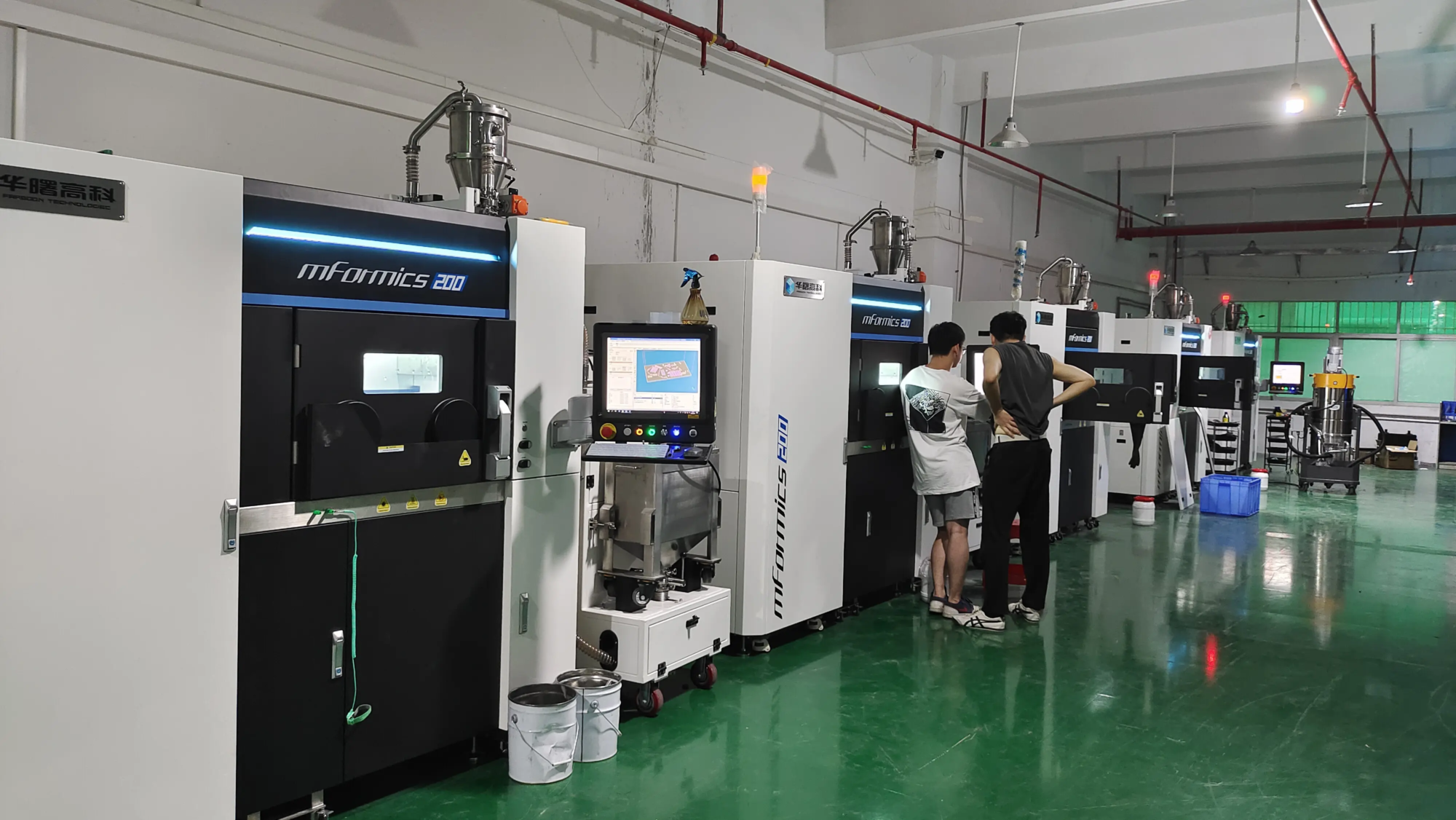
- Advanced equipment: manufacturers like huge light Utilize industrial grade SLM (Selective Laser Melting) Metal printers (critical for certain durable components or molds) as well as a variety of high-precision polymer printers (FDM, SLS, SLA/DLP) to handle a wide range of materials and project requirements.
- Materials Science Expertise: Understanding the properties, biocompatibility, safety certification and post-processing requirements of various printable materials is critical for children’s products.
- Precision and Quality Control: Meticulous attention is required to ensure dimensional accuracy, surface finish quality, material integrity and eliminate any minor printing defects