Unlocking Innovation: The Ultimate Guide to 3D Printing Slingshots
introduce
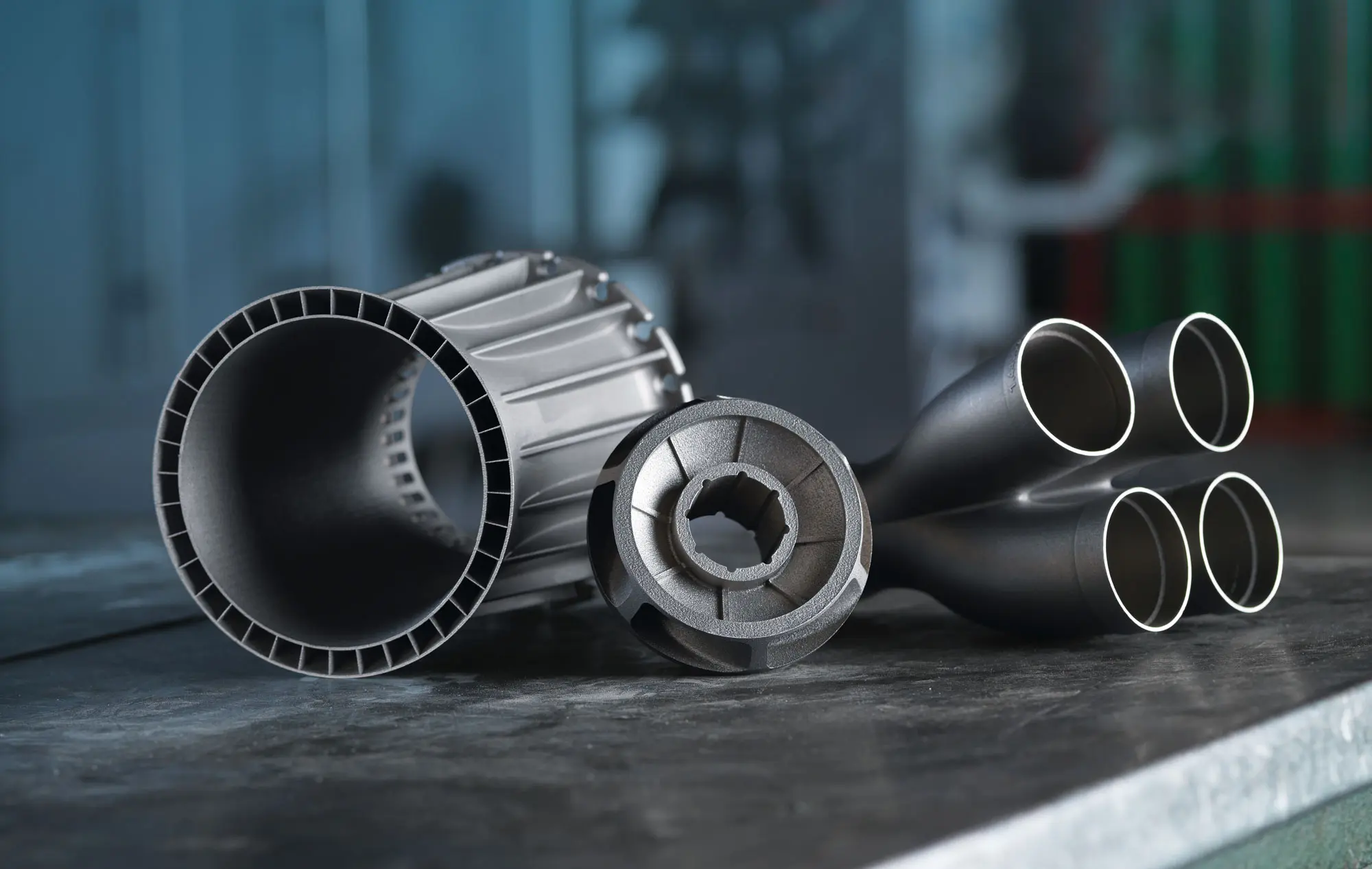
Slingshots evoke nostalgia, but modern engineering has transformed them into precision tools. 3D printing is a game changer as hobby merges with cutting-edge technology. At GreatLight, we leverage advanced SLM (Selective Laser Melting) technology to redefine what’s possible and push rapid prototyping beyond its limits. In this guide, we’ll explore how 3D printing can breathe new life into slingshot design, blending creativity with engineering excellence.
Why choose 3D printed slingshot?
Traditional slingshots rely on basic carvings or simple molds, limiting ergonomics and strength. 3D printing breaks down these barriers:
- custom made: Laser scans your grip for a personalized ergonomic design.
- Iterative development: Prototype in days instead of months.
- Material flexibility: Available from polymers to aerospace metals.
- Structural accuracy: Optimized weight distribution through a lattice structure that cannot be achieved by machining.
For hobbyists and industrial designers alike, the Print Slingshot embodies the power of rapid prototyping – turning digital concepts into high-performance reality overnight.
Material Selection: Balancing Power and Safety
Materials determine durability, recoil tolerance and comfort. GreatLight’s SLM printers unlock exceptional options:
| Material | most suitable | advantage | limitation |
|---|---|---|---|
| Nylon (PA12) | Entry level model | Impact resistant and flexible | Wear faster under pressure |
| Titanium (Ti6Al4V) | Heavy duty frame | Extremely high strength to weight ratio, corrosion resistant | higher cost |
| Stainless steel | budget metal construction | Highly ductile, cost-effective finishing | Heavier than titanium |
| Aluminum silicon 10 magnesium | Balanced performance | Excellent stiffness and thermal stability | Requires heat treatment |
Critical Insights: For fork tips (where stresses peak), titanium’s fatigue resistance prevents catastrophic failure. GreatLight’s SLM process enables metal porosity to be close to zero – critical for load-bearing parts.
Design Mastery: Design Your Framework
A great slingshot starts before printing. Leverage CAD and FEA tools:
- Fork geometry:
- Choose a parabola to evenly distribute stress.
- A prong angle ≥ 8° prevents the belt from slipping.
- Ergonomic handle:
- Embedded textured lattice area for slip-resistant grip.
- Test finger cavity depth for recoil control (16–20mm).
- Failure point:
- Add fillets (minimum 2mm) at stress concentrations.
- Orient the ply lines perpendicular to the strip force (prevents delamination).
Pro tip: Use topology optimization (e.g., nTopology) to digitally remove excess weight while maximizing stiffness.
Printing and post-processing: turning prototypes into performers
Printing stage:
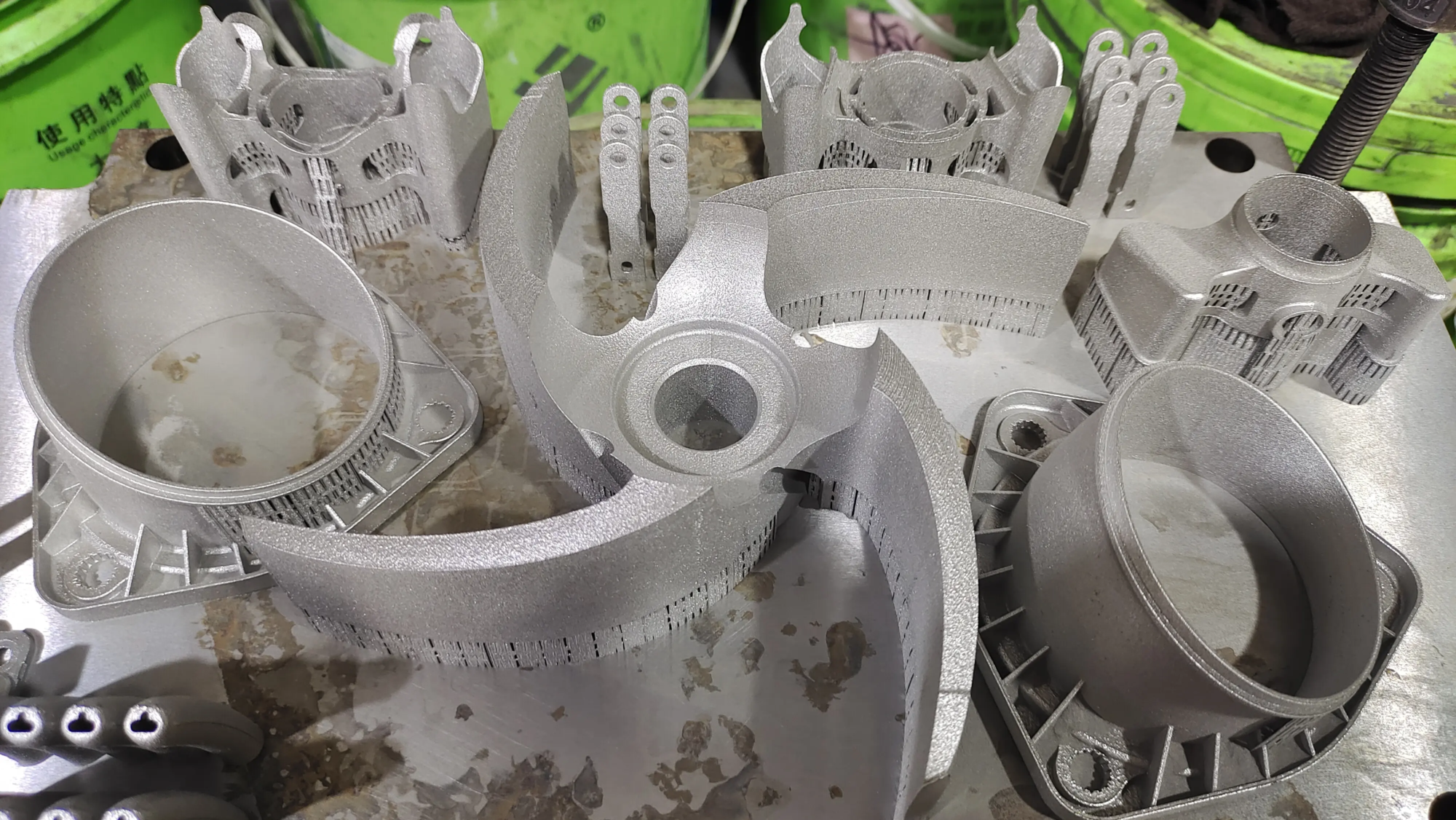
- SLM Metal: GreatLight prints titanium slingshots in 100μm layers under an argon atmosphere – eliminating oxidation.
- Polymer Tips: SLS nylon handles or forks can withstand 800–1200 PSI band loads when properly annealed.
Excellent post-processing:
- Metal: Stress Relief Annealing > HIP (Hot Isostatic Pressing) homogenizes the microstructure. Surface preparation by bead blasting or vibration polishing.
- polymer: Acetone vapor smoothing improves impact resilience.
- Security check: Dye penetration testing reveals microcracks that are invisible to the naked eye.
GreatLight’s one-stop service handles all stages: heat treatment, base CNC threading and anti-glare coating – from prototype to polish all in one place.
Security and legality: non-negotiable
- Force limit: The polymer frame should be able to withstand a belt pull force of ≤ 50N; the metal frame should withstand ≤ 200N.
- Age warning: Age restriction of 14+ applies at all times. Safety tips engraved on the handle.
- legality:
- Wrist slingshots are banned in California.
- Germany requires proof "Sports purposes."
Please consult local laws before manufacturing!
Golden Rule: Print multiple test units. Prior to field use, the forks are destructively tested at 120% of maximum load.
Conclusion: Where Tradition Meets Tomorrow
The 3D printed slingshot embodies innovation—enabling manufacturers to iterate on designs at the speed of light while enabling unprecedented functionality. Whether printing lightweight nylon or mission-critical titanium parts, GreatLight’s SLM expertise sets a new benchmark in custom rapid prototyping.
Our advanced platform takes SLM metal printing from science fiction to shop floor reality, unlocking geometries and material classes beyond traditional machining. By integrating end-to-end finishing and rigorous testing, we deliver prototypes that are indistinguishable from mass production – faster, smarter and without compromise.
Ready to realize your vision? Customize your high-performance slingshot stand today >>
FAQ: 3D Printed Slingshot
Q1: Can plastic withstand repeated firing without cracking?
Of course you can – but the choice of material is crucial. Nylon (PA11/PA12) handles cyclic stress best. Avoid PLA (too brittle). Post-print annealing maximizes interlayer adhesion.
Q2: Why choose metal instead of polymer?
For heavy duty bands or hunting, metal can prevent the frame from bending. Unlike plastic, titanium retains accuracy after more than 10,000 shots.
Q3: How thick should the fork tips be?
A diameter of at least 5 mm is safe for metals; according to testing, polymers require 8–10 mm.
Q4: Does layer direction affect strength?
Crucially! For FDM, align the forks vertically so that the ply line is parallel to the strip force. SLM parts are isotropic.
Q5: Can GreatLight print fan designs?
Yes – Submit STP file. Our engineers optimize the design for improved printability and strength.
Question 6: What finishing can improve the durability of polymers?
Epoxy coating + fiberglass lining. For metals: Passivation prevents corrosion.
Q7: Are 3D printed slingshots legal worldwide?
Varies by region. Australia classifies them as weapons; Canada considers them unregulated. Always verify locally.
The innovations are endless – and so is your next project. With GreatLight, push the edge instead of playing it safe. what will you Create tomorrow?