The sounds of tomorrow: How 3D printing is reinventing the trombone
For centuries, the trombone has captivated audiences with its rich and powerful sound. Its basic design – the slide – remains a marvel of acoustic engineering. However, beneath its brassy surface lies a world of innovation and sophistication, and Additive Manufacturing (AM)Commonly known as 3D printing, a quiet revolution is brewing. Engineers, musicians, and manufacturers are leveraging the unique capabilities of 3D printing to overcome traditional limitations and explore entirely new realms of sound that go beyond mere novelty.
Beyond Plastic Prototypes: The Metal Frontier
Early exploration often uses plastic resins (SLA, FDM) as experimental instruments to demonstrate proof-of-concept for complex internal geometries and unique visual designs. While plastic is valuable, it lacks the acoustic properties necessary for professional performance—the mass, density, and resonance characteristics that are critical to projection and sound quality.
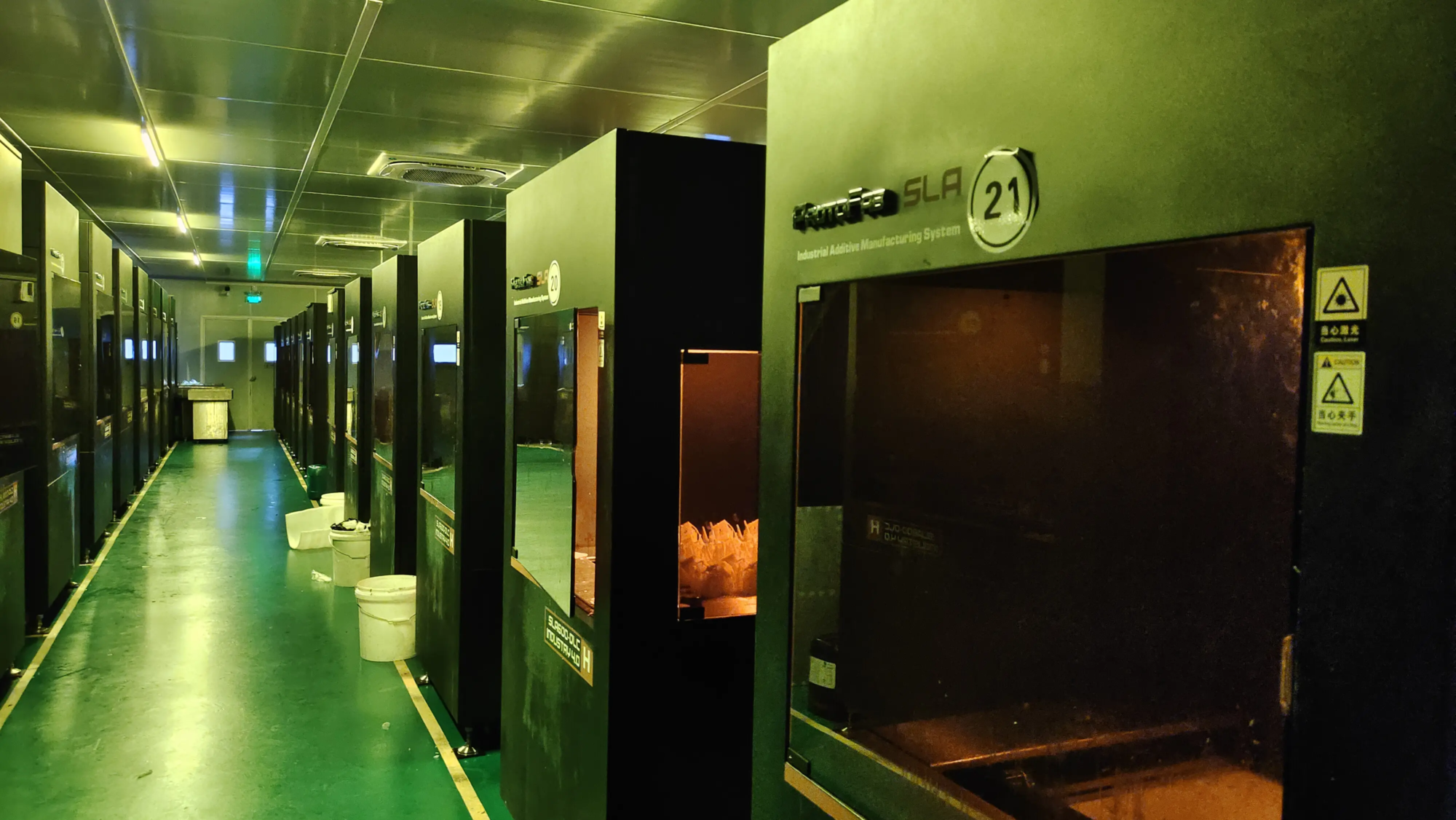
this real leap On arrival with Metal Additive Manufacturingspecifically Selective Laser Melting (SLM) and similar powder bed fusion technology. These processes enable manufacturers to huge light Working directly from fine metal powders, the layers are carefully fused using high-powered lasers to create fully functional trombone components and increasingly complete instruments.
Breakthrough innovation is just right:
-
Thorough acoustic optimization and customization: Traditional manufacturing methods (casting, machining, hand hammering) struggle with complex internal geometries. 3D printing thrives on them. Engineers can now design:
- Optimized airflow path: Computational fluid dynamics (CFD) software allows designers to model airflow through complex bends and chambers before printing. Smooth laminar flow minimizes turbulence and drag, improving response, efficiency and tonal consistency throughout the range.
- Precision bell mouth and taper control: The shape and flare rate of the horn section profoundly affects sound projection and timbre. 3D printing is able to create bells with mathematically precise, complex tapers that cannot be consistently achieved by hand-making, opening the door to entirely new shades.
- Lightweight without sacrificing tone: Strategic internal lattice structures or optimized wall thickness variations can significantly reduce instrument weight, improving player ergonomics and endurance while maintaining the mass and stiffness needed to produce a resonant sound. Designers can target specific weight distribution to achieve balance.
-
Materials Science Symphony: SLM printing opens up material possibilities beyond traditional brass alloys:
- Special alloy: Discover alloys with superior sound damping, specific densities or unique hues. Titanium components are extremely lightweight and have different resonant properties compared to brass components.
- Mixed structure: Combine different materials in one printed part. Imagine the nickel silver slide inner tube seamlessly transitioning into the lighter resonant alloy of the bell section, all printed as an integrated component. This level of material integration is revolutionary.
- Enhance consistency: Eliminate the differences inherent in handcrafted instruments. Each printed instrument is based on the same digital file, exhibiting near-perfect consistency in size and internal geometry, simplifying mass customization.
-
The ergonomic revolution: The player’s comfort level directly affects musicality. 3D printing helps:
- Custom handle/grip: Scans of players’ hands can help create ergonomic grips that perfectly fit their anatomy, reducing fatigue and strain. This is especially valuable for players with limited mobility.
- Tailor-made balance point: Precise control of mass distribution throughout the slide and bell allows manufacturers to adjust the instrument’s center of gravity to improve balance. Reducing weight on the sliding hand can greatly improve agility and comfort.
- Unique slide outline: While traditional round slides dominate, printed slides allow the exploration of ergonomic shapes that suit hand position without sacrificing acoustic integrity or the smoothness of the slide action.
- Accelerate prototyping and custom instrumentation: For instrument designers, the iterative process is greatly accelerated. Prototypes can be printed, acoustically tested, digitally tweaked and reprinted in days, rather than the weeks or months required using traditional methods using manual labor. This promotes rapid innovation. also, A true custom instrumenttailored to the anatomical and tonal specifications of the individual player, became economically and technically feasible. Imagine that a trombone is not only designed for the player’s size, but also optimized for their specific mouth shape and desired sound profile.
Overcoming Challenges: Precision Matters
Creating high-performance brass instruments via additive manufacturing requires extreme precision and expertise:
- Surface finish: The printed metal surface requires meticulous polishing to achieve the smoothness required for seamless airflow and sliding action. Post-processing expertise is critical. company likes huge lightEquipped with advanced SLM technology and comprehensive post-processing capabilities (precision machining, polishing, finishing), it is an important partner in transforming metal prints into professional-grade instruments.
- Dimensional accuracy and tolerance: The slides must fit together with micron-level precision to achieve silent action. The hole must maintain a precise taper. The inherent accuracy of modern SLM systems, coupled with precise calibration and expert process control, makes this possible.
- Material integrity: The metal must be completely dense, with no voids or inclusions that could compromise the sound quality or structural integrity. SLM technology and strict quality control processes ensure the required uniformity of acoustic performance.
Future Scores: Collaboration and Refinement
We are witnessing the early stages of change. Institutions such as Yale University’s Department of Music and Department of Engineering have produced groundbreaking experimental instruments. Innovators like Javier Filártiga Chávez showcase incredible concept designs. Companies like Nordic Sound are pushing the boundaries of functionality. Synergies between musicians, acousticians, engineers and professional manufacturers will drive progress.
Conclusion: New resonance
3D printed trombones are not meant to replace the centuries-old craftsmanship of master craftsmen. Instead, they represent an exciting new instrument categoryunlocking previously unimaginable possibilities:
- Enhanced acoustic performance: Through optimized geometries and novel materials.
- Unprecedented player comfort: Through ergonomic customization and smart lightweighting.
- Customized Instruments: Making truly personalized horns a reality.
- Accelerate innovation: Facilitate rapid design exploration and prototyping.
While challenges around finish, cost scaling and tonal traditions remain, the trajectory is clear. As metal additive manufacturing technologies like SLM mature and become more accessible through experienced partners like GreatLight, and as our understanding of acoustics deepens, expect 3D printed trombones to evolve from fun experiments to valuable professional tools that enrich the orchestral landscape with their unique sounds.
FAQ: Learn about 3D printed trombones
- Does a 3D printed trombone really sound good? Absolutely. Early plastic prototypes lacked sound quality, but Metal 3D printed partsespecially those instruments made using SLM, the sound quality is close to or sometimes even exceeds that of traditional instruments. Due to optimized geometries and alternative materials such as titanium, they often have unique tonal characteristics – perhaps lighter, darker or more concentrated. Sound quality depends largely on professional design and post-processing.
- Does the slideshow function properly? Can they play fast riffs? Yes! One of the biggest breakthroughs is the use of metal additive manufacturing to create functional sliders. Precision SLM printing allows slide tubes to be manufactured to tight tolerances, resulting in smooth, quiet motion comparable to high-quality conventional slides. Attention to ergonomics can even improve some players’ agility.
- Are they as durable as regular brass horns? Professional-grade metal 3D printed parts, especially nickel silver or titanium slides and bells, demonstrate exceptional durability. Molten metal has good structural integrity. However, because custom walls may be thinner or have unique alloys, they may require slightly different care. Long-term service life for professional use is still being proven, but shows great promise.
- How much do they cost? Currently, custom or low-volume 3D printed trombones tend to be much more expensive than mass-produced brass instruments due to specialized design, materials, and printing/post-processing costs. However, as technology advances and scales up, costs are falling. Prices are comparable to, or possibly less than, quality handcrafted instruments.
- able any Can the parts be 3D printed? Almost any component can be printed: slide components, horn sections, valve sections (for tenors/bass bones), stands, handles, water keys. Key innovations often focus on key parts of the acoustic dive, such as slides and horns, where geometry optimization provides the greatest returns.
- Is customization really possible?
- anatomy: Yes, handles/handles can be scanned and customized.
- Aesthetic: Almost unlimited shapes/patterns/additions are possible.
- acoustics: Designs can be iterated to achieve specific tonal goals—lighter, darker, more focused, etc. This requires collaboration between players, designers and manufacturers.
- Who are the pioneers of this technology? Research institutions (academia), professional musical instrument manufacturers exploring AM (e.g. Nordic Sound), independent designers/engineers (e.g. Javier Filártiga Chávez) and professional AM services such as huge light Possess expertise in precision metal parts. Cooperation between these groups is key.
Unleashing potential through precision manufacturing
Taking an innovative trombone design from concept to concert-hall-ready reality requires a manufacturing partner with deep expertise in metal additive manufacturing and precision machining. It is in this area that Hongguang excels. Take advantage of advanced Selective Laser Melting (SLM) Equipment and comprehensive Post-processing capabilitiesGreatLight transforms complex digital designs into high-performance, fully functional metal components. Whether you are designing groundbreaking acoustically optimized prototypes, developing custom ergonomic features, or refining material properties to achieve unique tonal characteristics, GreatLight has the proficiency to ensure the dimensional accuracy, surface quality and material integrity critical to professional instruments. explore possibilities and Customize your next precision innovation with GreatLight – get a rapid prototyping quote today.