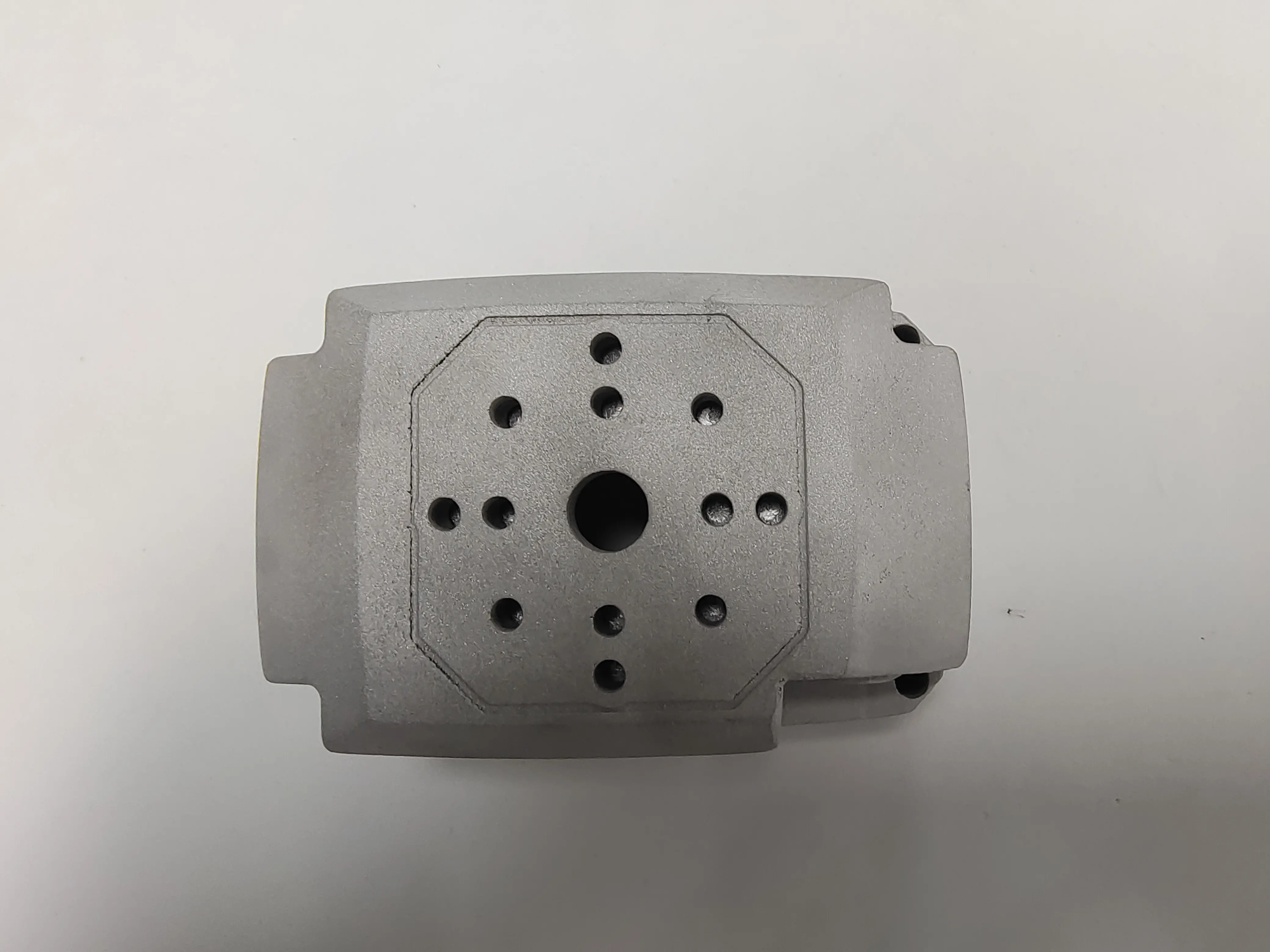
The engineering realities behind 3D printed .22LR receivers: technology, legality and responsible applications
mentioned "3D printing gun" Often triggering sensational headlines and heated debate. In this area, the .22LR caliber design is distinguished by its relatively low pressure compared to centerfire rounds. Videos have proliferated online showing functional-looking plastic guns in consumer printers. But what are the actual technical and legal realities? Let’s demystify the topic, separate hyperbole from engineering fact, and highlight key considerations.
Misconceptions and Core Concepts: It’s All About the Receiver
The most critical points to grasp immediately are: When talking about 3D printed guns currently available to the public, we are overwhelmingly talking about lower receiver (or frame), incomplete, reliable firearm capable of sustained fire. Attempts to fully 3D print a barrel or bolt even suitable for 0.22LR pressure using consumer grade printers (FDM/FFF – Fused Deposition Modeling) remain largely impractical, unreliable and dangerous.
The .22LR rimfire round, while producing less peak pressure than centerfire rounds like the 9mm or 5.56mm (typically around 24,000 PSI CUP vs. 35,000+ PSI CUP), still requires strong critical components. Printed polymer materials simply do not have the tensile strength, heat resistance, or dimensional stability to reliably form a barrel chamber or bolt under repeated stress, especially when injected multiple times.
Printed version.22LR "gun": Receiver housing equipped with standard parts
The functional concepts behind most designs that disappear and then reappear online involve:
- Printed lower receiver: This is a component legally defined as "firearm" In jurisdictions such as the United States. It houses the trigger mechanism and provides structural attachment points. It is typically printed using FDM technology and engineering-grade thermoplastics such as ABS, PETG or nylon.
- Key components purchased: The actual firing mechanism (bolt, firing pin), barrel liner (usually a metal prefabricated tube in .22LR on both sides), pin, spring, etc. are all purchased separately. These parts constitute the regulated "serialization core" drive function.
The printed receiver essentially acts as a custom housing integrating these commercially available metal parts.
Technical challenges and limitations of printed receivers (even 0.22LR)
When printing only The receiver eliminates the need to print high-voltage components, but this does not come without significant challenges:
- Material selection and strength: Even strong engineering plastics have limitations in impact strength and creep (the first thing they deform over time under load). The trigger guard, pin hole, buffer tube threads, and bolt and barrel bushing connection points are the primary failure points. Repeated kickback and mechanical stress will Reduce the integrity of thermoplastics. Nylon variants (NylonX, PA-CF) offer better performance but require specialized printers and setup.
- Heat resistance: Friction and impact Porter energy can generate heat at critical points. Prolonged firing can soften the thermoplastic at the chamber/barrel junction or near the bolt path, causing distortion.
- Dimensional accuracy & solid warpage: Achieving precise holes for the pins, correct alignment of the bolt carrier group path, and adequate rail integrity requires expert calibration of the printer and complex design knowledge. Warping during the printing process remains a constant battle.
- Interlayer adhesion: The inherent weakness between the printed layers (z-axis) is the fundamental weakness under pressure. Impact or leverage can cause cracks along these layer lines.
- Durability and service life: The plastic receiver is a consumable item. Lifespan varies depending on material, design complexity, print quality, and firing rate, but is typically orders of magnitude shorter than metal receivers.
Legality Minefield
This is most important and cannot be emphasized enough:
- Undetectable Firearms Act (USA): Federal law strictly prohibits the use of firearms that cannot be detected by standard metal detectors and are of insufficient quality (as stated in the law). While early plastic firearms drove this law, today nearly all functional designs contain critical metal parts (barrel liners, bolts, pins, etc.) that make them detectable, but compliance is a critical design and use requirement.
- State and local laws: Regulations vary widely and are often much stricter than federal law. Many states ban unserialized firearms entirely (