Confusing Problems with 3D Printing Ironing: When the Perfectly Flat Top Stays Always Elusive
That freshly printed part appears from your FDM machine. Looks great… almost. Clean sides, clear details, but top surface? Disappointing ridges, lines or small flaws of landscape. For creators who require professional aesthetics or flat functions, this is the bane of FDM 3D printing. Many solutions are influx of slicer settings called "Ironing." But experienced manufacturers and professionals know that ironing is not a wand. It’s a picky tool that is often filled with your own dilemma. Let’s dig deeper "Why" Behind these frustrations and how to navigate them – or know when to rotate completely.
What exactly is it yes Ironing?
Unlike the family trivia of the same name, 3D printing ironing is not about pressing down wrinkles from plastic. This is a slicer function designed to make The final Top layer of print. After the last layer is deposited, the thermal nozzle travels at low speeds and lowers slightly, moving backwards (but still soft) to the top surface without squeezing new plastic. Target? To gently melt the peaks, push the filament into the valley slightly and fill the valley, resulting in a significantly smoother, more homogeneous finish. When it works, it is transformative. If not, then go crazy.
Common ironing difficulties and their root causes
-
Burning, spotted or embossed "scar":
- question: The nozzle does not melt cleanly, but leaves dark discoloration, spots of molten wires, and even scratched/dig lines.
- reason: Too much heat (temperature). This is the most common culprit. The ironing temperature is usually set too high to exceed the melting point of the already laid layer. The nozzle actually burns or over-penetrates the surface. Inadequate cooling This exacerbates this during ironing. Plastics don’t have time to parse quickly enough.
-
Scrape, sand or skip the line:
- question: The nozzle appears to be rough and can damage the surface, forming a chisel, sometimes jumping over the section without smoothing it.
- reason: Inadequate nozzle gap (flow/z offset). If the nozzle is too close to the surface, it can physically drag into the plastic instead of gently melting the top. Too much traffic During the ironing process, too much molten plastic contact is also forced, resulting in scratches. Uneven beds/first floor issues Zoom in this; the lower spots are scratched, and the higher spots may not be touched.
-
Inconsistent smoothness or "Skip point":
- question: Some areas look smooth, others remain unchanged and rough. It lacks consistency.
- reason: Complex geometric/miniature features. Ironing algorithms have difficulties on complex top surfaces, tight corners or very small islands. The path may skip small sections. G-code artifacts: Sometimes, slices produce inefficient ironing paths that miss the area or apply pressure. Strong cooling. Ironically Too many Cooling on the lower layer (high fan settings) may result in top layer settings Too fast It can be melted effectively before ironing.
-
A lot of time fines:
- question: Ironing greatly slows down the printing process, especially for large planar surfaces.
- reason: physics. Effective, ironing must It happens slowly. The nozzle must be deliberately moved across the entire top surface (or the final solid layer area). This slow speed essentially increases the time of the print job, which becomes apparent in production environments.
- Substance Sensitivity:
- question: Ironing works like the charm on PLA, but immediately creates chaos or clogs on PETG on materials that are prone to oozing or heat creeping.
- reason: Material behavior. Different polymers react greatly to heating near their glass transition temperature. The inherent viscosity of PETG makes it easy to function during the ironing process. Materials such as ABS can become soft and harsh. High temperature materials require especially precise thermal control.
Why iron "Correct" Can feel like alchemy
Frustration stems from the delicate interactions of many variables:
- Precise requirements: A small adjustment of temperature (as small as 2-5°C), flow rate (usually dropping to 1-2%) or Z-shift (0.01mm increments) can lead to differences between perfection and disaster. Your printer hardware must also be very tuned (horizontal bed, calibration flow, accurate Z-Steps, vibration control).
- Environmental factors: Ambient temperature and drafts affect cooling rate, which can affect the ironing plastic settlement. Even moving air in your build space can lead to imbalance.
- Material Batch Variants: The filaments are not exactly consistent. Manufacturers may need to recalibrate new volumes or minor formulas.
- Differences in slicer algorithms: Different slicers (Cura, Prusaslicer, etc.) uniquely implement ironing logic. An effective strategy may fail.
Mitigation Strategy: Steel Pass
Although perfectly elusive, you can significantly improve reliability:
- Temperature triangulation: Start to be low. Reduce the temperature from your iron by 5-10°C print temperature. Lower is usually safer than higher. Observe and increase gradually if necessary. Ironing is specially enabled in the slicer to isolate the settings.
- Mainstream: from Very low flow rate (10-15%). You are reassigning, not extruding. If the smoothing is insufficient, increase slowly.
- Mind the gap: Set a slight but intentional Z-deflection bump (e.g. 0.05-0.15mm) to prevent scratching. Use BabyStepping in the first ironing test and keep an eye on it!
- Slow and steady victory (sometimes): Slow iron speed is not negotiable (20-30mm/s is common), but optimized Acceleration and asshole set up. Smooth movement prevents the annoyance that causes stripes.
- Tamed Cooling: Ensure parts cooling fans become leave During the ironing pass. Pre-cooling is crucial, but explosive cooling period Ironing can lead to inconsistent results. Post-process cooling settings in slicer.
- Small-scale test: Forgot to test ironing on 10 hours of printing. Design small flat calibrated square or flat model for quick iterative setup. Change one Once parameter.
- Slicer Exploration: If one slicer is consistent, try another. Compare ironing paths and logic.
Is ironing always worth fighting? Know when to call (or call us!)
For prototypes that require visually perfect or flat function, investments in adjusting the ironing time can be accepted. However, in a professional context – Especially for end-use parts, demanding precise application or quantity production – Pursuing perfect ironing settings for each material and model can often become an inefficient time sink.
Here are the features of professional rapid prototyping services, such as the ones we offer in Greatlight, which are essential:
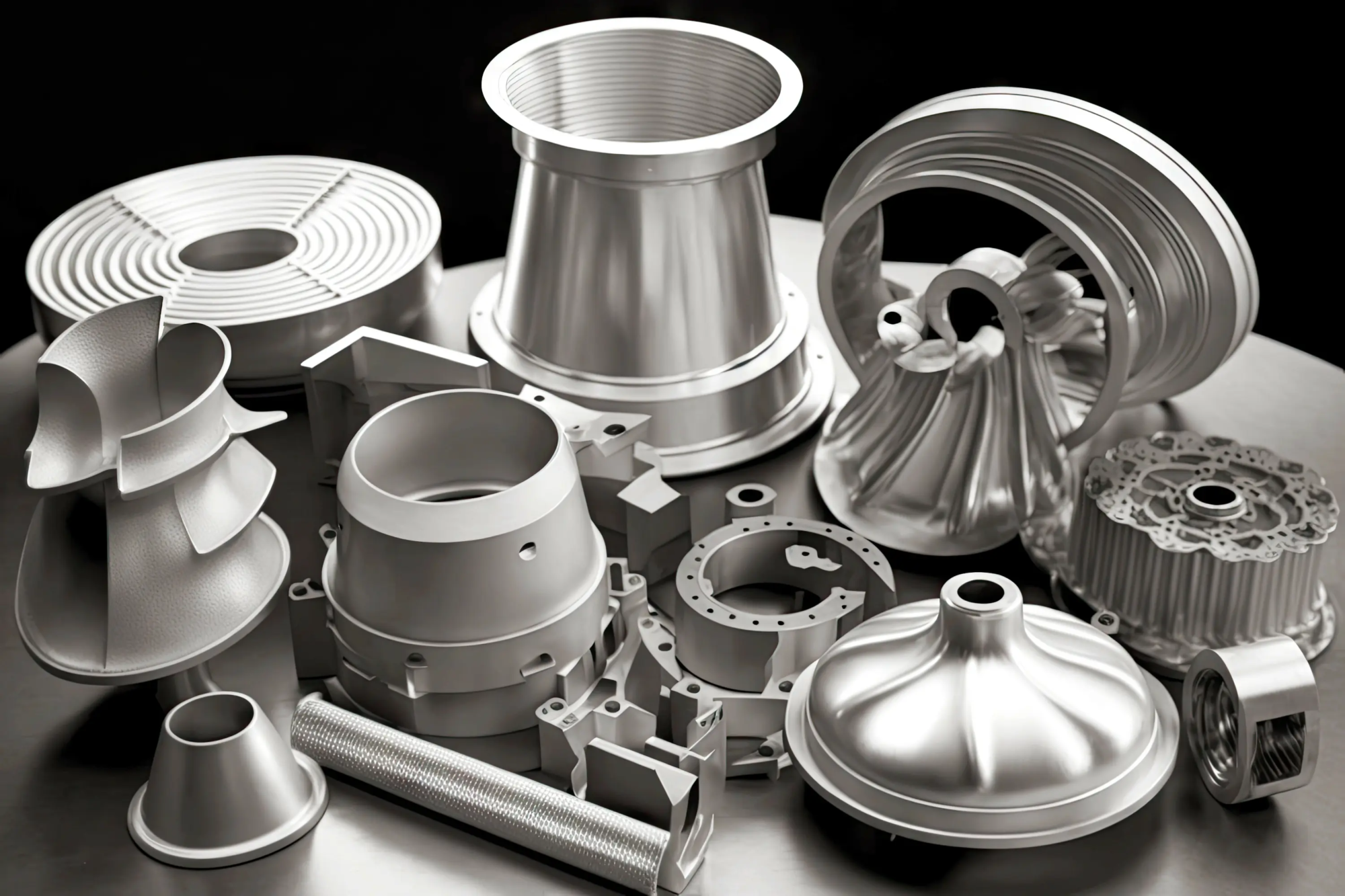
- Advanced SLM Metal Printing: When you go beyond polymer filaments, FDM ironing disappears. Selective laser melting (SLM) is an industrial metal 3D printing that produces metal parts directly from the powder, with inherent dimensional accuracy significantly higher and naturally smoother than FDM printing directly on the bed. Unlike FDM’s layered deposition, the melting and solidification process of SLM creates parts with nearly full density and superior mechanical properties that can be used in high stress applications. True accuracy.
- Excellent comprehensive post-processing: Although SLM greatly reduces FDM’s inherent surface texture problems, Greatlight does not stop there. We provide Comprehensive one-stop post-processing solution:
- Subtraction technology: Accurate CNC machining provides perfectly flat mating surfaces and tight tolerances that cannot be achieved by FDM and ironing.
- Surface reinforcement: Professional bead blasting, grinding and polishing technology provides finishes ranging from uniform matte to nearly molar smoothness. For FDM parts, these techniques are also more effective than relying on ironing alone.
- Material versatility: Fast and reliable processing of various metal alloys avoids the inherent filament material sensitivity of FDM ironing.
- Speed and reliability: Skip the days of calibration ironing and just fail on key prints. Leverage our industrial-grade SLM equipment, expert engineering and strict quality control protocols to deliver functional high-precision metal parts consistently and reliably.
- Focus on your core needs: Release your engineering or design team from the frustration of printer troubleshooting and slicer mechanics. Focus on design and Function Knowing that procuring accurate physical prototypes is reliable and professionally handled.
Conclusion: Ironing is a tool, not a panacea
3D printing ironing is a testament to the creativity of the manufacturer’s community – a clever software solution that is a common physical limitation of FDM printing. at the same time able It takes a lot of time to achieve beautiful results and achieve consistent perfection, adjusting expertise, patience and acceptance of unreliability, especially between different materials and geometric shapes. Understanding the root causes of common ironing allows you to experiment more effectively.
However, it is often counterproductive for professionals, businesses or applications that require a guaranteed accuracy, functional integrity or high-quality completion without manual intervention and only investing energy to perfect FDM ironing. Recognize its limitations. For truly production-grade surfaces, dimensional accuracy and material strength – especially in Metal – Advanced manufacturing processes such as SLM materials combined with expert post-processing provide reliable, high-value alternatives that translate prototype challenges into predictable production success.
FAQ: 3D printing ironing
Question 1: I understand "Enable ironing" In my slicer. Is it just working?
A: It cannot be used reliably out of the box. Ironing requires careful adjustment of several parameters (temperature, speed, flow, Z offset) that are specifically matched to your printer, wire and model details. Think of it as an advanced feature that requires calibration.
Question 2: Why does ironing sometimes work well in small tests but fail in the actual part?
A: The larger surface exaggerates the bed, cooling uniformity, or any contradiction in the printing mechanism. Complex top surfaces with holes, corners, or letters often destroy the slicer’s ironing path algorithm, resulting in skipped or overlapping areas.
Q3: Will increasing the ironing speed make the speed faster without losing mass?
A: Almost always, no. Speed is effective for melting and returning enemies. Increasing the speed significantly reduces heat transfer and material flow, resulting in minimal or no smoothing, usually used in conjunction with artifacts. Patience is the key.
Question 4: Can I use ironing on any material?
A: Although technically possible, its practicality is very different:
- PLA: The simplest, usually responds well to moderate temperatures.
- petg / where: Tough due to stringing and stickiness; very precise, usually lower temperatures and Very low flow.
- ABS: It works fine, but be aware of warping/burning caused by higher glass transition temperatures. Annealed ABS surfaces may exhibit surprising behavior.
- TPU/Soft PLA: Highly unpopular. The nozzle tends to grab and drag the flexible material.
- High temperature materials (nylon, peeping, PC): Very precise control is required; usually, effective and high risk of coking/embedding risks.
Q5: At first my ironing looked great, but then there were ripples?
Answer: This points to overheat. Even if it looks smooth when it is hot, too much heat during the ironing process can weaken the layer structure. As the parts are completely cooled or encounter pressure, overheating, bonded plastic will deform or ripple.
Q6: It took so long to iron! Is there a better alternative to smooth the top?
Answer: Absolutely:
- Grinding/Printing/Painting: Classic finish – labor intensive, but very effective for polymers. All the heat-related problems are avoided.
- Vapor smoothing (such as ABS/ASA acetone and other solvents): Can produce smooth finishes, but require care and toxic materials; geometric dependency.
- Professional services (such as Greatlime): Technologies such as functional metals or demanding polymers, SLM (metal) or advanced post-machining (CNC machining, professional finishing) provide the limitation of bypass/ironing, providing guaranteed quality and accuracy without manual fiddling.
Question 7: When is it not worth solving the ironing problem yourself?
A: Consider professional services at the following times:
- You need consistent production-grade surface quality on multiple parts.
- The accuracy and tolerance of dimensions are crucial (e.g., mating surfaces).
- Parts are functional and require specific material properties (strength, heat resistance).
- You need parts that are reliably printed with metal (SLM) or exotic engineering materials.
- The time you spend debugging a slicer sets up the price more than just reliable outsourcing of production.