The ultimate guide to making a creepy FNaF mask using 3D printing
The bizarre animatronics of Five Nights at Freddy’s (FNaF) captivated horror fans around the world. Their unsettling designs—a potent blend of childhood familiarity and uncanny horror—make for incredibly compelling cosplay and display pieces. Creating your own high-precision FNaF masks used to be a daunting sculpting challenge. Enter 3D printinga revolutionary tool that allows fans to create stunning replicas at home. This comprehensive guide delves into the entire process, from digital files to finished scares, allowing you to bring Freddy, Bonnie, Chica, Foxy, or any glamrock to spooky life.
Phase 1: Digital Blueprint – Finding and Preparing Models
The basis of your project is the 3D model. Quality is everything here.
-
Source repository:
- universe of things: A classic starting point, there are many free FNaF mask models (e.g. Freddy Fazbear, Toy Bonnie, Nightmare Fredbear). Look hard; quality varies widely.
- Cults3D: A mix of free and paid models. Often featuring highly detailed, quality creations by highly skilled designers.
- My mini factory: Focus on carefully curated, print-tested designs. Expect higher quality, but usually at a higher price. search "FNaF mask".
- Specific creator profile: Dedicated artists often sell special models through dedicated Gumroad or Patreon pages.
-
Selection criteria:
- Accuracy and details: Does it capture the character’s iconic look? Are the proportions correct? Are there small details (eyebrows, scratches, tooth structure)?
- Printability: Does the model include supports? Are the parts divided logically? Was the wall thickness analyzed? Check comments/reviews.
- Wear resistance: Is this designed as a wearable mask with eye/mouth openings and head holes? If possible, verify internal dimensions. A visor-only helmet requires different preparation than a full-head helmet.
- license: Respect the license! Free for personal/printing use? Need credit? Paid model? Pay the fee.
- Pre-flight preparation (slicing software – Cura/PrusaSlicer/ChiTuBox):
- Import and target: Load STL file. Rotate the mask so the print is vertical/flat side down for maximum stability and minimal support in critical areas such as eye sockets. Printing curved masks vertically typically sacrifices minimal detail while maximizing structural integrity.
- Zoom ratio: A crucial step! Measure your head circumference, especially from forehead to back of head and temple to temple. Scale the model in the slicer to match these measurements. leave one slight Gaps for padding and electronics (1-2 mm on each side). Print a small test ring first! ItalianCaps should be snug but comfortable.
- support: Strategically engage support, especially for overhangs above 45 degrees (chin, cheekbones, nose). use "tree support" or "organic support" In modern slicers, it is easier to remove and save material. Minimize supports in areas requiring paint/visibility.
- Floor height and parameters:
- Floor height: 0.15mm – 0.2mm Balance detail and print time.
- filling: 10-20% spiral or cube fill is usually enough to provide rigidity while minimizing weight and plastic.
- Perimeter/Walls: 3-4 layers of walls (1.2mm – 2.0mm thick) ensure durability.
- Brim/raft: Highly recommended! Provides adhesion and prevents thin edges from warping.
- Material Selection (Initial Print):
- People’s Liberation Army: The best place to start. Easy to print, solid detail retention, wide color selection, and cheap.
- Polyethylene glycol: Improved durability and temperature resistance, slightly more difficult to print. Less brittle than PLA. Suitable for wearable masks.
- Avoid ABS/ASA unless you are an expert: Enclosures and controlled environments are required to prevent deformation. Advantages: Easier to achieve steam smoothing.
Phase 2: Turn plastic into reality – print your masterpiece
This stage requires vigilance.
- Machine calibration: Make sure your printer bed is carefully leveled. Perform a new temperature tower calibration for the filament of your choice. Clean the bed thoroughly.
- Monitor early stages: Observe the critical first layer. Make sure there is good adhesion across the edges/bottom. If layer shifting or poor adhesion occurs, pause/cancel immediately.
- Print duration and patience: Depending on size, detail, and printer speed, making a detailed mask can easily take 15-40+ hours. Do no Hurry up! Slow and steady wins the quality race.
- Environmental control: Minimize drafts (close windows/lids). Maintain a stable temperature. Avoid vibrating surfaces.
Phase Three: From Print to Beautiful Horror Film – Post-Processing
This separates a decent print from a stunning reproduction.
- Support removal:
- Use precision flat end mills and hobby knives. Work slowly. Soak difficult PLA supports in warm water or freeze PETG prints briefly to lyse them. Sandpaper to remove small bumps.
- Assembly (if multi-part):
- Use strong adhesive: CA glue (strong glue) For PLA/PETG. Consider plastic welding solvents (methylene chloride derivatives for ABS/ASA only – Use extreme caution/ventilation when handling! ). Internally reinforce large joints with epoxy putty or caulk.
- Polishing: this The key to perfection.
- For large bumps and deep lines, start sanding coarsely (~120 grit).
- Use medium sandpaper (~240 grit) and fine sandpaper (~400-600 grit) for sanding. Wet sanding minimizes dust.
- Key areas: Eye sockets, chin, forehead—anywhere smooth curves require clean transitions.
- Tip: Wrap sandpaper around a soft sponge/foundation applicator to contour. Put on a respirator!
- Primer and Filler Defects:
- Apply for one High fill primer (Multiple thin coats!). This reveals every micro-defect and layer line.
- Identify and Fill: Use glass putty (such as Bondo Spot Putty, Tamiya Putty) to fill in small dents and layer lines where the primer is exposed. The sand is smooth.
- Repeat priming/sanding cycle until silky smooth. Aim for professional-grade results in 2-4 cycles. Don’t rush this step!
- Painting and Weathering:
- Primer: A spray paint designed specifically for plastic (such as Rust-Oleum Painter’s Touch 2X works great for covering plastic). Apply in a thin, even coat. Cover the part.
- Detailed description: Acrylic paint (airbrush is ideal for gradients/soft features, hand brushing is ideal for scraps/text) brings life to eyes, tears, cheeks, fur textures. Don’t overlook the details! Reference pictures are essential.
- weathering: Crucial for authenticity! Use washes (diluted acrylics/inks), dry brushing (light colors on dark textures) and subtle sponging to simulate dirt, rust (very sparse!), wear and tear. Matt varnish provides protection between coats and before severe weathering.
- Clear Coat: Seal your masterpiece with one Matte Varnish Spray. This protects the paint and enhances the realism of weathering.
- Finishing touches:
- eyeball: Punch students with thick black vinyl. Install a blinking LED controlled by a microcontroller (Arduino Nano). Spray frosted glass paint on the white LED to give the eyes a diffused light. Alternatively, high-quality pre-made animatronic eyes exist.
- filling: Line interior contact points (forehead, cheeks) with tightly bonded dense memory foam or padded fabric. Comfort is key!
- Shoulder straps and safety gear: Sturdy adjustable straps bolt/screw in place via hidden anchor points. If needed, consider having internal vents near the nostrils/mouth (“buck chewer” vents located discretely behind the teeth).
When ambitions exceed benchmarks: professional 3D printing services
Even committed DIY enthusiasts encounter limitations: printer size limitations, material complexity (resin for extreme detail, metal for endoskeletons), the ability to achieve a super-smooth surface without endless sanding, or just time constraints.
This is where working with a professional rapid prototyping company becomes extremely valuable.
company likes huge light Focus on bridging the gap between ambitious design and producible reality. Their expertise provides solutions ideal for complex projects such as wearable FNaF masks:
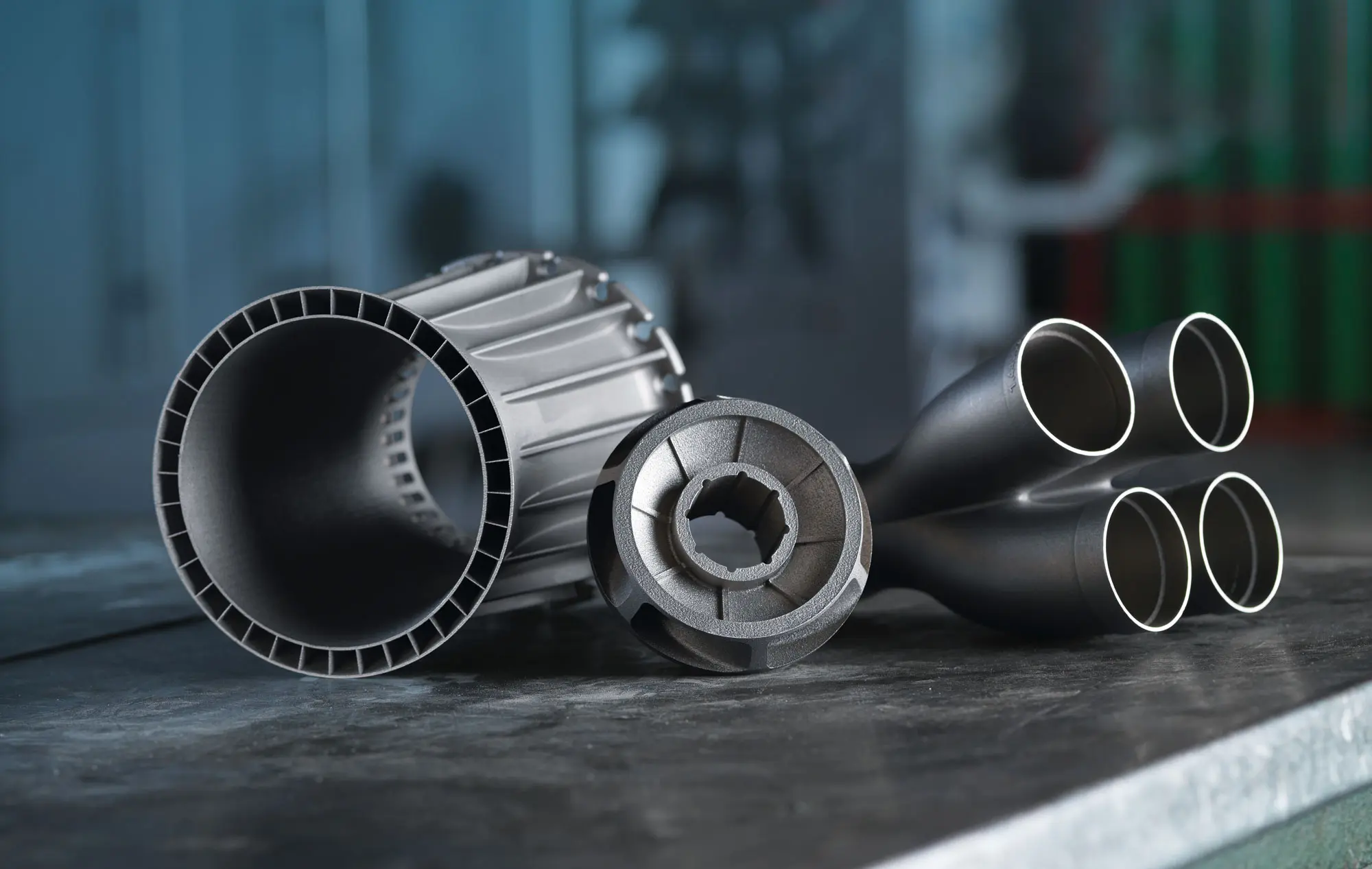
- Industrial grade materials: Access engineering-grade powders and resins unavailable to consumers—nylon variants that offer extreme toughness and impact resistance for wearables, industrial resins that capture microscopic details impossible to capture with FDM printers, and even Metal printing (SLM/DMLS) For creating functional internal endoskeleton components (if that’s your vision).
- Excellent surface finish: Technologies such as stereolithography (SLA), material jetting (PolyJet) and selective laser sintering (SLS) produce prints that require significantly less manual finishing than FDM. Post-processing pipelines typically include steam smoothing (for ABS-type powders) and specialized resin cleaning/curing systems. Picture the mask taken off the plate, almost ready for paint.
- Scalability and details: Need a huge headset that extends beyond the printer bed? Professional SLS/SLA systems handle large prints seamlessly. PolyJet offers multi-material capabilities (rigid/flexible parts printed together) and incredible resolution in microns – ideal for complex facial features such as realistic tear or hair tuft textures.
- Engineering for Strength and Durability: Expert technicians optimize slicing parameters based on load and usage to ensure structural integrity. Digitally integrated reinforcement where needed ensures the mask can withstand the wear, impact and weight of integrated electronics.
- Comprehensive solution: Companies like GreatLight are not just in the printing business. they provide One-stop post-processing for the whole process: Precision sanding and smoothing, expert priming, high-quality painting services (primer, paint detailing, weathering), metal plating finish simulation technology, rugged accessory hardware integration, and electronic procurement/installation advice – delivering a near-finished product ready for final assembly and wear.
Conclusion: Embrace Horror Creation
Creating your own FNaF mask via 3D printing is an incredibly rewarding journey, blending technical skills, artistic vision and passion for the series. Whether you’re meticulously crafting every step on your home printer, using patience and sandpaper to achieve smooth horror effects, or working with a professional expert, e.g. huge light Using industrial materials, finishes, and scale to create museum-worthy replicas, the potential is endless.
Remember, the devil is in the details – meticulous scaling, relentless polishing, thoughtful painting and creative electronics elevate your animatronics from simple props to convincing, unsettling beings. Embrace the process, respect the raw materials, prioritize safety (ventilation!), and most importantly, enjoy making your nightmares come true. Dark corridors await…
FNaF Mask 3D Printing FAQs
Q1: What are the most suitable consumables for beginners for FNaF masks?
- one: PLA is usually the best filament to start with. It’s easy to print (wide temperature tolerance/low warpage), produces good detail, comes in a variety of colors, and is affordable. Just make sure your slicer settings, such as cooling, are optimized. PETG is slightly more challenging but offers better impact resistance and temperature stability for masks worn outdoors.
Q2: How do I make sure the mask actually fits my head?
- one: This is critical! Make key measurements in slicing software:
- Head circumference: Forehead to back of head (around widest point).
- Width from temple to temple: Above the ear from side to side.
- The model was digitally scaled to match these measurements before slicing. Always print a vertical test ring (approximately 10% scale) to verify gaps – leave 1-2mm on each side for padding and comfort.
Q3: Why does my print look so bumpy/layered? How can I make it work?
- one: Layer lines are inherent in FDM printing. Achieving smoothness requires extensive post-processing:
- Start polishing: From coarse-grained (remove large bumps/lines) to fine-grained (400+). Wet sanding reduces dust.
- Prime and fill: Apply filler primer -> sand -> repeat (multiple cycles!). Use glass putty to repair deeper defects.
- Final polish: Sand the primer smooth before painting.
- (Professional service tips): Companies like GreatLight often print with SLS/SLA/PolyJet, which have finer layers/beads and can achieve mold-level smoothness with less manual work.
Q4: Can a resin printer be used for masks? Advantages/Disadvantages?
- one: Yes, SLA/MSLA/DLP resin printers are ideal for masks that require extreme detail and smoothness.
- advantage: Amazing detail resolution (getting edges, teeth, eye structures), smoother surfaces requiring less sanding (but still requires primer!), ability to print translucent/luminescent resin for effects.
- shortcoming: Resin is generally more brittle than FDM plastic (worry about drops/impacts). Larger masks require larger/more expensive resin printers. Requires rigorous post-processing (IPA cleaning + UV curing) and enhanced safety precautions (respirator, gloves, ventilation!). Some resins can cause skin irritation within masks; thorough curing and isolation/sealing is critical.
Q5: Why should I use a service like GreatLight instead of printing at home?
- one: Professional services excel when you need them:
- Materials other than PLA/PETG: Strong engineered nylon (sintered PA11/PA12) is tough, and industrial resins (ABS-like, tough resin) can mimic the durability of injection molding, rubber-like flexibility, and even metal parts.
- Superior Finish/Jumbo Size: Get a surface closer to molded plastic without weeks of sanding. Print masks are larger than typical home printers allow (especially SLS/Powder Bed Fusion or large SLA).
- Expert post-processing: Benefit from commercial grade sandblasting, vapor smoothing (for nylon powder), precision paint/airbrush detailing, metal plating finishes and professional lighting/electronics integration.
- Time and expertise: If time is limited or you want museum/movie quality results, they can provide the kit and expertise to skip months of labor intensive sanding/painting.
Q6: What safety precautions are critical?
- one: Always put safety first!
- FDM printing: The room should be well ventilated, especially when printing ABS. Avoid contact with hot parts. Wear gloves/face shield/goggles when removing supports and sanding.
- Resin printing: must In a well-ventilated area (or ventilated enclosure), wear gloves, safety glasses, and a VOC-specific respirator. Only use nitrile gloves when handling uncured resin. Properly cure finished prints before handling without gloves. Never allow uncured resin to come into contact with skin.
- painting: Use a proper respirator when spraying outdoors or in a highly ventilated spray booth. Acrylic is safer for indoor ventilation.
- Wear resistance: Make sure you have good vision through the eye holes! Pads internal contact points to prevent wear/pressure points. Avoid prolonged use. If possible, provide ventilation holes. Ensure electronic circuits are insulated/buffered to prevent skin contact/short circuits. Use a sturdy headband to prevent accidental drops/shifts.
Disclaimer: This guide is for reference only. Success requires proper technical and safety precautions. The characters in Five Nights at Freddy’s are the intellectual property of Scott Cawthon and Steel Wool Studios.