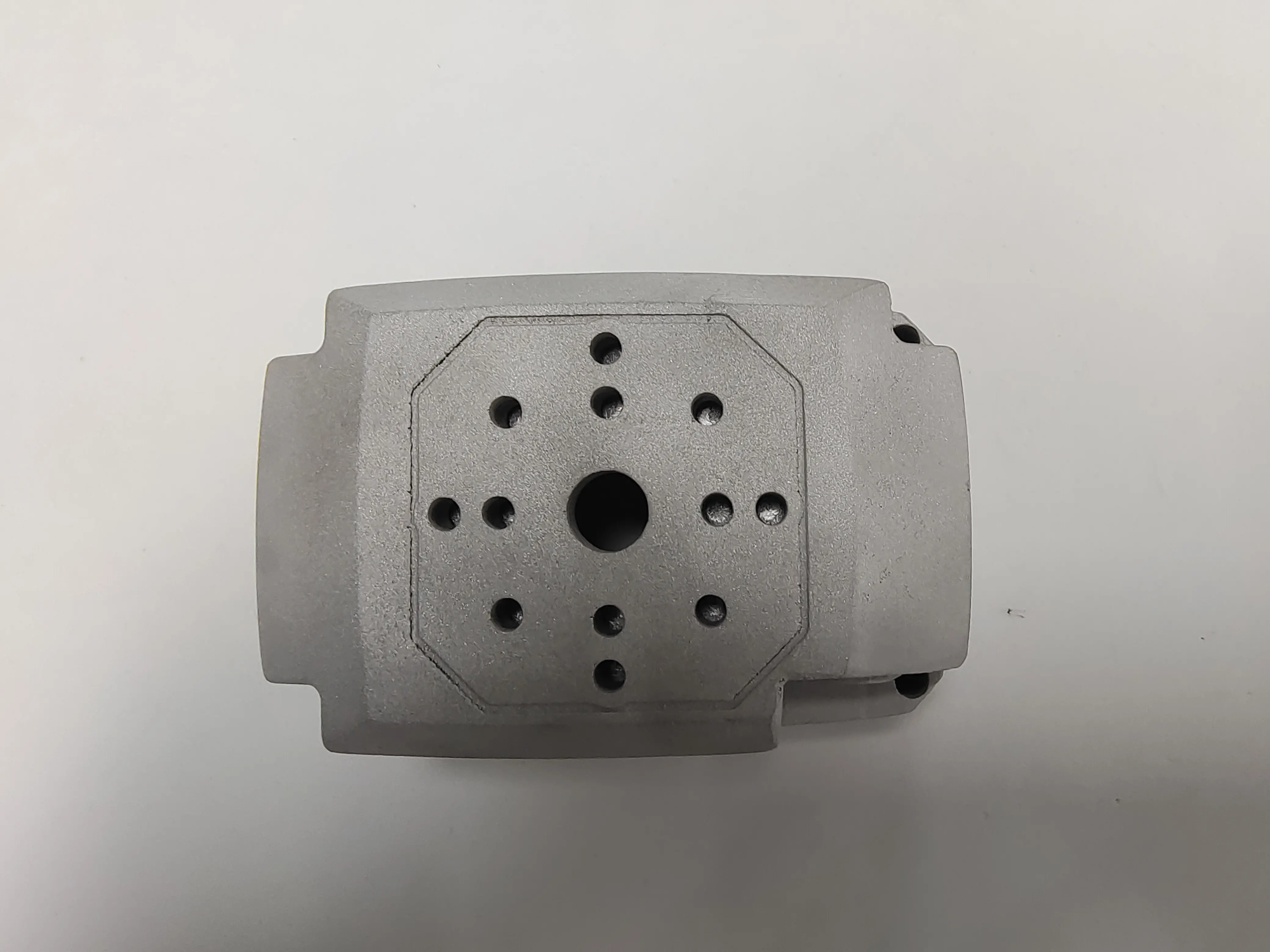
Breaking speed: 3D printing breaks barriers at 600 mm/s
The world of additive manufacturing is undergoing a huge transformation. Gone are the days when 3D printing was only associated with slow, meticulous layer building, suitable only for leisurely prototyping. The revolutionary threshold has been crossed—— 600mm/s 3D printing It is now a reality, bringing the technology into a new era of ultra-rapid production. This is not just an incremental improvement; This is a paradigm shift that will redefine the speed and efficiency with which complex parts can be realized from digital design.
Imagine reducing printing time from hours to minutes for many common geometries. At 600 mm/s, the print head moves at speeds approaching those once considered science fiction. This revolution in speed is revolutionary for rapid prototyping.
Decoding 600mm/s: What does it really mean?
Translating this raw speed into tangible benefits underscores its importance:
- Dramatically shorten delivery times: Prototyping cycles are shortened dramatically. Designers can run multiple iterations in a day, speeding product development and time to market.
- Real production potential: Speed removes key barriers to wider adoption in manufacturing. Printing functional end-use parts becomes economical for high volumes.
- High-throughput manufacturing: Facilities equipped with such printers experience a significant increase in output, effectively expanding operations.
- Reduce cost per part: Reduced machine time directly translates into lower operating costs, which is especially important for prototyping and low- to medium-volume production.
The technology driving this leap in speed
Achieving reliable, high-quality printing at 600 mm/sec requires more than just increasing the printer’s capabilities; it also requires increasing the print speed. It requires complex engineering advances:
- Advanced motion system: An ultra-rigid frame, high-torque motors and precisely calibrated linear guides/drives form the mechanical backbone, minimizing vibration and inertia for fast, precise motion.
- High Flow Hot Ends and Extruders: Specialized extruders provide large amounts of plastic filament. The hot end melts this material quickly at incredibly high flow rates without degradation.
- Revolutionary Cooling: Ultra-high speed printing generates a lot of heat. A significantly enhanced cooling system – powerful radial fans, optimized ducting – solidifies each layer almost instantly, preventing deformation and ensuring geometric accuracy.
- Next generation control electronics: Faster microcontrollers and advanced algorithms enable rapid increases in processing power. A high-speed communication bus transmits movement instructions without latency bottlenecks.
- Smart slicing software: Software develops simultaneously. Algorithms predict complex head movements, optimize acceleration profiles, compensate for flow dynamics at speed, and manage rapid cooling strategies.
- Progress in Materials Science: Filaments designed for high-speed printing exhibit enhanced melt stability, rapid crystallization and excellent adhesion even at unprecedented speeds.
Beyond Plastic: Impact on Metal Prototyping and Production
While rapid plastic prototyping can bring huge benefits, the knock-on effects also extend dramatically to Metal Additive Manufacturing (AM). Technologies such as Selective Laser Melting (SLM), which are critical to companies like GreatLight, are also undergoing a speed revolution driven by the following concepts:
- Laser power and scan speed: New metal additive manufacturing systems approach a paradigm shift in speed in polymers by taking advantage of shorter exposure times and faster laser scan paths enabled by galvanometer optimization.
- Multi-laser system: Deploying multiple high-power lasers simultaneously can significantly increase the productivity of metal powder bed fusion processes.
- Advanced process monitoring: Sophisticated on-site monitoring ensures quality at higher build speeds, identifying potential defects in real time.
- Process parameter optimization: Adjusting laser parameters, incubation strategies, and layering times without compromising part integrity can help speed metal builds.
When it comes to rapid prototyping of metal parts—critical for industries such as aerospace, medical, and automotive—the pursuit of higher speeds means faster functional testing, accelerated design verification, and faster production-ready parts.
Meeting challenges with extremely high specifications
Speed brings new obstacles that require expert solutions:
- Mechanical stress: Components are subjected to tremendous forces; the printer’s rugged engineering and quality materials are non-negotiable.
- Material Limitations and Quality: Not all materials handle top speeds well. Material formulation and printer calibration become critical.
- Accuracy and Surface Finish: Maintaining detail and smoothness requires calibrated hardware/software interactions and optimized process parameters.
- Thermal management: Aggressive active cooling is critical.
- Software complexity: High-speed slicing requires extremely complex algorithms.
GreatLight: Harnessing speed for rapid prototyping success
exist huge lightwe are at the forefront of leveraging cutting-edge additive manufacturing technologies to deliver rapid prototyping solutions that meet the needs of modern industry. We know speed is of the essence. Our commitments include:
- Advanced SLM Metal Printing: Utilize state-of-the-art metal additive manufacturing equipment capable of high-throughput production.
- Full spectrum service: In addition to printing, we offer a comprehensive One-stop post-processing and finishing (heat treatment, CNC machining, surface polishing, painting, coating) for rapid prototyping and end-use parts.
- Materials expertise: We source and process quickly Wide range of materialsincluding a variety of metal alloys, available custom-made to meet specific project requirements.
- Precise focus: Our dedication to accuracy ensures prototypes perfectly match design intent and functional requirements, even with quick turnarounds.
- Cost-effective solution: We offer competitive prices Custom precision rapid prototypingleveraging speed and efficiency to reduce costs without compromising quality.
The 600mm/s benchmark signals that 3D printing has irreversibly moved beyond novelty and entered the competitive arena of real-world manufacturing and rapid prototyping. It enables designers and engineers to achieve the incredible: faster innovation, faster validation, and faster production cycles.
in conclusion
The breakthrough of 600mm/s 3D printing speed marks a historic turning point. This leap breaks previous limitations, enables unprecedented prototyping speeds, and makes additive manufacturing suitable for a wider range of production applications. Successfully leveraging this speed depends on combined advances in hardware, software, materials and process expertise. For companies that need rapid prototyping solutions, especially for complex metal parts, they can work with experienced suppliers such as huge light Ensure access to this cutting-edge speed, the expertise to manage its complexity, and comprehensive finishing services to efficiently and cost-effectively deliver truly production-ready components. Embrace the speed revolution—because speed matters.
FAQ: 3D printing at 600mm/s
Q: Can all types of 3D printers reach a speed of 600mm/s?
one: No, major specialty Fused Filament Fabrication (FFF)/Fused Deposition Modeling (FDM) printers, designed for high-speed operation, can reliably reach and sustain these speeds using the advanced technologies mentioned above (robust motion systems, high-flow hotends, intense cooling). Most standard consumer printers are significantly slower.
Q: Will the 600mm/s print speed sacrifice quality?
one: It doesn’t have to be this way. When printing speed is too fast No Proper hardware, software adjustments (precise pressure control!), material formulation and cooling able Resulting in poor layer adhesion, vibration, ringing (ghosting/echoing) and surface artifacts, printers designed for these speeds employ specialized solutions to maintain acceptable (often surprisingly high) accuracy and surface finish in many applications. Regardless of print speed, prototyping applications that require extremely high surface finishes may require post-processing.
Q: What materials work well at such high speeds?
one: Engineering thermoplastics specifically formulated for high-speed printing perform best. PLA variants, PETG and specially designed ABS or PP derivatives generally exhibit high melt flow stability, which is critical for consistent extrusion at speeds of 600 mm/sec. Brittle filaments (certain filling materials) or materials requiring very high temperatures (such as PEEK) remain challenging in these extreme situations. Materials manufacturers continue to innovate to expand their high-speed materials portfolio.
Q: What are the benefits of such speed for metal 3D printing?
one: Although the metal printing mechanism is different (e.g. powder bed fusion such as SLM/DMLS), the same leap is achieved production throughput Driving the viability of metal additive manufacturing. Faster laser scan paths, multiple lasers, optimized parameter sets and advanced monitoring significantly reduce build time for each part in metal, making rapid metal prototyping and volume production faster and more cost-effective. Companies like GreatLight take advantage of these advances in metal additive manufacturing.
Q: Is ultra-fast printing suitable for my prototyping project?
one: High-speed printing excels at rapidly producing prototypes where functional testing, form verification or iteration speed outweighs the need for the absolute highest surface quality or ultra-fine detail. For complex geometries that require complex supports or require isotropic strength, expert tuning, such as GreatLight, is critical. Evaluate prototype priorities: If delivery time is critical, this high-speed functionality can be transformative.
Q: How does GreatLight help with rapid prototyping using these technologies?
one: As experts in rapid prototyping, GreatLight remains at the forefront. We utilize advanced additive manufacturing systems (SLM, SLS, FDM) with high throughput. In addition to printing, our one-stop service handles complex metal prototyping and complex post-processing (CNC machining, handling, finishing), ensuring rapid delivery of fully functional, high-precision prototypes and parts optimized for speed and quality.