

Make Your Ultimate Dungeon Master Accessory: A Comprehensive Guide to 3D Printing D&D Dice Towers
For tabletop adventurers, there’s nothing more satisfying than the satisfying clatter of dice rolling across the table—unless it’s the concentrated cascading resonance of your own customized dice tower! 3D printing has revolutionized the way we create accessories for games like Dungeons & Dragons, and the dice tower is a prime example. This guide takes an in-depth look at how to leverage this technology to create a centerpiece worthy of your gaming desk, exploring how design, materials, printing techniques, and, more importantly, professional service can elevate your options beyond typical desktop consumable printers.
Why Choose Dice Tower?
Besides being purely aesthetically pleasing, dice towers serve important purposes:
- Fair roll: They ensure randomness by rolling the dice thoroughly before announcing the results, thus eliminating any suspicion of deliberate manipulation.
- Controlled space: They control chaotic dice, preventing them from sliding off the table, knocking over mini dice, or ruining a carefully planned battle map.
- atmosphere: Themed towers enhance immersion – imagine scrolling through miniature castle towers or mysterious obelisks!
Blueprint: Design your Dice Tower experience
Before printing begins, a well-thought-out design lays the foundation:
-
Functionality is crucial:
- Entrance ramp/opening: Smooth, angled entry point prevents dice from getting stuck. Its size is slightly larger than the largest chips (including D20/D100).
- Internal ramp: Design a smoothly sloping ramp inside (30-45 degrees is usually optimal) to guide the dice as they fall. Consider adding baffles or bumps to effectively randomize scrolling.
- Exit the chute: Make sure there is a clear exit path from the tray or table. A slightly wider opening works best.
- Stablize: The base must be large enough and heavy enough, or designed with a low center of gravity to prevent tipping over during vigorous rolling.
-
Theming: Integrate your campaign world! Popular themes include:
- Classic Fantasy: Castle (complete with merVmbaปกlons!), wizard tower, dwarven mines, dragon lair.
- Gothic horror: Vampire Spire, Haunted Mansion.
- Sci-fi/Future: Harsh industrial structures, stylish spaceship interiors.
- Organic/Natural: Rooted tree trunks, giant mushrooms, coral reefs.
- Minimalist: Clean lines focus purely on functionality.
- Size issues: Think portability versus desktop presence. Tabletop towers are common, while larger towers make impressive centerpieces. Make sure your design fits within the printer’s build volume (or consider a segmented/modular design).
Turn your vision into reality: printing options and materials
This is the combination of DIY and professional capabilities. While desktop FDM printers are popular among hobbyists working with PLA or ABS plastic, professional service can bring huge advantages, especially with the possibilities associated with premium accessories like dice towers.
-
Desktop FDM/resin printing: (Usually DIY or basic service)
- advantage: Affordable wire/material cost, ideal for complex, detailed designs (especially resin/SLA).
- shortcoming: The plastic tower feels light and not too premium. Thin wall designs may have weaknesses. High-performance material options are limited. Surface finish often requires extensive post-processing.
- Material: PLA (simple, cheap, wide range of colors), PETG (tougher), ABS (durable, deformable), resin (incredible detail, brittle unless tough/specialty resin is used).
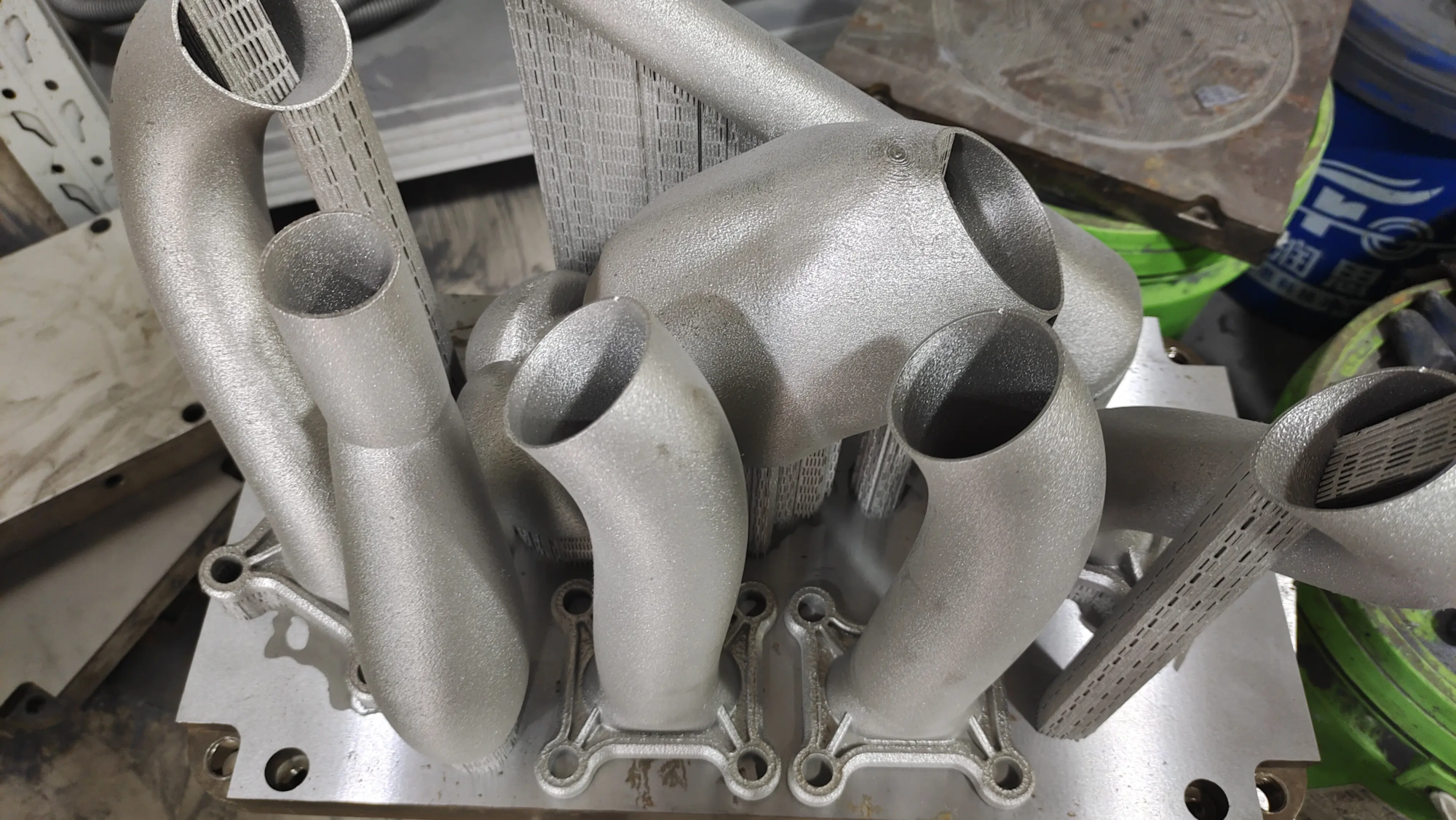
- Professional Metal Printing (SLM – Selective Laser Melting): (Professional Services – Like those provided by GreatLight)
- advantage: Unparalleled Durability and Weight – Feels Solid and Luxurious. Stainless steel or aluminum alloys are very strong. Excellent surface smoothness can be achieved through post-processing. Unique metallic beauty – cool to the touch and resonant Blow. Enables extremely complex geometries not possible with plastic printers. Cool! (Rapid rolling of the dice will cause the plastic to warm over time). High corrosion resistance.
- shortcoming: The cost is higher than plastic printing. Production time is longer. Specific design optimization is required (unlike plastic design rules).
- Material: Stainless steel 316L (high corrosion resistance, strong), aluminum alloy (AlSi10Mg – lightweight, good strength).
Professional touch: perfect post-processing
That’s the magic of transforming an original print into a display piece. Specialty stores such as huge light Excellent performance here:
- Support removal: Carefully remove support structures without damaging intricate features.
2 wood2. Smooth surface:- plastic: Sand, prime, paint. It can be time consuming for amateurs.
- Metal: Steam smooth (if applicable) or extensive mechanical buffing/polishing to achieve a stunning mirror or satin finish. Media blasting, such as sandblasting, produces a consistent, attractive matte texture.
- Coloring and coating: Spray painting (intricate designs require skill), powder coating, professional plating (e.g. nickel, gold, chrome). Metal prints offer a variety of options, such as polishing the metal stock to embed gemstones or create special effects.
- Assembly (modular design): Precision bonding or designing clever locking mechanisms for multi-part towers.
Why choose professional 3D printing services for your dice tower?
Especially for metals:
- Access to advanced technology: SLM printing unlocks strength and beauty not possible with plastic.
- Materials expertise: Learn about optimized designs for metals such as stainless steel 316L or aluminum.
- Excellent post-processing: Industrial-grade finishing delivers unparalleled smoothness and professional looks. (avoids tool inspection)
- Scalability: Do you need a multiple? Pro shops process batches efficiently and consistently. Perfect for gifting or limited edition.
- Complexity handling: INTERICK


