Beyond Injection Molding: 3D Printing Power of Revolutionary Milk Boxes
For decades, trusted milk boxes, whether they are housing dairy, bottles, or doubling them as improvised furniture, have largely been the undisputed field of injection molding. This quality production method performs well in effectively developing a large number of standardized and durable plastic waste bins. But what happens when you need something Different? When your vision exceeds the limitations of traditional molds? Or when you need a faster and smaller number of solutions? That’s the transformational capability of industrial-grade 3D printing steps, and companies like Greatlight are leading.
Why consider 3D printed milk bins?
Injection molding requires expensive, rigid steel molds for each design. This creates significant obstacles:
- High initial cost: Mold represents a large upfront investment, usually tens of thousands of dollars, which is overkill for small batches or prototypes.
- Stiffness: Design changes require modification or complete replacement of the mold, resulting in delays and additional costs.
- Long delivery time: It may take several months to process the design freeze to the first part.
- Design limitations: Complex geometry, internal lattice, complex reinforcement modes or integrated features are often very difficult or impossible.
- Low-capacity economics: Due to mold amortization, it is well known that small amounts of molding by injection are expensive.
Industrial 3D printing has hampered these obstacles, opening up a world for milk box design, prototyping and production:
- Rapid prototyping and design iteration: From days rather than months, go from CAD models to fully functional prototype crates. Test ergonomics, superposition, structural integrity and aesthetic appeal. Make design adjustments now without changing tools.
- Unrivaled design freedom: Create crates with complex internal ribs for ultra-high strength weight ratios. Design integrated handles, hinges, unique patterns that directly form custom logos in the structure, or impossible interior partitions and compartments.
- Custom: Easily produce crates for specific bottle shapes, unique sizes for niche applications or personalized brands without additional tools.
- Bridge production and small volume manufacturing: Need 50, 100, or 500 custom crates? 3D printing provides an economically viable solution where injection molding is faltering and is ideal for pilot runs, professional applications or limited editions.
- Material Innovation: Access engineering grade thermoplastics (such as PA12 nylon, PP-like materials), and even metals (such as via SLM via SLM) to provide characteristics that suit specific needs – enhanced chemical resistance, ultimate durability, UV stability, temperature resistance, temperature resistance or unparalleled strength/weight/weight ratio.
Greglime: Your partner for 3D printing of premium milk bins
As a highly specialized rapid prototyping manufacturer with cutting-edge technologies such as industry Selective laser melting (SLM) Metal and high-performance polymer SLS/FDM platforms have the capability, expertise and infrastructure to revolutionize the development and production of milk boxes.
Our advanced features for your crate success:
- Precision Engineering: We don’t just print; we designed the solution. Our team analyzed your functional requirements – load capacity, reduced resistance, superposition, environmental factors – recommending the best materials and printing technology.
- Industrial Material Library:
- Engineering Polymers: Glass-filled nylon (PA12-GF), for stiffness and impact strength, flexible fragments/flexible TPU, PP-like polymers for chemical resistance or ASA/UV-resistant polymers for outdoor durability.
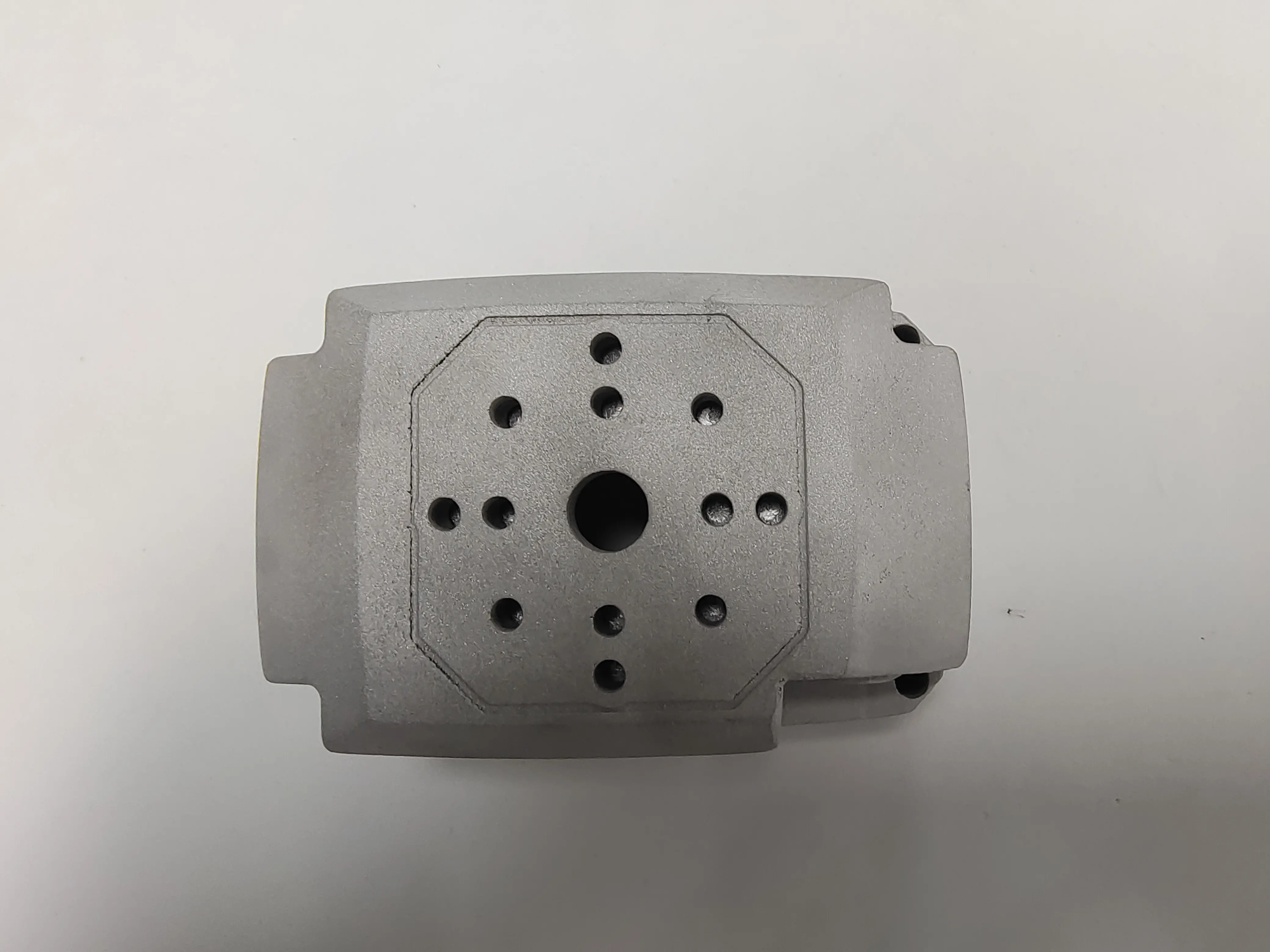
- Metal 3D Printing (SLM): Build an incredibly strong, lightweight and temperature-resistant aluminum alloy (ALSI10MG) crate – ideal for heavy logistics, specialized transportation or demanding applications where extreme durability and fire resistance are crucial.
- Strength and Performance Focus: Through advanced software simulation (FEA) and industry knowledge, we optimize print orientation and fill structures to maximize the power needed, greatly enhancing impact and stacking capabilities. We focus on creating Function Reliable parts.
- Full-service finishing: We provide comprehensive post-processing to meet your aesthetic and functional requirements:
- Smooth (vapor smooth or mechanical finish).
- The color of the dye is consistent, especially in batch processing of approved brand crates.
- Painting and professional paints (e.g., antibacterial, anti-slip).
- Precision machining interface or critical dimensions (using our custom precision machining expertise).
- For metal crates: grinding, polishing, heat treatment.
- Speed and Agility: Bypassing traditional tool delivery time. Accepting high-fidelity prototypes or a small portion of finished crates in a few weeks, speeding up your development cycle or time on the market.
- Logistics and volume flexibility: Intelligent nesting parts within the construct can maximize efficiency and reduce unit costs, especially in SLS polyamide printing. We handle projects from single prototypes to small batch production with ease.
Ideal for 3D printed milk bins:
- New prototype design: Quickly validate forms, fits, and features before committing to expensive tools.
- Customized solutions: Unique bottle shapes (cosmetics, premium beverages, specialty chemicals), integrated RFID tag holder, ergonomic processing or brand promotional crate.
- Professional industrial uses: Lightweight aerospace parts carrier, anti-static slats for electronic devices, chemical resistant containers, heavy metal tool carts/trays.
- Low volume production operation: Used for niche markets, pilot programs, specialized retail, seasonal packaging or custom logistics solutions.
- Replacement parts: Replicating traditional crate designs is no longer mass production.
- Enhanced Performance Crate: Leveraging design freedom, it can be lighter and more powerful than traditional choices.
Conclusion: Unlock innovation with advanced 3D printing
Unremarkable milk boxes no longer need to be limited by the limitations of mass production tools. Industrial 3D printing, provided by leaders such as Greatlight, Empater Designers, engineers and brands, to push possible boundaries. Whether you need to accelerate prototypes, achieve impossible geometry, unlock customization, or economically generate low-volume, high-performance crates, additive manufacturing can provide the key.
It goes beyond the development of parts production – it can make innovation, agility and problem-solving traditional methods cannot be solved effectively. Ready to transform your milk bin or carrier concept into a tangible, high-performance reality? Take advantage of the speed, flexibility and engineering capabilities of professional 3D printing.
FAQ: 3D printed milk bins
Q1: Isn’t 3D printing too expensive for things like milk boxes?
A: For mass production that requires hundreds of thousands of units of standard design, injection molding usually wins at unit cost. However, 3D printing becomes highly costly –Effective Usually The only one Viable prototyping solutions, bridge production (dozens to low units), highly customized designs or crates made of special materials. Eliminating tool costs greatly changes the economic equation in these cases. We also optimize quantitative production costs for the nesting efficiency of plastic parts.
Q2: Is the 3D printed milk box strong enough?
A: Absolutely, when professional production Industrial grade equipment and materials. We use advanced engineering polymers such as glass-reinforced PA12, ABS-like resin or PEKK, which are optimized for structural integrity and impact resistance. Metal printing (SLM aluminum) produces exceptionally strong and durable crates. Crucially, our engineering expertise enables us to optimize designs specifically for additive manufacturing, where required to place materials at maximum strength and meet stacking requirements, often exceeding the performance weight ratio of universal injection crates.
Q3: Can you match the smooth finish of the injection board box?
A: While some 3D printing processes (such as FDM or SLM) leave behind characteristic layered surface finishes, we offer a wide range of post-processing services such as vapor smoothing (for certain polymers) and professional painting to achieve a very smooth styling with plastic parts that can make the consumer ready look. For metal crates, polishing achieves excellent smoothness. The texture is customizable according to your requirements.
Question 4: How to ensure dimension accuracy?
A: Our industrial machines (SLM, SLS, Advanced FDM) have high accuracy and repeatability (±0.1mm or higher is typical). We employ rigorous calibration procedures, controlled environments, and utilize engineering grade materials with predictable shrinkage characteristics. For key functions, we can incorporate precise processing into post-processing. For small production of large-capacity plastic boxes, we can ensure batch consistency.
Q5: Chemical resistance, UV stability and food safety?
Answer: Material selection is crucial. We guide you to get the best materials:
- Chemical resistance: Specific polypropylene, some nylon (check for specific chemicals) or metals.
- For UV Stability: ASA, a special UV Stable polymer or metal.
- For food contact (adjacent): We can provide materials that conform to molds, tools or food processing components, similar to the functions of traditional crates (they do not directly hold food). If you need direct food contact certification to apply, you need to specify clearly and greatly limit material options. We advise on suitability and may provide certificates of materials.
Question 6: Can you print large boxes?
A: Yes. Especially suitable for large plastic crates, our large industrial FDM, SLS platform and SLM (for metal) can hold common milk bins (approximately 13" x 13" x 11" Good in scope). Professional printers can handle larger sizes. We evaluate build volume requirements during quotes.
Question 7: How long does it take to get a 3D printed milk bin?
Answer: The delivery time is shorter than injection molding. Depending on the complexity of the design, material, quantity and post-processing, we can often provide functional prototypes or small plastic crate batch processing internally. 1-3 weekscompared to Several months Tools are usually required in injection molding.
Question 8: Can you help design 3D printed optimized crates?
Answer: Absolutely! Part of our services include design consultation. We can view your existing CAD model and suggest modifications (e.g., Design of Additive Manufacturing – DFAM) to enhance strength, reduce material use (and cost), improve printability and optimize the functionality to take advantage of AM’s unique advantages. For example, a custom hardening mode can be implemented.
Customize your innovative crate solution now! Whether you need quick crate prototypes, test functional custom crate samples or produce low volume custom crates, Great With advanced 3D printing techniques such as SLM, for metals, metal processing capabilities, plastic finishing skills and engineering expertise to deliver excellent results. Get competitive quotes for your custom crate project now and experience the future of crate manufacturing!