The galaxy at your fingertips: Using 3D printing to create an iconic Star Wars ship
The roar of TIE fighters, the graceful silhouette of an X-Wing soaring through space, the sheer size of a star destroyer that blocks the sky—these images are etched in the collective imagination of Star Wars fans around the world. Now, thanks to the revolutionary power of 3D printing, the dream of owning a detailed replica of these iconic ships is no longer limited to vision or expensive licensed merchandise. It can be achieved at your desk or through professional services that can bring true galactic engineering marvels to life.
Why 3D print a Star Wars ship?
For fans and makers alike, 3D printed Star Wars ships offer an unparalleled blend of passion, customization, and engineering appreciation.
- Unprecedented details: Capture intricate panel lines, dimensional graphics, weapon systems and cockpit interiors far beyond those of mass-produced models. Digital sculptors recreate extremely precise designs based on classic references or concept art.
- Scale flexibility: Build everything from palm-sized fighter jets to meter-long capital ships. Scale the Naboo Royal Cruiser to decorate your shelves, or craft an entire fleet of small Star Destroyers for strategic war games.
- custom made: Want a Republic gunship in Coruscant Guardsman livery, an ARC-170 in Shadow Squadron stripes, or your personalized cargo plane? 3D printing enables unique color schemes, modifications and weathering effects.
- The thrill of creation: There’s a deep sense of satisfaction that comes from actively participating in taking a beloved starship model from digital blueprint to tangible artefact, layer by layer, into reality.
Build a Legend: Popular Ships Taking Off:
Let’s delve into some of the most popular containers and the nuances of printing them:
- X-Wing Starfighter (T-65B): Symbol of the Rebel Alliance. Printing challenges include ensuring that the unique S-foil connects smoothly (open/closed), that the thin laser cannon prints cleanly without cracking, and that delicate astromech sockets (like R2-D2’s dome) retain detail. Resin prints excel at capturing finer details.
- Millennium Falcon (YT-1300 light cargo aircraft): The fastest hunk of junk in the galaxy required capturing its unique saucer/jaw structure, intricate exterior plating, and jaw details. Large prints require careful segmentation and sturdy support structures. Printing unique radar antennas (avoiding their well-known fragility) is key! Consider printing iconic containers in multiple pieces for assembly.
- Imperial Star Destroyer (Imperial Class I): Representing the power of empire requires precision. Achieving sharp, angular hull panels, unique pylons and intricate groove details without distortion (especially for large prints) was crucial. Keeping the focus away from the hull helps maintain symmetry. Metal printing can elevate this model into a truly impressive display piece.
- TIE Fighter (TIE/ln Space Superiority Starfighter): Simplicity masks complexity. Maintains the structural integrity of fragile solar arrays while being visually cleaner "wing" Getting around a spherical cockpit can be tricky during FDM printing. Ensuring clear visibility through the cockpit windows is critical. Resin printing provides a smoother effect to the spherical hull.
- Slave I (Firespray-31 class patrol and attack craft): Boba Fett’s iconic ship features an unusual angular shape and a unique rotating cockpit/flight direction. Achieving clean transitions between major hull sections and stably printing the complex rear engine array required careful orientation and support.
- Delta-7 Aether Elf Jedi Starfighter: Obi-Wan Kenobi’s elegant craftsmanship required precision to replicate its flowing lines, needle-like nose, fin-mounted engines and aerospace technology slots. Thin components can easily deform or break in FDM, making the resin ideal for high-fidelity miniatures.
Materials & Technologies: Plastics, Resins & Metals – Choose Your Hyperdrive Fuel
The choice of material fundamentally affects the look, feel, strength and level of detail achievable:
- FDM (Fused Deposition Modeling) – PLA/ABS/PETG: The most common hobbyist method is to use plastic wire.
- advantage: Affordable printer/materials, good structural strength (especially PETG/ABS), wide color availability.
- shortcoming: Visible layer lines, fine details, and draping difficulties often require extensive post-processing (sanding, filling) to obtain a smooth finish. Best suited for larger or sturdier boat designs.
- SLA/DLP/LCD (resin printing): Liquid resin is cured using UV light.
- advantage: Excellent detail resolution, smooth surface finish, prints very thin walls/fine features beautifully.
- shortcoming: Resin is more expensive, messier, parts can be brittle, require post-processing (cleaning, curing), and are UV sensitive. Ideal for small, highly detailed models such as starfighters.
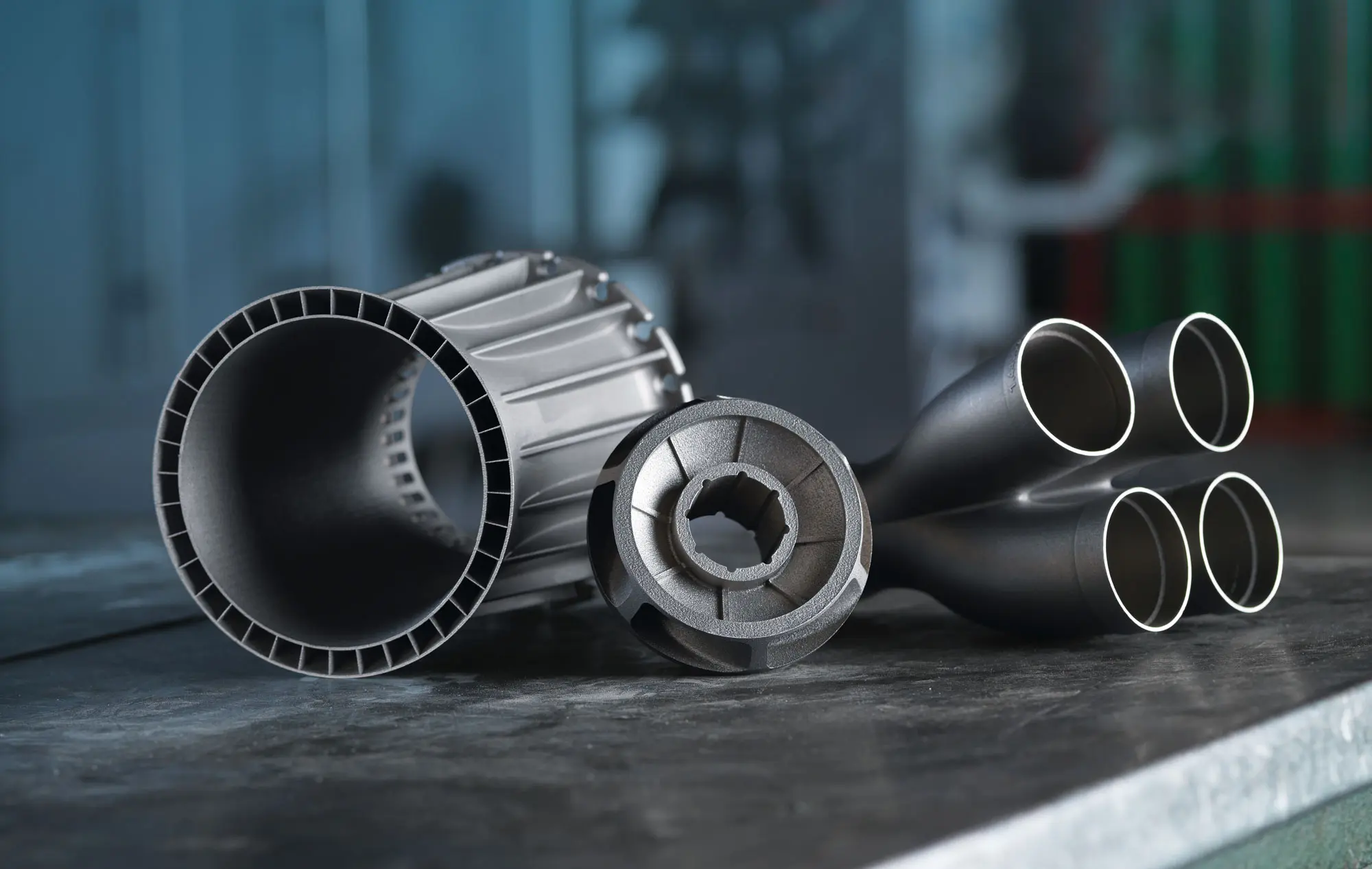
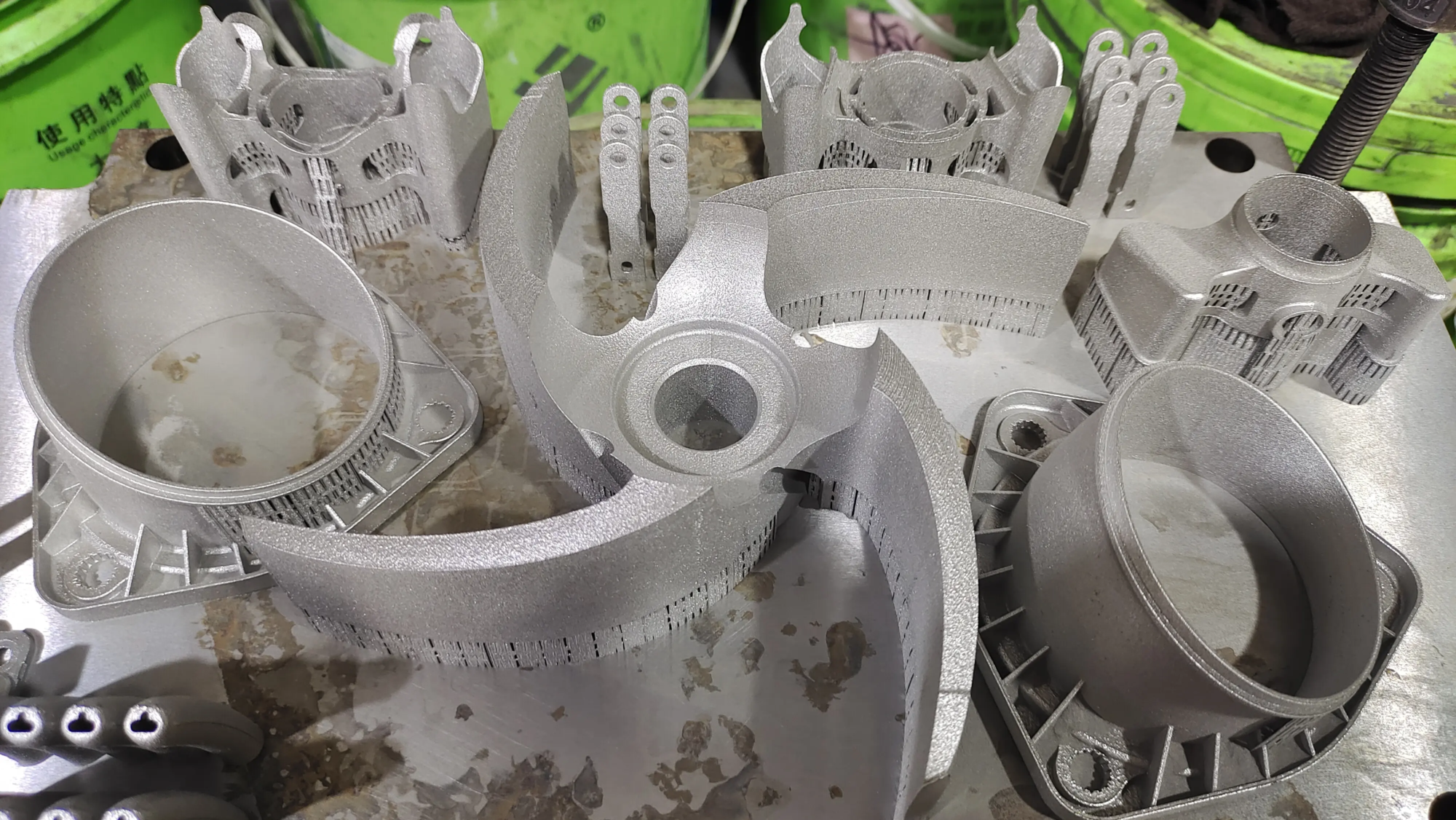
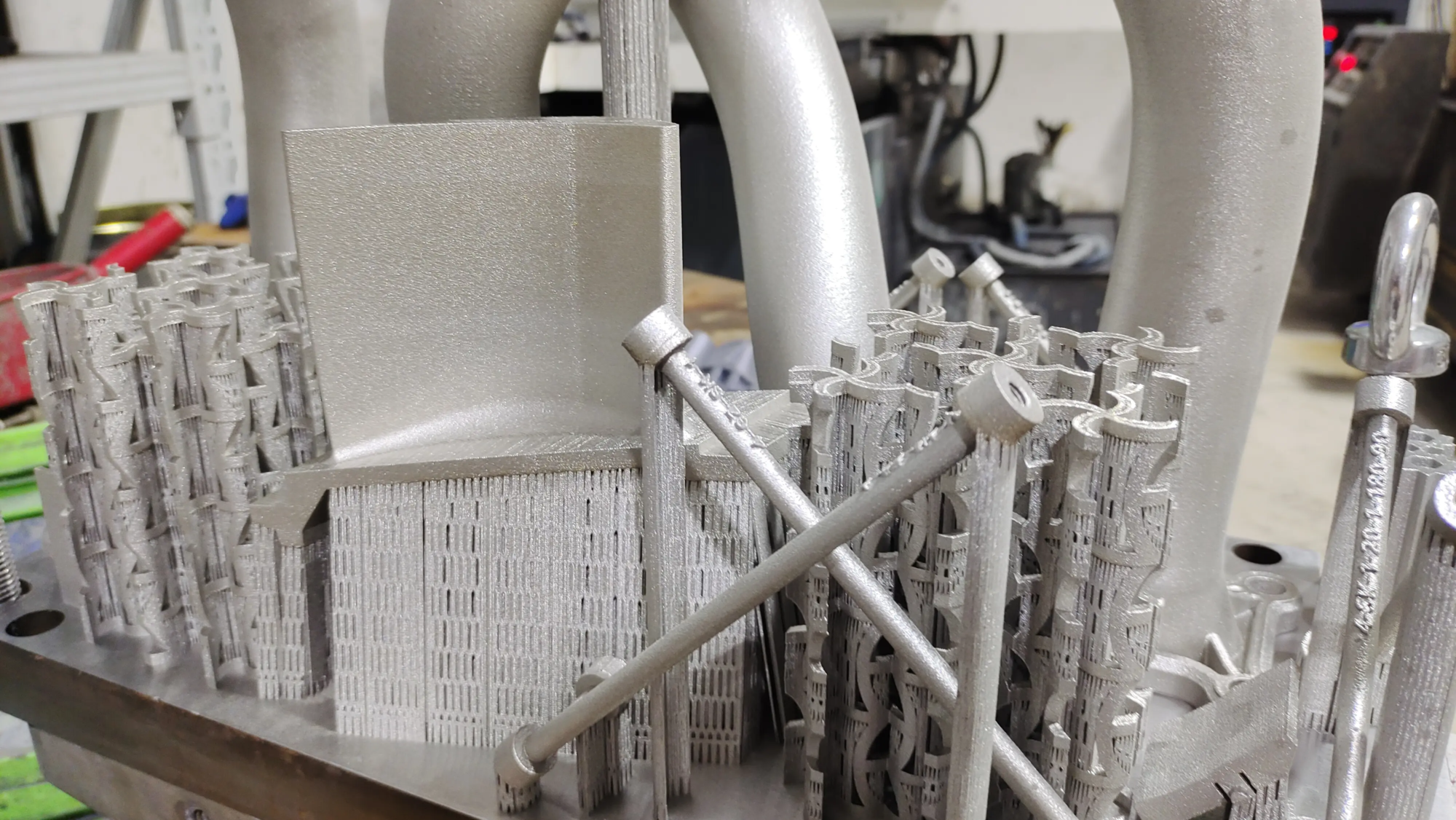
- SLM (Selective Laser Melting)/Metal 3D Printing: Techniques used by professionals, e.g. huge light Metal powder is melted using a laser.
- advantage: Unparalleled strength, durability, weight and premium metal finishes (from stainless steel, aluminum alloys, titanium to Inconel). Create functional engineering prototypes or showcase heirloom-quality pieces.
- shortcoming: Requires industrial equipment and expertise, is significantly more costly, and requires specialized design considerations.
- Guoguang advantages: Professional advancement SLM 3D printer and production technology, Honglaite specializes in solving complex metal rapid prototyping challenges. We can transform your complex Star Destroyer or structurally demanding ship design into a durable, precision metal entity. Our expertise ensures optimal printing parameters for the complex geometries inherent in spacecraft designs.
Design, printing and finishing art
- Purchase model: Use reputable repositories such as Thingiverse, Cults3D, MyMiniFactory, or commission a custom design. Make sure the design is optimized for printing (manifolds, appropriate thickness).
- Slicing Savvy: Orientation is critical to minimizing supports and visible layer lines on protruding surfaces. Calibrate supports carefully – too much hard removes; too little will result in failure. Adjust material speed, temperature and layer height.
- Post-processing – where the magic happens:
- Removing supports can be a delicate job (flat end mill, hobby knife).
- Sanding (gradually finer grit) smoothes the FDM print.
- Primer creates an even base for paint and highlights imperfections that require filler.
- Spray Painting and Surface Preparation: An airbrush provides a smooth primer. Masking enables panel/sector shapes. Weathering (dry brushing, water washing) adds realism. Decals/Transfers are completely customizable.
- GreatLight finishing touches: Professional touch-ups elevate the model. provided by Glow One-stop post-processing and finishing services – Precision assembly processing, complex painting, complex aging techniques and polishing to achieve museum-quality results, which is especially important for metal prints.
Conclusion: Launch your Galaxy Collection
3D printing unlocks the Star Wars universe in an extremely personal way. Whether it’s a PLA Falcon meticulously hand-polished on your hobby table or a metal Star Destroyer professionally printed and polished to perfection on display huge lightthis technology allows fans to become creators. It gives people democratic access to extremely detailed reproductions that were once impossible. The entire process, from selecting files, browsing for prints, to the cathartic final cleansing of the grime, was so rewarding. Embrace the possibilities. Choose your ship, choose your materials (PLA for fun builds, resin for museum details, metal with GreatLight for unrivaled heirloom quality), then send your printer flying into hyperspace. Your hangar is waiting for you.
FAQ: Answers to Star Wars 3D Printing Questions
Q1: Is 3D printing Star Wars ships legal?
one: Print model Personal use/non-commercial display Usually a fan art perk. Printed reproductions for sale, Unless you are the original model designer or with the express permission of Disney/Lucasfilm, is copyright infringement. When downloading fan art mockups, be sure to respect the creator’s license.
Q2: Can I print a giant Star Destroyer or a life-size cockpit?
one: Yes, but size determines feasibility. Desktop printers have size restrictions. Large models require segmentation – Print parts that are then assembled. Achieving truly large scale (e.g. over one meter) typically requires specialist printers that specialize in large format FDM or industrial solutions. Metal printing of large ships is feasible for suppliers like this huge light Have advanced sustainable development management ability.
Q3: How difficult is it to print these? Do I need experience?
one: The level of complexity varies. Simple Fighter is a beginner-friendly FDM project using PLA. Highly detailed models or large ships require more experience with slicing setup, supports and cutting