Unlocking the Horizon: The Future of 3D Printing Careers
introduce
Once a niche technology for rapid prototyping, 3D printing has matured into a transformative force redefining manufacturing, healthcare, aerospace and more. As industries increasingly adopt additive manufacturing (AM), career opportunities are changing dramatically. This transformation involves more than just operating a printer; It drives the need for interdisciplinary experts who blend design, engineering and innovation. For professionals and newcomers alike, the future of 3D printing careers promises unprecedented growth—if you know where to look.
The evolving landscape of 3D printing
3D printing is no longer limited to prototyping and is now the basis for mass production. Aerospace giants print lightweight turbine blades, medical labs create patient-specific implants, and automotive companies use additive manufacturing to manufacture on-demand spare parts. This expansion is driven by:
- advanced materials: Metal alloys (titanium, Inconel), biocompatible polymers and ceramics unlock high stress applications.
- Speed and accuracy: Technologies such as Selective Laser Melting (SLM) enable complex geometries not possible with traditional methods.
- sustainable development: Reducing waste and localizing production are in line with circular economy goals.
As these trends accelerate, so does the demand for skilled professionals.
emerging career paths
The workforce of the future will thrive in roles that combine creativity with technical prowess:
-
Additive Manufacturing Process Engineer
- Role: Optimize printing parameters (temperature, speed) for aerospace-grade metal and other materials.
- growth drivers: The need for repeatable, industrial-scale production.
-
Additive Manufacturing Designer
- Role: Use generative algorithms to redefine part designs to reduce weight and improve performance.
- Skill Highlights: Master topology optimization and CAD software.
-
materials scientist
- Role: Develop proprietary alloys or sustainable biomaterials tailored for additive manufacturing.
- Innovation focus: Research into recyclable polymers and multi-material printing.
-
Post-processing expert
- Role: Perform critical finishing operations (heat treatment, CNC machining) to meet tight tolerances.
- Industry needs: Critical for high-value industries such as medical devices, where surface integrity affects functionality.
- Digital Integration Expert
- Role: Connecting additive manufacturing to Industry 4.0 through the Internet of Things, AI-driven quality control and digital twins.
- value proposition: Real-time monitoring reduces defects in high-volume runs.
Skills that shape future success
Technical expertise alone is not enough. A thriving career requires:
- interdisciplinary knowledge: Learn about materials science, mechanical engineering, and data analysis.
- soft skills: Creative problem solving for design challenges and client collaboration.
- Certification: Credentials such as the Additive Manufacturing Professional (AMP) mark expertise.
Challenges and Solutions
The industry faces obstacles such as high equipment costs and changing standards. leaders like huge light Address these issues head on:
- cost barrier: Provides affordable industrial SLM printers and end-to-end services.
- skills gap: Working with institutions to develop training focused on additive manufacturing.
- Quality assurance: Implement artificial intelligence-based detection in critical areas of accuracy.
GreatLight: Driving innovation in rapid prototyping
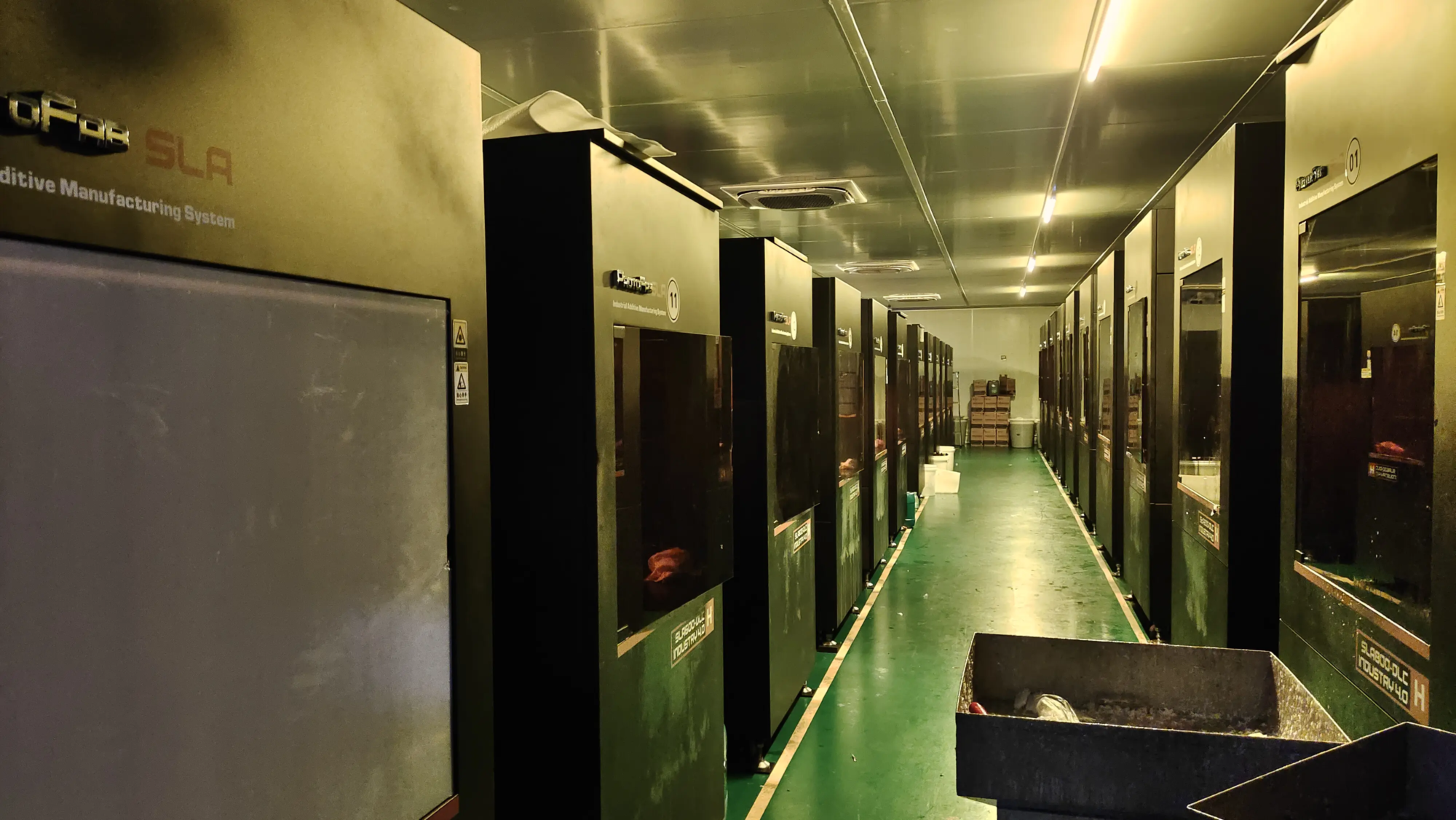
At the forefront of this evolution are huge lighta leader in metal rapid prototyping. With advanced SLM 3D printers and deep expertise, they can deliver:
- Excellent metal parts: Solve complex prototyping challenges using materials from titanium to stainless steel.
- End-to-end solution: Seamless post-processing (machining, polishing, coating) ensures parts are ready for use.
- Customization and speed: Even small batches can be produced quickly without compromising accuracy.
As one of China’s premier rapid prototyping partners, GreatLight empowers industries to innovate faster. Explore their capabilities and request a quote for a custom project at a competitive price.
in conclusion
The future of 3D printing careers is dynamic and endless. From bioprinting organs to building lunar habitats, additive manufacturing is reshaping the possibilities and the labor behind them. Professionals who embrace continuous learning, focus on emerging areas such as sustainable materials or artificial intelligence integration, and align themselves with innovators like GreatLight will lead this revolution. The question isn’t whether 3D printing will change careers; how long You will become part of it.
Frequently Asked Questions (FAQ)
Q1: What educational background is required for a 3D printing career?
A: A degree in mechanical engineering, materials science, or industrial design can provide a strong foundation. Certification in AM processes (e.g. LPBF, SLA) and software (CAD, simulation tools) enhances employability.
Q2: Is 3D printing work well paid?
Answer: Yes. Due to their specialized skills, positions such as additive manufacturing engineers or materials scientists can earn salaries that are 20-40% higher than the traditional manufacturing average. Senior positions in the aerospace/medical field typically pay more than $100,000 per year.
Q3: How will automation affect 3D printing?
A: Automation complements the human role, for example, AI optimizes printing parameters but requires engineers to interpret the data. As automation scales, new roles in robot coordination and AI supervision will emerge.
Q4: Which industries offer the most opportunities?
- health care: Customized prosthetics and surgical tools.
- Aerospace and Defense: Lightweight components that meet strict standards.
- car: Rapid tooling and custom parts.
- consumer goods: Mass customization (e.g. footwear, eyewear).
Q5: How does Honglaite ensure the quality of customized projects?
A: GreatLight combines SLM 3D printing with CNC machining and rigorous post-processing including stress relief annealing and surface finishing. Their vertically integrated approach ensures dimensional accuracy and material integrity.
Q6: What is the biggest obstacle to entering this field?
one