Unleashing Innovation: The Power of Topology Optimized 3D Printing
The relentless pursuit of stronger, lighter, more efficient parts drives innovation in countless industries. Enter Topology optimization (TO) – A revolutionary design approach that utilizes sophisticated algorithms to generate optimal material distribution within a defined design space based on specific load constraints and performance goals. When combined with unparalleled freedom Metal 3D printingEspecially with technologies like Selective Laser Melting (SLM), topology optimization has become a game-changer for rapid prototyping and production. This powerful synergy unlocks extraordinary design possibilities previously thought impossible.
Beyond traditional limitations: core strengths
Why has topology-optimized 3D printing captured the imagination of engineers and designers? The benefits are transformative:
- Complete weight loss: The TO algorithm removes structurally unnecessary material. The resulting complex organic geometries – often resembling skeletal structures – can be achieved 20-70% weight reduction No performance compromise compared to traditionally designed parts. This is critical for aerospace, automotive and robotics, where weight directly affects fuel efficiency, speed and battery life.
- Enhanced performance: Not only is it lighter; It tends to be more powerful. TO mathematically determines the optimal path for stress flow, resulting in parts that outperform their bulkier counterparts in terms of stiffness-to-weight ratio, fatigue life and energy absorption. Performance isn’t sacrificed; it’s redefined.
- Material efficiency: Minimizing waste is not only environmentally responsible; It makes economic sense. TO significantly reduces the raw materials required, resulting in significant cost savings, especially when using expensive high-performance alloys such as titanium or Inconel.
- Unleash design innovation: TO frees engineers from traditional geometric constraints (such as ease of machining or forming). It facilitates the creation of new biomimetic shapes and integrated features, such as internal channels for cooling or fluids, that were not possible before additive manufacturing.
- Accelerate the design cycle: TO software iteratively simulates performance, generating optimization concepts faster than manual trial and error. Combined with rapid prototyping via 3D printing technology, incredibly fast validation and refinement cycles can be achieved.
Where it has real-world impacts:
Topology-optimized 3D printed parts are revolutionizing industries that demand peak performance:
- Aerospace and Defense: Ultralight brackets, engine components, structural supports and satellite components. Clearance = reduced mass = increased payload and fuel efficiency.
- Automobiles and Motorsport: Suspension components, connecting rods, lightweight chassis components, heat exchangers. Gap = faster acceleration, better handling, enhanced EV range.
- Medical implants: Custom orthopedic implants (hip, knee) and skull plates are optimized for biocompatibility and mimicking bone structure. Clearance = better patient outcomes, improved osseointegration.
- Industrial machinery: Durable, lightweight work clamps, robotic arms and end effectors, and hydraulic system components. Clearance = higher throughput and energy savings.
- consumer goods: High-performance sporting goods (bike racks, helmets), wearable technology components. Clearance = superior ergonomics and functionality.
Turning optimized designs into reality: The GreatLight advantage
Converting complex TO-generated designs into tangible, high-performance metal parts requires expertise and cutting-edge technology. where is this huge light Good at:
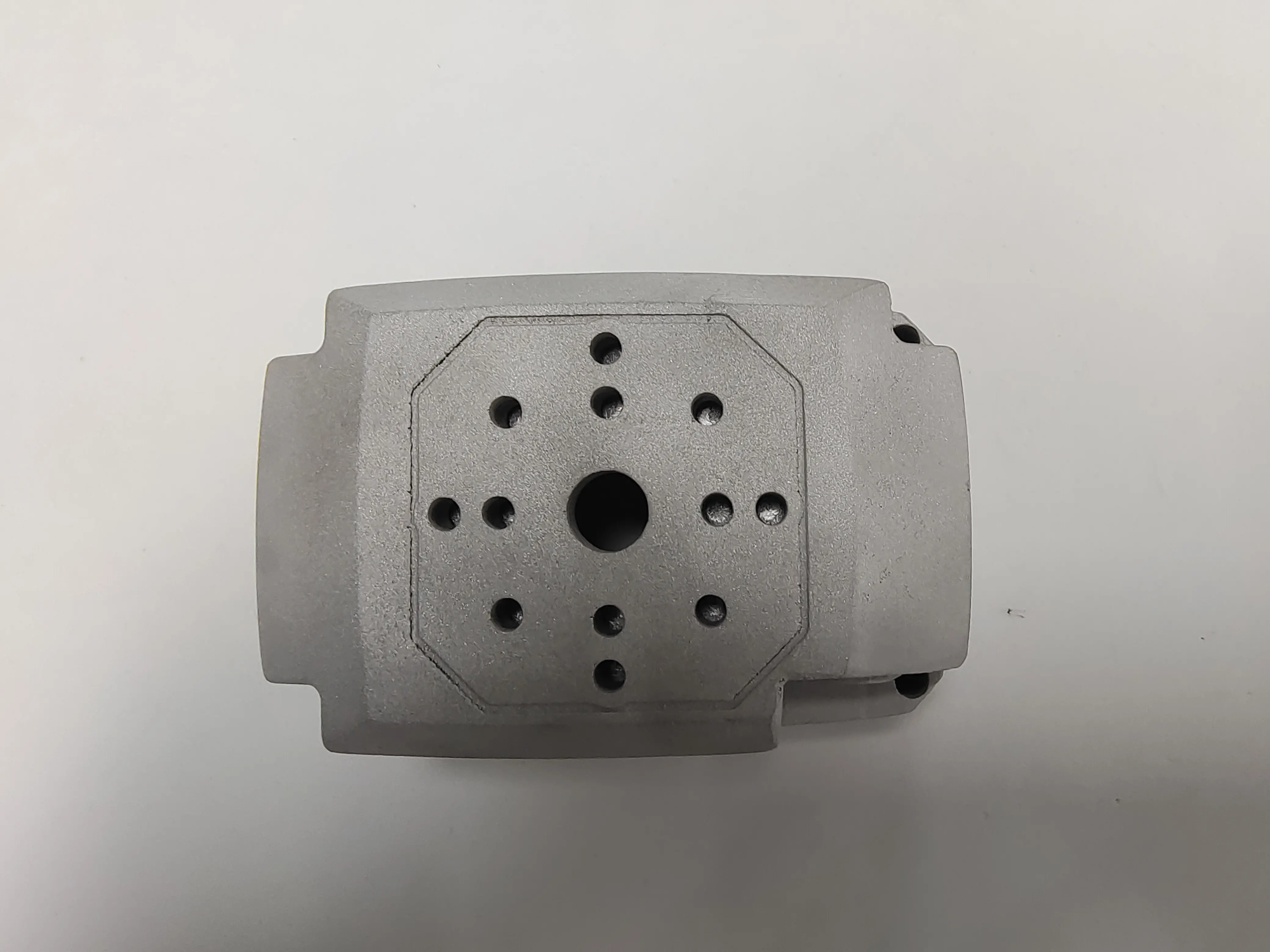
- SLM power source: We use advanced Selective Laser Melting (SLM) 3D printer. This powder bed fusion technology excels at producing the complex internal lattice structures and thin-wall features common in TO designs, using a variety of metals including titanium alloys (Ti6Al4V), aluminum alloys (AlSi, $10Mg), stainless steel ($316L, 17-4PH), nickel alloys (Inconel 718, 625) and copper alloys.
- Precision machining: In addition to printing, we offer a comprehensive One-stop post-processing Competence is crucial. Supports require expert removal, surfaces require finishing (machining, polishing, shot blasting), and critical dimensions often require precision CNC machining to achieve tight tolerances. GreatLight handles it all seamlessly.
- Material Mastery and Speed: We focus on Custom material solutions and provide fast processing times. Does your optimized design require specific alloy properties? We can provide advice and deal with it quickly.
- Rapid Prototyping Authority: Solving complex metal part prototyping problems is our core competency. Our expertise ensures your TO prototype accurately reflects its design intent and performance characteristics.
- Best value for money: Combining advanced TO design with our efficient production and finishing services allows us to deliver optimized parts at highly competitive prices without sacrificing quality.
Case Highlights: Imagine an aerospace actuator bracket designed by TO. Traditionally machined from a solid block and weighing 1.5 kg. The TO redesign was performed via GreatLight’s SLM and the result was